Skip the 5K monitor for gaming and go with a 4K instead — here's why
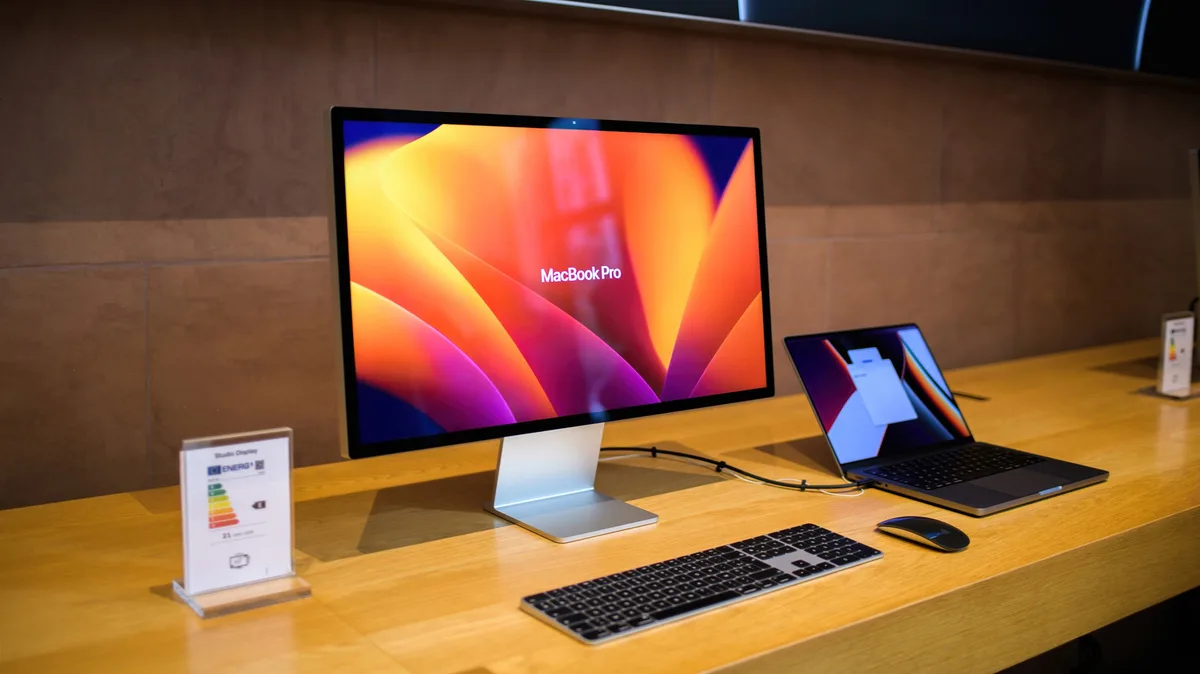
5K seems like the best option since it's the highest resolution, but 4K provides much better value for gaming.
Hadrian/Shutterstock We may receive a commission on purchases made from links.
We've come a long way since the first 4K monitor was released back in the olden times of 2001 (namely, the IBM T220). Hop in a DeLorean, travel back in time a quarter of a century, and it could be yours for the bargain price of just $22,000! In the ensuing years, 4K monitors have become increasingly popular, and now hold a market share of around 35 percent in the US. But there's a newer standard: 5K monitors have started to enter the picture, offering their own reasons to pick one up.
But what are the benefits of opting for a 5K monitor over a 4K model? While 5K displays are undeniably sharper than their 4K counterparts, there are drawbacks to this super-crisp resolution. There's also a wider discussion to consider about the benefits and drawbacks of owning a high-res display. Because 5K monitors are designed for a certain type of person, the upsides of these displays might not be worth ditching your 4K screen for.
Hadrian/Shutterstock At 3840 x 2160 — that's around 8.29 million dots — 4K monitors provide the high pixel count that enables modern, graphically intensive titles to look their best. The best gaming monitors offer speedy response times and exceptional image clarity that make the likes of Resident Evil Requiem or the path-traced delights of Cyberpunk 2077 sing. Of course, playing modern games in 4K is demanding. If you want to experience titles at 60 FPS or above, you'll ideally own a GPU along the lines of an Nvidia RTX 4070 or AMD's Radeon RX 9070 XT.
With so many games now leaning on demanding rendering techniques like ray tracing, you pretty much need an RTX 5080 or 5090 to play the latest games at native 4K resolution with console-beating frame rates. Not that you have to drop $3,000 on a monster graphics card to get fantastic image quality, though. Supersampling has come a long way over the years, ensuring gamers can get great-looking upscaled 4K+ images without massively sacrificing performance. Both Nvidia DLSS and AMD's FSR technologies let you play games at lower resolutions before upsampling them with the help of AI features. The result is an image that looks very close to native output while also putting far less strain on your GPU.
5K gaming monitors exist, but this resolution isn't generally aimed at gamers. The reason 5K is better for prosumers is that it's considerably sharper than a 4K screen. Unlike with a TV, you likely sit less than a foot away from your monitor. At this range, clarity is key. With a resolution of 5120 x 2880 — or a whopping 14.7 million dots — 5K monitors offer 77 percent more pixels than 4K panels. That makes them ideal for graphics professionals who regularly edit images or Ultra HD video content. If you're a professional photographer who needs pristine image quality, opting for a 5K monitor over a 4K model is definitely worth considering.
slyellow/Shutterstock Price is one of the biggest hurdles of 5K displays.
5News aggregated this summary from the outlet’s public feed. The full article, with all the context, is on www.engadget.com — the content belongs to Engadget.