The future of medicine is video games
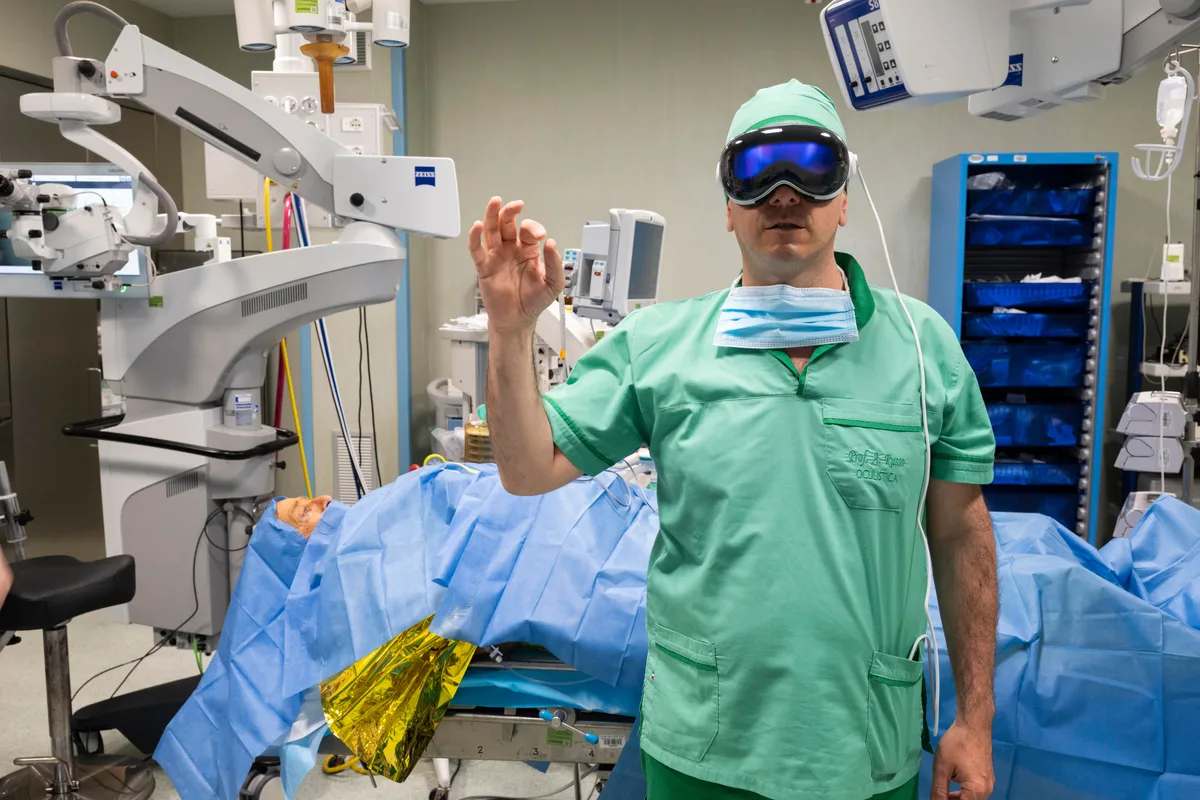
A physician in Italy dons a VR headset before performing surgery. | Fabrizio Villa/Getty Images If you’re like me, and you grew up in a house where your mom refused to let you get a video game console, because she believed sitting and staring at a TV was bad for you, you might think of video games as antithetical to health.
And there is plenty of research about the ways in which gaming too much can harm your physical and mental well-being.
I don’t think anyone would argue that eight hours of Call of Duty every day is doing your body or your mind much good.
But the old caricature of video games as simple brain rot is increasingly out of date.
Even some normal, non-educational games can help with brain function (as long as they are played in moderation — and some games are better than others).
Beyond that, what if we could take something that is wildly popular (there are 3 billion gamers worldwide , 190 million in the United States) and reimagine it in a way that goes beyond just entertainment? Gaming tech has advanced to the point that we can put people into hyperrealistic virtual realities or use AI to create new personalized gaming apps with a brief voice prompt.
These and other capabilities are unlocking new ideas from ambitious physicians and game developers that would have sounded like science fiction when I was a teen.
There’s increasing evidence that these platforms can be adapted to do genuinely incredible things to benefit our health.
Here are just two ways in which video games are poised to change medicine — including one that allows any of us to game out in the name of advancing science.
I can’t wait to tell my mom.
Video games could solve some big challenges in caring for kids My perspective on video games in medicine started to change when I learned about one specific use: as an alternative to anesthesia for children and adolescents.
Here is a genuine clinical problem: For years, doctors have had few options beyond general anesthesia for kids who need to undergo imaging or minor surgeries.
An MRI, for example, really only works when the patient is able to stay completely still and, as anyone who has spent a single minute around a child can attest, that’s hard for kids to do.
So, children have been put under during routine MRIs or minor procedures that, when they’re performed on an adult, require only local anesthesia or no anesthesia at all.
5News aggregated this summary from the outlet’s public feed. The full article, with all the context, is on www.vox.com — the content belongs to Vox.