Microplastics Are Chemically Alive and Probably Up to No Good
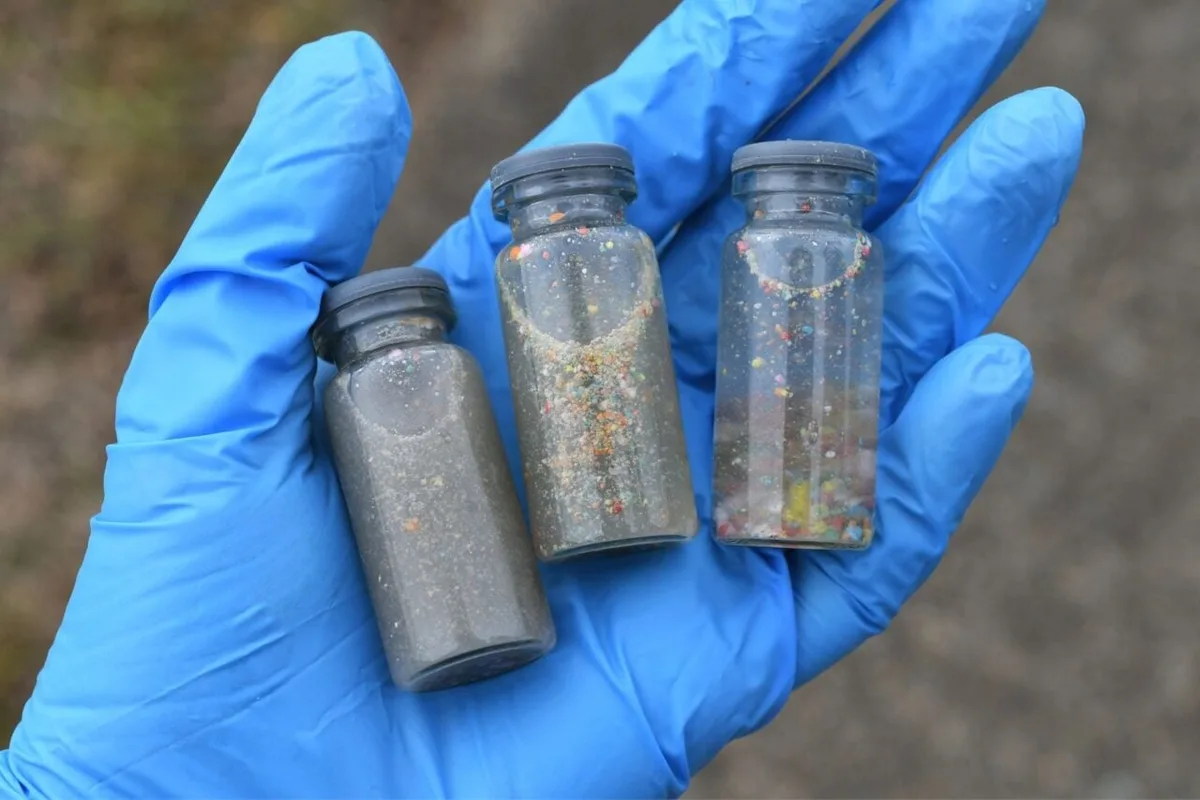
Many scientists have argued that microplastics pose a real, if often subtle, threat to human health. A study out this week may provide a vital clue as to how this harm is happening.
Researchers at Columbia University and others took a close look at how microplastics behave in water. They found that when plastic is broken up into tiny fragments and surrounded by water, it can easily produce highly reactive molecules. Though more study is still needed to understand the exact health impacts of microplastics, the team’s work undercuts the assumption that plastic is always chemically passive, the authors say.
“Our findings challenge the prevailing paradigm of plastic inertness [and] identify a possibly overlooked mechanism for the detrimental effects of microplastics on health and the environment,” they wrote in their paper, published Wednesday in the journal Nature.
Microplastics are any piece of plastic smaller than 5 millimeters. Over the years, scientists have increasingly raised the alarm about the likely dangers of microplastics for both people and other animals.
We know that plastics commonly contain chemicals that can mimic and possibly disturb the functioning of some natural hormones. There is also some research suggesting that microplastics can directly harm our bodies, but the data on these potential risks is more limited .
One reason why plastics are so widely used in society is that they’re supposed to be chemically inert under normal circumstances. The researchers’ experiments, however, indicate that this assumption doesn’t hold true once plastics are broken down into the tiny pieces that can enter our bodies. Specifically, they found that microplastics are capable of spontaneously generating unstable molecules known as free radicals when in the presence of water.
Scientists Sound the Alarm Over Plastics in Our Brains After Shocking Study
“As plastic fragments into smaller and smaller particles, its surface area increases enormously,” said senior study author Wei Min, a Columbia professor of chemistry and biomedical engineering, in a statement from Columbia. “Then microplastics change the water that surrounds them, generating high-energy, reactive radicals that very likely contribute to biological damage that we see in animals and potentially in humans as a result of microplastic exposure.”
Obviously our bodies are filled with water, so it’s certainly reasonable to think that microplastics can create these radicals inside us, too. We might also be exposed to these molecules when drinking bottled water, the researchers speculate. Such radicals might then explain at least some of the harmful bodily changes scientists have associated with microplastics, such as inflammation, immune dysfunction, and altered metabolism.
At the same time, scientists are still trying to quantify the health risks of microplastics, which may be influenced by other factors like age.
5News aggregated this summary from the outlet’s public feed. The full article, with all the context, is on gizmodo.com — the content belongs to Gizmodo.