Friday, October 9, 2026 SourcesAbout🌓
🇺🇸 US ▾
BREAKING
› JONATHAN TURLEY: France's free speech crackdown shows what happens when politicians define truth› Delta Air Lines cuts 2026 forecast on fuel surge, but CEO says demand is still strong› Iran's Houthi allies step up deadly attacks on Saudi Arabia› How to navigate new tax rules in year-end planning, according to top-ranked advisors› Here are Friday's biggest analyst calls: Nvidia, SpaceX, Tesla, Boeing, Apple, American Express & more› Dominion still has pending lawsuits against election deniers such as Rudy Giuliani and Sidney Powell› Russia is 'going backwards' in equipment and deploying post WWII-era tanks, according to Western officials› Podcast: One country musician is calling for other artists to oppose assault rifles› Bidets save you money and reduce waste — we tested the best options out there› 50+ products to make your life easier and our planet cleaner› JONATHAN TURLEY: France's free speech crackdown shows what happens when politicians define truth› Delta Air Lines cuts 2026 forecast on fuel surge, but CEO says demand is still strong› Iran's Houthi allies step up deadly attacks on Saudi Arabia› How to navigate new tax rules in year-end planning, according to top-ranked advisors› Here are Friday's biggest analyst calls: Nvidia, SpaceX, Tesla, Boeing, Apple, American Express & more› Dominion still has pending lawsuits against election deniers such as Rudy Giuliani and Sidney Powell› Russia is 'going backwards' in equipment and deploying post WWII-era tanks, according to Western officials› Podcast: One country musician is calling for other artists to oppose assault rifles› Bidets save you money and reduce waste — we tested the best options out there› 50+ products to make your life easier and our planet cleaner
Business

Stocks slide toward lowest level since July after Warsh’s hawkish press conference
Fortune ·
Stocks slide toward lowest level since July after Warsh’s hawkish press conference

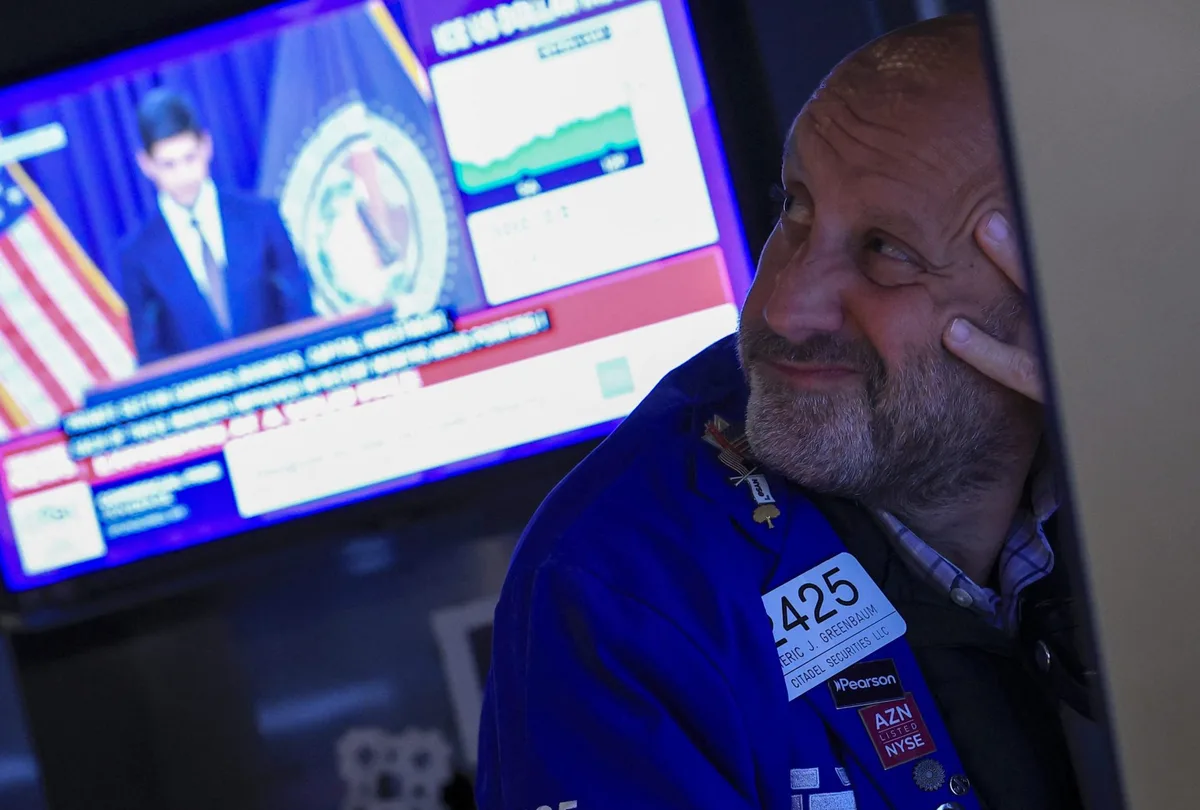
Stocks slid Wednesday afternoon after Federal Reserve Chair Kevin Warsh followed the central bank’s first rate hike in three years with a press conference that hinted it wouldn’t be the last.

The S&P 500 dropped 1%, heading toward its lowest close since July.

The Dow Jones Industrial Average fell 1.7%, or more than 700 points, with financial shares leading the decline.

The Nasdaq Composite fell 0.8%.

The 10-year Treasury yield held near 5% a day after touching its highest level since 2007, and the dollar index climbed 0.6% to its strongest since late July.

Markets had priced in the quarter-point increase itself and initially took it in stride.

All three indexes were higher before the 2 p.m. decision.

The selling started during the press conference.

Warsh was on a tightrope going in.

The question was whether he’d frame the hike as a one-off adjustment—which risked the bond market reading it as too little to deter inflation—or as the start of a longer cycle.

He did neither, and instead went in a more hawkish direction.

“I would be hard pressed to describe broad financial conditions as restrictive,” he said in his opening remarks.

“This view was widely shared by the committee, so we removed a dose of accommodation.” That’s a new way of describing a rate hike, and one investors aren’t used to.

Under his predecessor, Jerome Powell, the Fed called policy “modestly restrictive,” meaning rates were already high enough to slow the economy.

Read the full article on Fortune ›

5News aggregated this summary from the outlet’s public feed. The full article, with all the context, is on fortune.com — the content belongs to Fortune.
More from Fortune

See all ›

More in Business

See all ›