The company selling a $3,000 mattress cover that billionaires love wants to become a healthcare company that treats sleep apnea
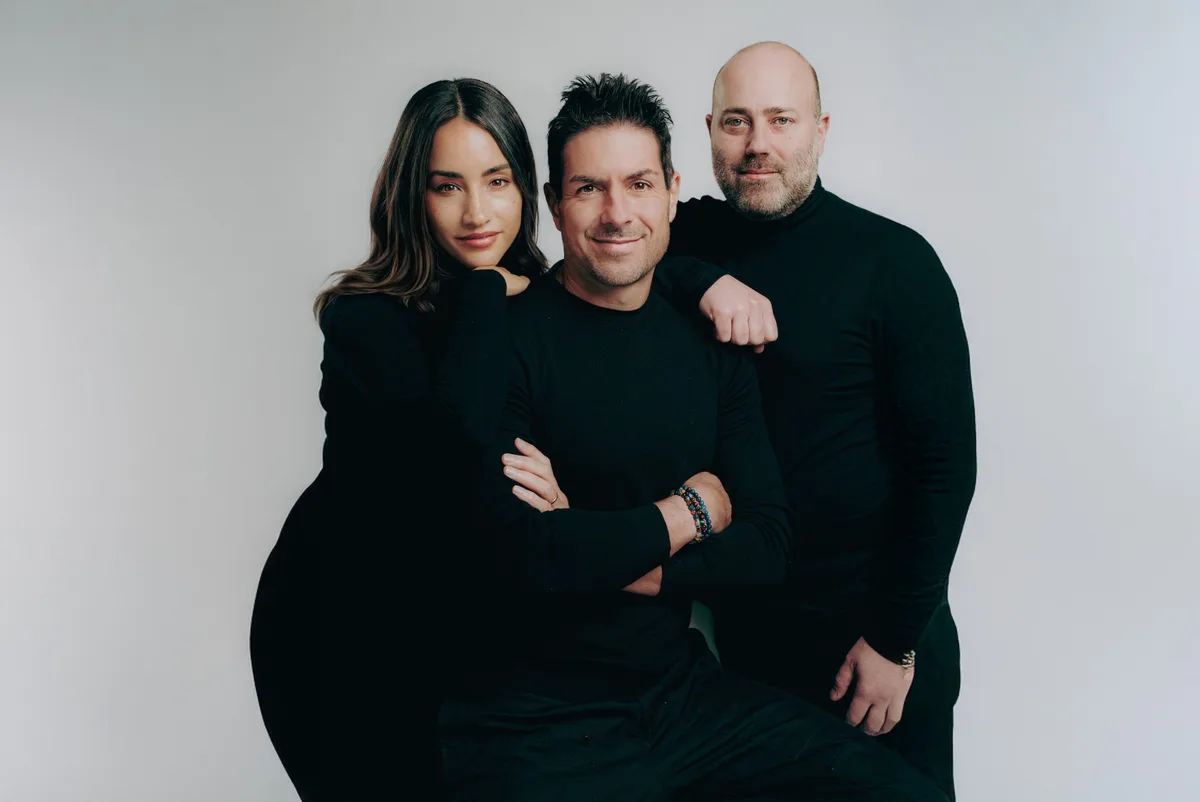
Eight Sleep, the startup behind the $2,999 mattress cover that puts both Elon Musk and Mark Zuckerberg to sleep, wants to stop being known for the celebrities who use it.
Instead, the company is pursuing FDA clearance to detect and treat sleep apnea, a pivot it hopes will turn a bougie tech gadget into a business that insurers, not just billionaires, will pay for.
Matteo Franceschetti, Eight Sleep’s cofounder and chief executive, told Fortune the company’s filing with the FDA is progressing “fairly smoothly.” The company began pursuing clearance with the FDA for its sleep apnea detection and mitigation technologies in 2025 and is conducting clinical studies in support of its submissions.
Currently, the company has only published one independent study on the Pod’s benefits, alongside several study preprints that were both directionally positive but not yet independently verified.
There are several studies, however, funded by Eight Sleep, on sleep apnea that have been published in scientific journals.
Eight Sleep also collects and has a massive cache of user data that, when aggregated and de-identified, can be used to identify broader trends and support research, reports, and studies on sleep and health.
FDA clearance for sleep apnea detection would likely put Eight Sleep in more rigorous regulatory lane as Apple’s Watch and Samsung’s Galaxy Watch and Ring, both cleared by the FDA since 2024 to flag sleep apnea “risk.” The FDA has a lower bar for the detection of apnea—snoring so bad that the sleeper stops breathing—than diagnosis .
Eight Sleep is pursuing the more clinical prescription-based diagnostic aid of which there are also existing home sleep-testing devices .
While the Apple Watch can tell users they have signs of apnea, Eight Sleep is hedging it will be able to quantify apnea events per hour.
In August 2026, Eight Sleep also began a clinical trial with Abu Dhabi’s Department of Health, testing whether its product, the Pod, can automatically reposition sleep apnea patients, and therefore become an alternative to a CPAP machine.
U.S. consumer health-tech firms are increasingly using the emirate’s Department of Health as a springboard for medical credibility.
Just weeks before Eight Sleep’s announcement, Oura signed its own joint research program with DoH on women’s health and cardiometabolic risk, while Whoop landed a $75 million investment and research partnership with Mubadala to validate its biomarker labs in what became its first market outside the US.
The goal, Franceschetti said, is to get insurers to treat the Pod like a medical device rather than an out-of-pocket luxury.
The company told Fortune it’s actively working on making the Pod more affordable, though it isn’t yet clear how it gets there without a different cost structure.
5News aggregated this summary from the outlet’s public feed. The full article, with all the context, is on fortune.com — the content belongs to Fortune.