The Iran war is minting new one-day millionaires: oil tankers brave enough to sail across the Strait of Hormuz
The 2026 economy has created a new throng of one-day millionaires, businesses raking in seven-figure sums in 24 hours or less.
That includes teams at AI frontier labs like Anthropic, who are seeing monthly revenue top $500 million from just a single client’s Claude spending, one consultancy reported.
That’s nearly $17 million per day.
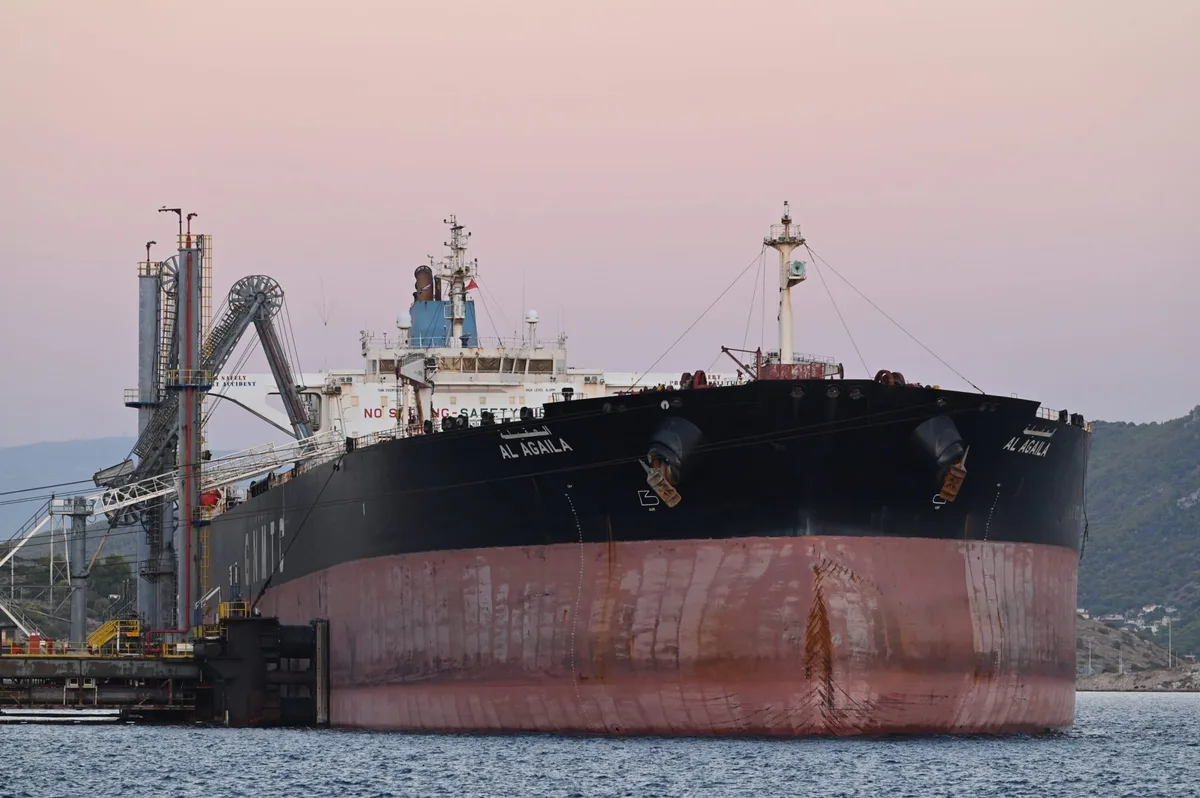
Outside of the AI boom, there’s a new stock of near-instant daily millionaires as a result of the Iran war: oil tankers willing to odyssey across the Strait of Hormuz.
The cost for a vessel to haul oil from the Persian Gulf to China, which requires crossing the key chokepoint, reached $1.035 million per day, according to data from the Baltic Exchange this week, the first time the price tag has exceeded seven figures.
By comparison, a similar large crude carrier transiting from the Persian Gulf cost about $208,000 per day , per the Platts VLCC index.
Commercial traffic through the Strait of Hormuz has continued to dwindle in the Iran war’s seventh month, but the need to export oil from the Gulf is still more urgent as constrained supply drives up costs above $100 per barrel once again.
Ioannis Papadimitriou, principal freight analyst at Vortexa, told Fortune the exorbitant shipping costs are a byproduct of both the dangers associated with crossing the chokepoint—and the increased necessity for the commodity those ships carry.
“It’s all about risk,” he said.
What’s driving up cargo shipping costs? As attacks in the region escalate, commercial ships have remained the target of strikes, including two tankers that were hit by projectiles in the Strait of Hormuz on Friday, according to a UK navy agency.
“One of the drivers is the geopolitical risk and the risk of the assets—which is the ship in this case—which is increasing because of the tit-for-tat attacks that we saw from the U.S. and the territory attacks from Iran on ships,” Papadimitriou said.
Beyond fewer freighters being interested in crossing the channel’s east side where there are the most disruptions, the danger associated with the passage means insurance premiums for vessels have also increased, amounting to about 10% of the assets aboard, according to Papadimitriou, up from 0.5% to 1% prior to the war.
Those premiums are then passed down for the charterers to pay.
This increased demand has also encouraged some market consolidation, limiting the number of players in the maritime shipping market and allowing the growing firms to hike up prices.
5News aggregated this summary from the outlet’s public feed. The full article, with all the context, is on fortune.com — the content belongs to Fortune.