Thrive’s Joshua Kushner chides Silicon Valley VCs over AI euphoria
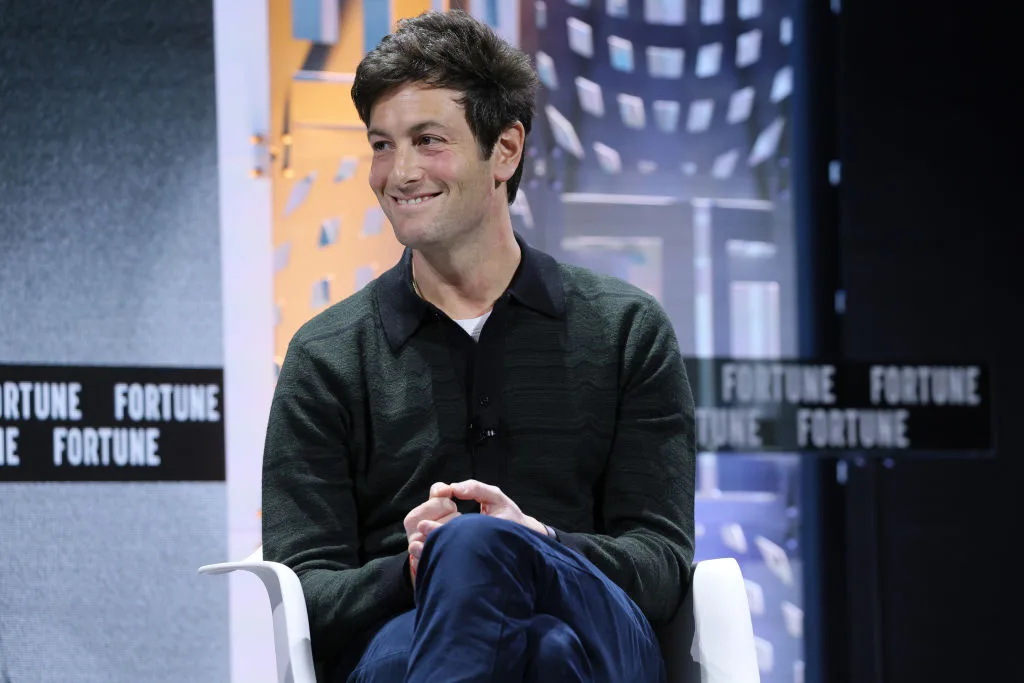
In Thrive Capital’s first-ever investor letter, founder Joshua Kushner has some unexpected things to say about his venture capital rivals on the West Coast.
“It is difficult to overstate the magnitude of the opportunity,” Kushner wrote about AI in the letter, leaked to Bloomberg . “It would also be a grave error in our minds to let excitement weaken our investment discipline. … Within Silicon Valley in particular, the industry can become fixated on hyperincremental technological turns rather than where the technology ultimately leads.”
While his secretive New York-based firm, just like those in Silicon Valley, is betting heavily on AI, Thrive is doing so differently, he argues. There’s no so-called spray-and-pray investing . Thrive tends to goes big on the companies it backs. Bloomberg estimates about 90% of its capital is poured into the top 15 investments in each fund.
That makes Thrive, he contends, a company of independent thinkers. “We are independent because markets move between fear and enthusiasm, and neither is a substitute for judgment.”
His comments are in direct contrast to one of the basic premises of Silicon Valley venture capital: that it is a business of “outliers” as espoused by Marc Andreessen .
In the “outlier” view, a VC firm makes a lot of bets prepared to lose money on many — even most — of them. The few big hits will be so lucrative that they will cover the losers and much, much more. That philosophy leaves VCs forever looking for the next OpenAI or another mega hit. It can also lead to, as we saw during the post-pandemic lean years , cutting ongoing support for startups not deemed to be on track to be the biggest winners.
In contrast, Kushner writes, “We believed an investment firm could be opportunistic across stage, sector, and geography, while remaining deeply concentrated in a small number of people and ideas.” The idea is to “build Thrive to concentrate our time, capital, and energy on the people and ideas we believe in most.”
He also dismisses Silicon Valley’s idea that VCs are in the business of disrupting incumbents.
“Unlike many of our peers, our conviction was not only that these industries would be disrupted from the outside in but also that many would be transformed from the inside out,” he wrote about AI’s impact.
Thrive has largely stuck to this thesis. Its deepening relationship with OpenAI is its biggest example. The VC firm is a major investor in the AI lab. But in December 2025, the roles switched when OpenAI took an ownership stake in Thrive Holdings, the VC firm’s spinout. Thrive Holdings buys companies and then works with OpenAI to give them an AI makeover. Part of the deal involved OpenAI dedicating employees to work with Thrive’s companies.
Thrive Holdings has bought more than 70 businesses and has a team of 35 engineers. Kushner says its accounting platform uses agents to produce tax returns 30% faster with 98% accuracy, and its IT services firm has agents independently solving half of its help desk tickets.
Still, Thrive’s strategy is working in part because it nabbed stakes in some of the industry’s best-performing startups ever.
5News aggregated this summary from the outlet’s public feed. The full article, with all the context, is on techcrunch.com — the content belongs to TechCrunch.