Inside the bitter war over cows and wilderness at Point Reyes
POINT REYES NATIONAL SEASHORE — For nearly 60 years, warring camps have battled one another for the soul of a wind-swept peninsula with breathtaking hills, rugged cliffs, granite outcroppings, oak forests and wide expanses of pasture land and beach.
Jutting off the coastline like an upside-down ice skate, the Point Reyes National Seashore is separated from the mainland by the San Andreas fault, which runs like a skate’s blade edge separating the Pacific and North American plates. The peninsula covers about 110 square miles — roughly five times the size of Manhattan.
Elephant seals and sea lions bark and breed on its sandy coves. Whales and sharks breach and hunt in the waters beyond the thick kelp forests that tickle its edges. And in its forests and on its grasslands, tule elk and mule deer graze, while bobcats and coyotes hunt for rabbits and mountain beavers.
But the peninsula 20 miles north of San Francisco also has been home to agriculture since the 1800s and is the site of one of the state’s fiercest land disputes — one that, contrary to the usual red-versus-blue scenario, pits Northern California liberals against other Northern California liberals.
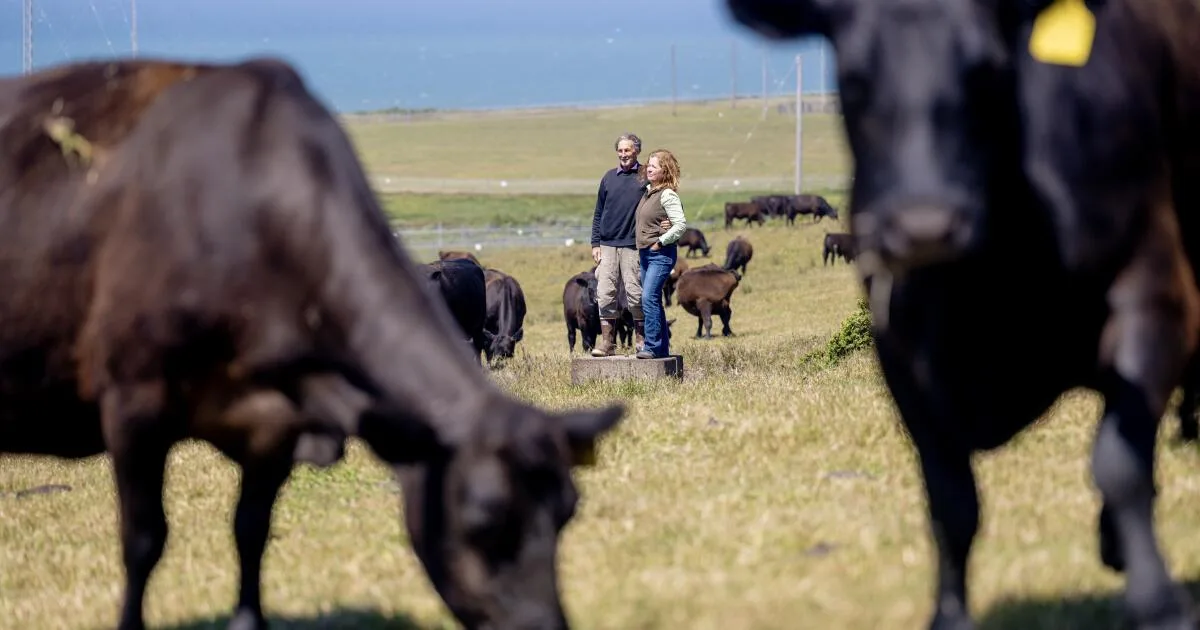
On one side: beef ranchers and dairy operators who advocate sustainable and organic food and land practices; they note the seashore was established, in part, to preserve their way of life.
On the other: environmentalists who say the taxpayer-funded park is no place for commercial farming, and that the seashore should protect its rare and diverse wildlife and welcome the visitors who bicycle, hike and camp on its beaches, oak forests and grasslands.
For seven weeks last year, it seemed the interminable battle over the seashore had finally come to an end.
In January 2025, a settlement was announced with the National Park Service laying out how the park would function going forward. Natural landscapes and wildlife would take priority over agriculture. Eleven of 13 historic ranching families would leave and be made whole for their losses.
While no one involved really loved the deal or got everything they wanted, many were satisfied, said Jeff Miller, senior conservation advocate for the Center for Biological Diversity, one of the environmental groups involved in the settlement. “The ranchers walked away with a few million dollars and the tule elk get to stay.”
Then this year, the two remaining ranch and dairy families sued. The goal: to upend the deal announced in the waning days of the Biden administration.
The Trump administration, with its pro-meat, pro-cattle agenda, is taking notice.
Since 1962, when the seashore was established, there have been grumblings. The ranchers said the park service saddled them with excessive rules and regulations. The environmentalists said the ranchers brought in invasive plants with their feed, and that cattle fouled the soil and waterways.
But nearly everyone agrees that it was in 2012 when things really began to boil over. That year, the park service moved to shut down a local oyster farm, whose lease was expiring.
5News aggregated this summary from the outlet’s public feed. The full article, with all the context, is on www.latimes.com — the content belongs to Los Angeles Times.