The Backlash Against Polyester Has Gone Too Far
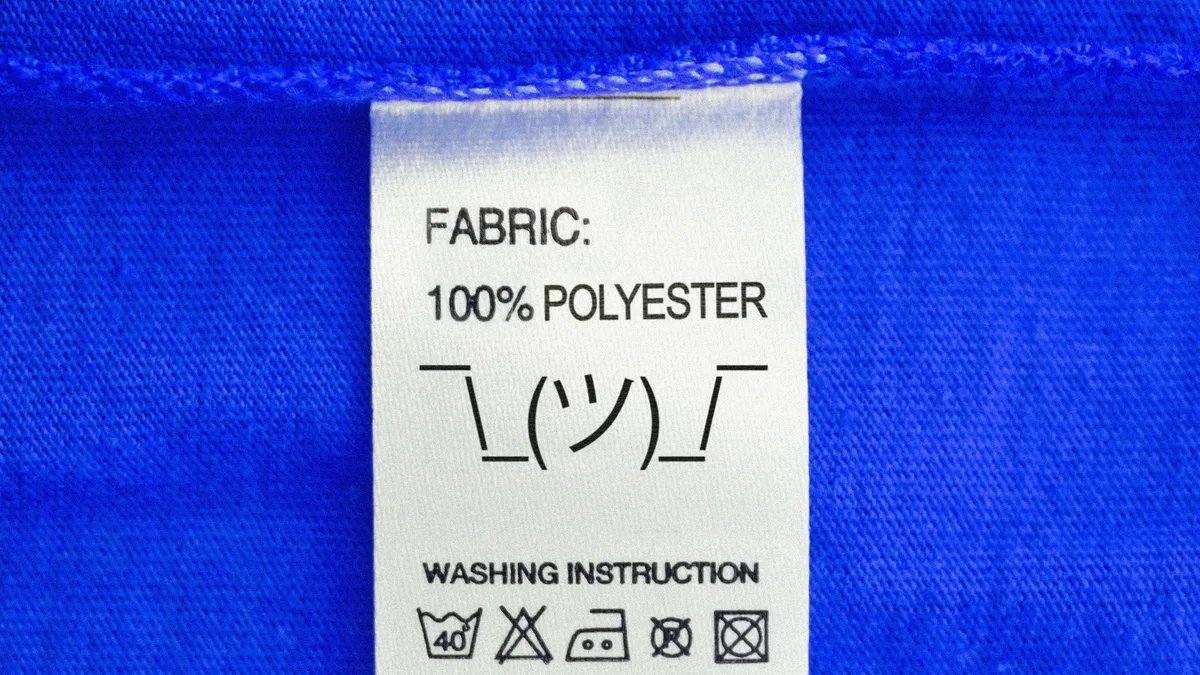
Lately, the men of the internet who are obsessed with self-optimization have found a new fixation: their underwear.
Many standard pairs use polyester or spandex, or sometimes both.
What are they doing to the environment and their bodies, wearing clothes that shed all of those microplastics and leach forever chemicals? They want the underwear of their ancestors—underwear made from natural fibers.
On Reddit forums such as r/PlasticFreeLiving and r/SustainableFashion, people trade strategies for breaking up with polyester boxer briefs: “Any recs or leads to find linen cloth for making my own underwear?” one exasperated user wondered.
Another wanted recommendations for all-natural underwear that would also be formfitting.
He knew about organic cotton and hemp, he explained, but the problem was, they chafed.
Seemingly everyone is interested in natural fibers.
Whitney Crutchfield, who teaches textile development at the Fashion Institute of Technology, told me that she first noticed natural-fiber mania brewing among her sustainability-minded students.
Then, a year or two ago, she sensed the discourse shifting to regular consumers.
Across the internet, people are purging their closets of synthetics, swearing allegiance to only natural fibers from now on.
The enthusiasm seems to cut across gender, culture, and politics.
“I need my workout clothes to show my nasty sweat!” the fashion journalist Liana Satenstein wrote last year, praising the emergence of a new generation of natural-fiber workout wear amid posts about French pedicures and vintage Prada thongs.
“Make all clothes natural fibers again,” posted Carnivore Aurelius, an anonymous wellness influencer who sells “beef collagen peptides.” Natural fibers are indeed pretty great.
Silk, wool, hemp, linen, cotton, and the like—all of which come directly from either plants or animals—don’t carry the baggage of their artificial competitors.
5News aggregated this summary from the outlet’s public feed. The full article, with all the context, is on www.theatlantic.com — the content belongs to The Atlantic.