How Experts Are Reimagining Early Childhood for a Changing World
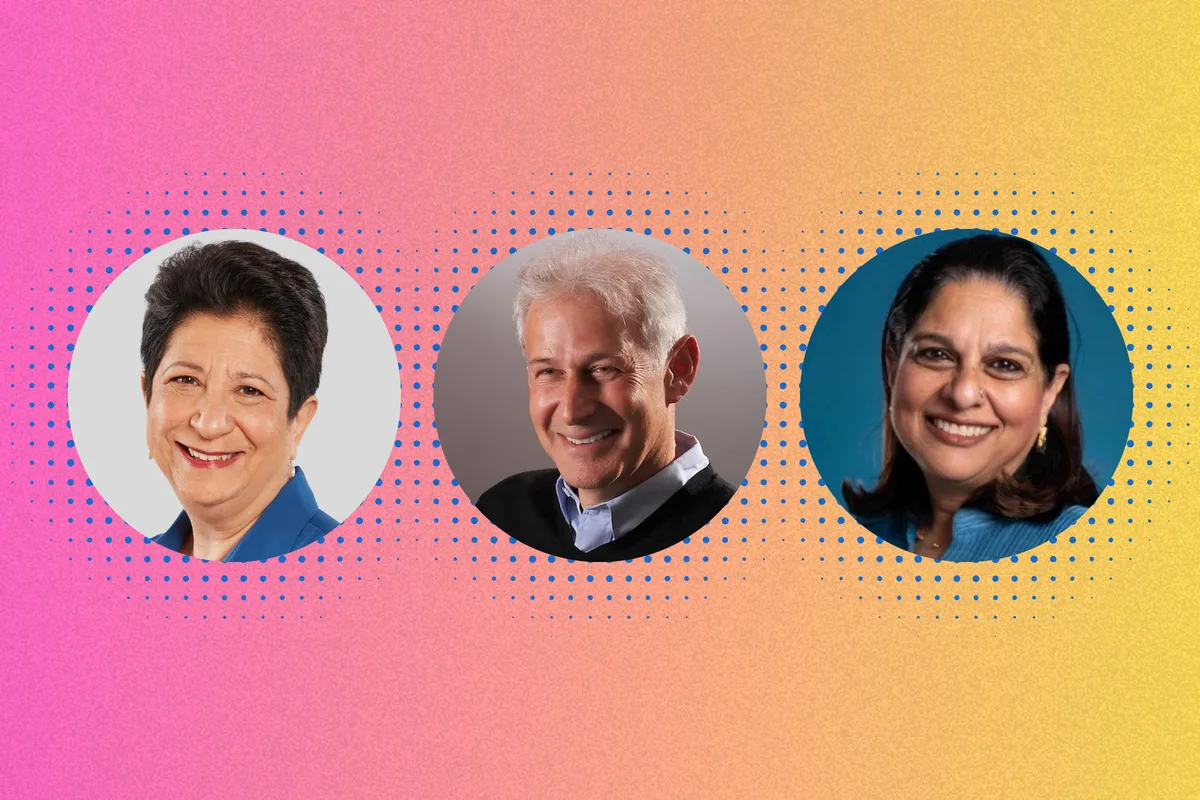
Most experts working in early childhood development agree: the first years of a child’s life shape not just their academic readiness, but also a child’s lifelong health, resilience, emotional well-being and brain development.
But Jack Shonkoff, a professor of child health and development at Harvard University, believes that researchers and policymakers need to expand those conversations in order to address disparities in early childhood .
“My plea is: Let's move beyond quickly on the fact that children are our future, and say what we are going to do about that,” said Shonkoff, who is also the director of Harvard’s FirstPlace Partners, an initiative that works with neighborhood leaders and other organizations to apply developmental science and improve outcomes for children, families, and communities.
“We need new ideas, we need to be bold.” Shonkoff spoke at a TIME100 Talks panel moderated by TIME executive editor Nikhil Kumar in New York City on Wednesday.
The panel, which centered on reimagining early childhood in a changing world, also included Pia Rebello Britto, global director of education at UNICEF , and Rosemarie Truglio, senior vice president of global education at Sesame Workshop .
Britto said that UNICEF is trying to create “practical steps” to better the lives of children around the world and prevent perpetuating unequal circumstances.
These steps include investing in children’s abilities to “eat, play, and love.” “Eat: We are working to ensure adequate, right, appropriate nutrition.
Play: Because it's all about that interaction with children, the stimulation that sparks the brain connections,” Britto said.
And love, she continued, is “the foundation of it all.” “That human trust, the protection,” she said.
“We talk about children in humanitarian contexts.
We talk about children being affected by war and by climate change.
How do you nurture that love?” Sesame Workshop , the global nonprofit educational organization behind the beloved childhood show Sesame Street, works especially in that “play” step, Truglio said, emphasizing the importance of opportunities for children to learn cognitive processing skills, self-regulation, and social empathy.
“Our mission is to help kids grow smarter, stronger, and kinder,” she said.
She highlighted how important the last goal on that list is for building a better future full of kinder adults, adding: “Boy, do we need more perspective-taking and collaboration and truly listening and seeing the people in our lives and treating them with compassion and respect.” Sesame Workshop attempts to teach children those lessons through media and with “joy and fun and happiness,” she said.
5News aggregated this summary from the outlet’s public feed. The full article, with all the context, is on time.com — the content belongs to TIME.