In Europe, Today's Children Will Live Through Nearly Twice as Many Fire Weather Days Than Their Grandparents
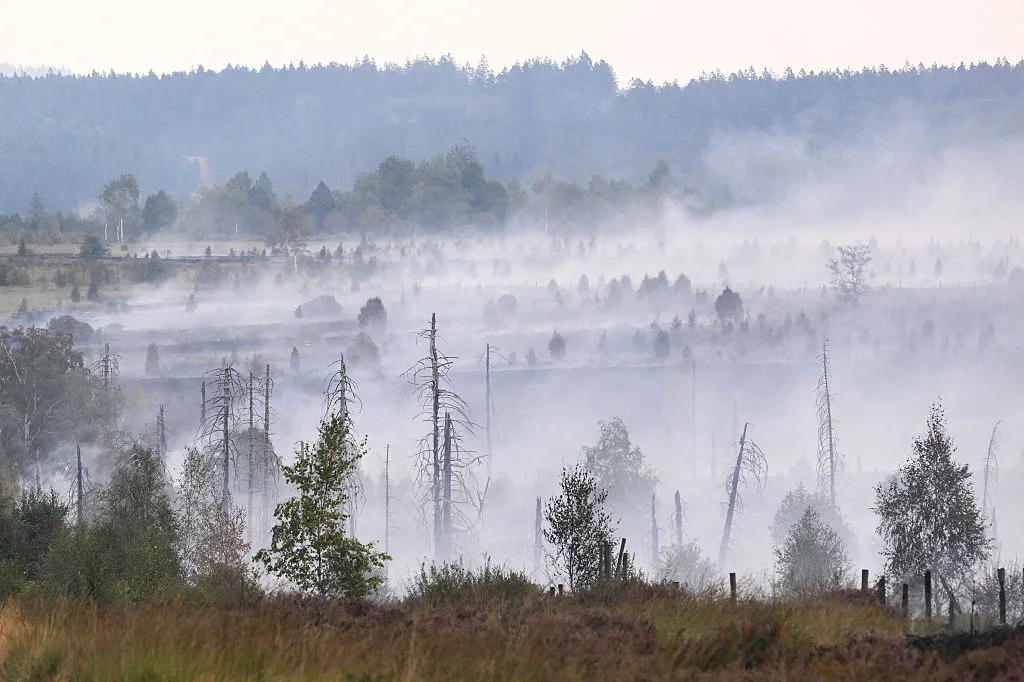
Smoke emanating from burnt soil and vegetation during a wildfire at the Hautes Fagnes (High Fens) nature reserve near Baelen, south east of Brussels, on Aug.
17, 2026. —John Thys—Getty Images Children born in Europe now will live through almost twice as much extreme fire weather as their grandparents (an 84% increase), according to a new study published today in the journal Environmental Research Letters.
A child born in Europe in 2025 will live through more than three additional years of extreme fire weather compared with someone born in 1950, the researchers found.
The largest increases are projected in the Mediterranean—a region already hard hit by wildfires.
There, people born in 2025 are projected to face up to 2.5 times the exposure to extreme fire weather than those born in 1950—the equivalent of over five additional years of extreme fire weather over their lifetime.
That’s for a scenario where global warming increases by 2.6°C above pre-industrial temperatures by 2100, as is currently predicted under current global climate and energy policies.
To map out potential outcomes, researchers used climate model projections for fire weather known as the Fire Weather Index.
Fire weather refers to the hot, dry, and windy conditions that make fires more likely to ignite, spread faster, and become harder to suppress—conditions that are becoming more common due to climate change.
They define extreme fire weather as days when the fire weather index exceeds the top 5% of days for that country over 1985-2014.
“It doesn't mean that there [will be] a wildfire on all of those days, but it does mean that the risk is much higher,” says Rosa Pietroiusti, lead author of the study and PhD researcher at Vrije Universiteit Brussel.
Portugal, the European country that has seen the highest proportion of its area burned in recent decades, can expect to see extreme fire weather days more than double under current climate policies, from 14 days per year from 1950 to 1970, to 32 days per year by 2100.
Each additional degree of global warming by the end of the century adds around 272 days of extreme fire weather to the life of a Portuguese child born in 2025.
A child born in Greece can expect to see 473 additional days of exposure to extreme fire weather during their lifetime, while children in Spain and Italy will see 448 days.
Exposure to wildfire smoke comes with a number of immediate health impacts, including stinging eyes, wheezing, coughing, and shortness of breath.
5News aggregated this summary from the outlet’s public feed. The full article, with all the context, is on time.com — the content belongs to TIME.