Is this the next big thing in music? Spotify is turning online fandom into real-life community
The first time I heard Phoebe Bridgers’ new album, Lost Weekend , I was sitting beside my sister beneath a sky full of stars, surrounded by roughly 400 of Bridgers’ biggest fans.
It was Aug.
13, one night before the album’s release, and Spotify had invited us to hear it inside the planetarium at the Liberty Science Center in Jersey City.
Before we could hear the first baseline, however, everyone had to lock their phones inside magnetic Yondr pouches.
Once we entered the planetarium, there would be no photos, videos, or notifications competing for our attention.
Credit: Spotify/Matt Grubb With our phones out of reach, the lights dimmed and the album began.
Footage of night skies and landscapes moved across the dome in time with the music: stars over Madagascar, the northern lights above Icelandic glaciers, and storms rolling across Texas.
Created by photographer and National Geographic night-sky explorer Babak Tafreshi, the audiovisual show used footage captured across nearly 20 countries without computer-generated imagery.
The phone-free rule meant that everyone experienced the next hour together, from the first song to the last.
Nobody could skip ahead, check what other fans were saying online, or pull out our Notes app when a favorite lyric hit.
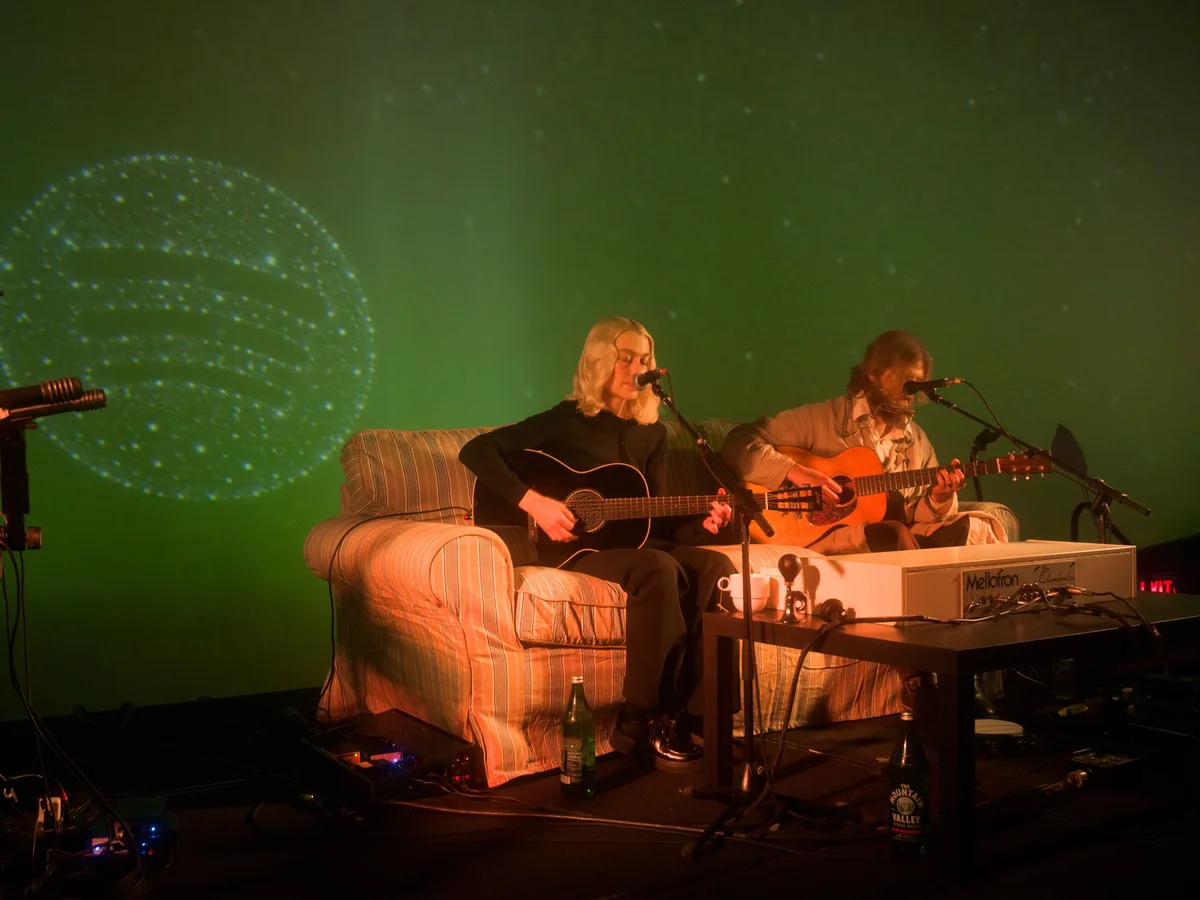
After the final song ended and the crowd wiped tears from their eyes in unison, Bridgers herself walked out for a surprise acoustic performance with longtime collaborators Christian Lee Hutson and Nick White.
She played two songs from the new album, along with "Scott Street." (Yes, my sister and I both cried).
For those three songs, with no phones in the air and hundreds of fans completely locked in, the rest of the world could wait.
Credit: Spotify/Matt Grubb The night was an unusually immersive album rollout, yes, but it reflected a broader shift in how music platforms and artists think about fandom .
5News aggregated this summary from the outlet’s public feed. The full article, with all the context, is on mashable.com — the content belongs to Mashable.