Viture Pro 2 Review: A Dark Horse in the Entry-Level AR Glasses Race
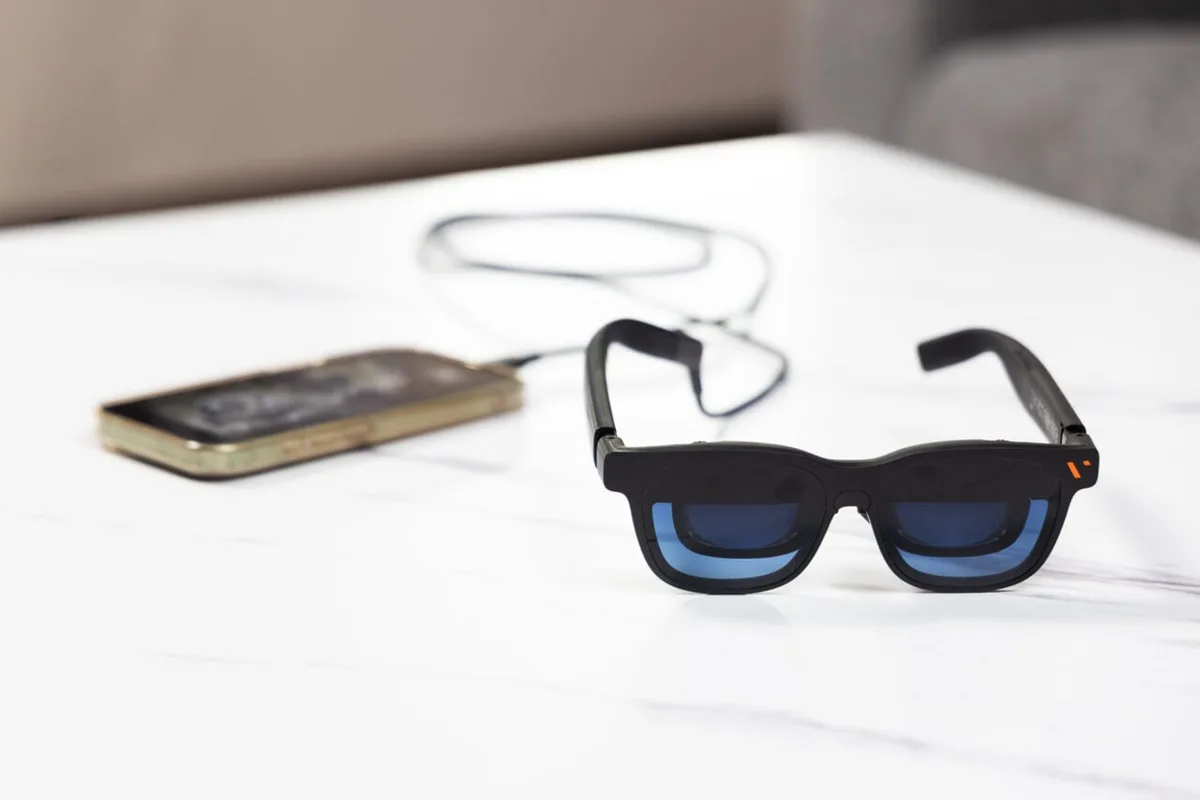
AR glasses are on fire right now. Not in the VR kind of way where the whole house is burning down, but in the “wow, there are a lot of great options to choose from” kind of way. Hot on the heels of the X by Xreal (XBX) a01+ AR glasses , Viture has released its own pair at the same price point with a similar feature set.
The $299 Viture Pro 2 are the newest pair of video glasses to join the entry-level AR race, and while they already have some tough competition, they’re making a case as one of the strongest value pairs out there.
The Viture Pro 2 are excellent entry level AR glasses with lots of features and a bright, sharp, micro OLED screen.
In the context of previous Viture AR glasses, the Viture Pro 2 are a massive upgrade. Compared to the first Pro pair, they’re sharper, brighter, lighter, and (to hammer all of that home), way cheaper. They MSRP at $299 compared to $449.
The question isn’t necessarily how they stack up to old Viture glasses; it’s how they stack up next to the competition, and in my experience using them, the answer to that question is “surprisingly well.” The first thing you notice when you put on the Viture Pro 2 is the sharpness. According to Viture, the Pro 2 are sharper than the previous generation thanks to a few things, including a micro OLED display and what Viture calls UltraClarity 3.0, which is meant to reduce blurry corners and visual artifacts like color fringing.
While I’ve not tested the first generation of Viture Pro AR glasses, I can say from experience that the Pro 2 feel sharper than budget competitors like the a01+ from X by Xreal and even the RayNeo Air 4 Pro . The display is 1080p, and it looks plenty bright with a peak of 1,600 nits—that brightness is the same as the a01+ but slightly brighter than the RayNeo Air 4 Pro, which maxes out at 1,200 nits. On top of all that, the Viture Pro 2 also has a 120Hz refresh rate, which makes it quite smooth and quick enough for gaming.
To put the Viture Pro 2’s display to the test, I threw a whole spectrum of content at the glasses. For watching movies, I watched portions of movies like Jurassic Park and The Dark Knight on Hulu, and the quality was solid—there was enough brightness, and the resolution was high enough to feel immersed. Overall, watching movies felt about the same as Xreal and RayNeo’s comparably priced options, though a bit sharper. There was no blurring on the edges of the screen that I noticed, and no distracting visual artifacts.
If there’s one difference between the Viture Pro 2 and the other two pairs, it’s the lack of HDR10, which does make the dynamic color range maybe slightly less robust, but I can’t say that it was enough to make me feel like I was truly lacking.
The screen size is listed as 146 inches virtually, and that seems about right even if the “virtual” size measurements on glasses are mostly marketing fluff. If I put a phone four inches from my face, is it the equivalent of watching on a 100-inch screen? I think most people would say “not really.” Either way, RayNeo’s Air 4 Pro still have the biggest virtual screen size at 201 inches, and that does translate in practice.
5News aggregated this summary from the outlet’s public feed. The full article, with all the context, is on gizmodo.com — the content belongs to Gizmodo.