Don’t overlook Elektron’s budget electronic music instruments
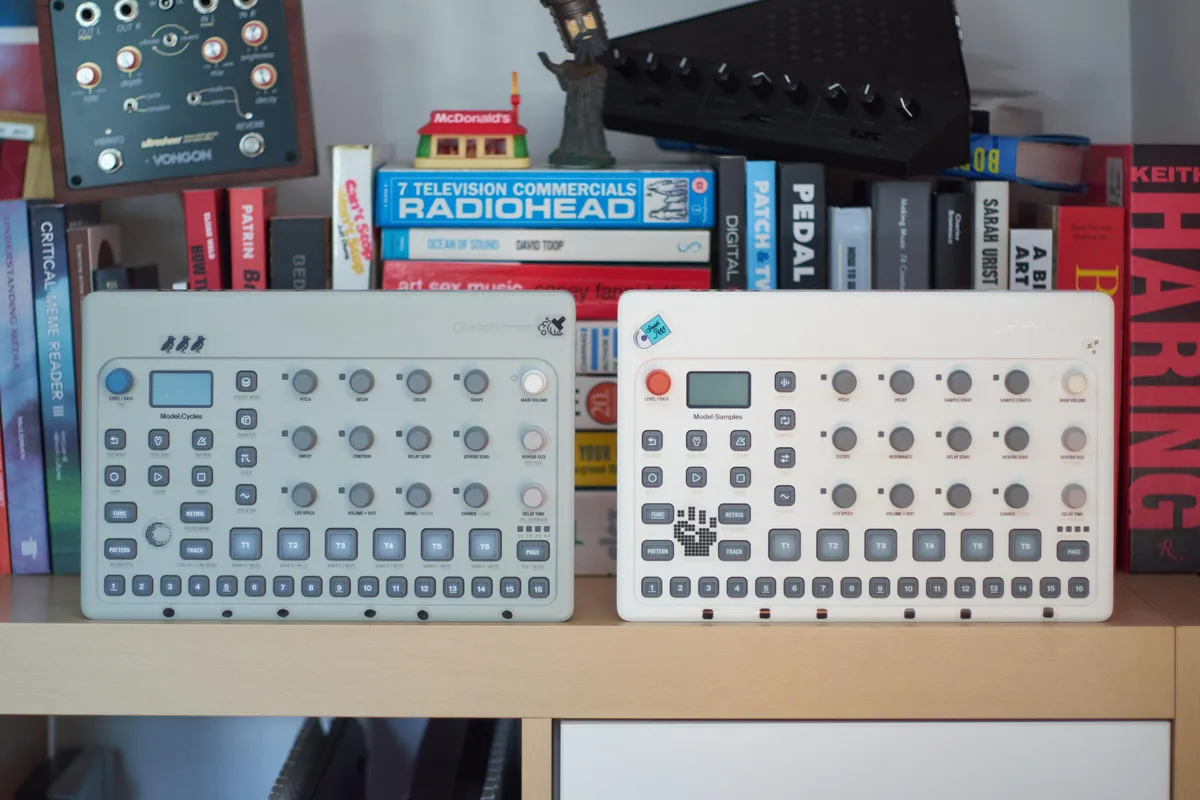
I keep coming back to the criminally slept-on Model:Samples and Model:Cycles.
When I’m asked what to buy if you want to get into making electronic music, I often recommend Elektron’s budget-minded Model:Samples and Model:Cycles grooveboxes. They don’t grab headlines the way Teenage Engineering’s gear or the Telepathic Instruments Orchid do, and even compared to the company’s higher-end and more niche musical offerings like the Digitakt , Octatrack , or Tonverk , they’re often overlooked. But as my collection has grown to include fancier and far more expensive instruments, I still find myself coming back to the Model series.
Those looking to get their first groovebox are often drawn to more familiar brand names like Korg or Roland. And lots of people on Reddit will be quick to recommend the Novation Circuit Tracks (which I personally find confusing and mediocre-sounding). This is probably also partially due to the reputation Elektron gear has for being obtuse. If you’re an established music maker and aren’t deterred by a complicated workflow, you’re probably going to pick up a more powerful Elektron box, like the Digitone or Syntakt. That leaves the Models lineup in a weird no man’s land, and that’s a shame.
The primary difference between the two Models instruments is that the Model:Cycles uses FM synthesis and the Model:Samples , appropriately enough, plays samples. (It is not technically a sampler, however, since it can’t record samples, and instead they have to be loaded over USB.)
The Model:Cycles is built around a streamlined version of the engine found in the Digitone, one of my favorite-sounding synths of all time. This is a modern take on FM that can do the cold bells and icy pads you associate with iconic instruments like the DX7 (the iconic sound of the ’80s). But it also does modern glassy keys and aggressive turn-of-the-millennium EDM bass.
The two are more alike than not, though. They’re both six-track grooveboxes with six velocity-sensitive pads and plenty of knobs for hands-on controls, and they look almost identical. But most importantly, they feature Elektron’s legendary step sequencer without being nearly as intimidating as the company’s more expensive and notoriously complicated offerings.
The sequencer is built around what the company calls “trigs” and “locks.” Trigs are basically just events, typically triggering a note, and locks are just step-specific settings. It seems like a simple enough concept, but it makes these instruments far more capable than they might seem at first blush.
Six tracks isn’t a lot to work with. Once you’ve loaded up a kick, snare, and hi-hat, then you’ve only got three more tracks for bass, any melodic elements, and additional percussion. But sound locks allow you to change samples or presets on a per-step basis. That means, so long as they never play simultaneously, you can have your kick and snare share the same track, then you can put your hi-hats and other percussion on a second track, and leave the four other tracks for everything else.
5News aggregated this summary from the outlet’s public feed. The full article, with all the context, is on www.theverge.com — the content belongs to The Verge.