How the Supreme Court could use Trump’s ballroom to gut environmental law
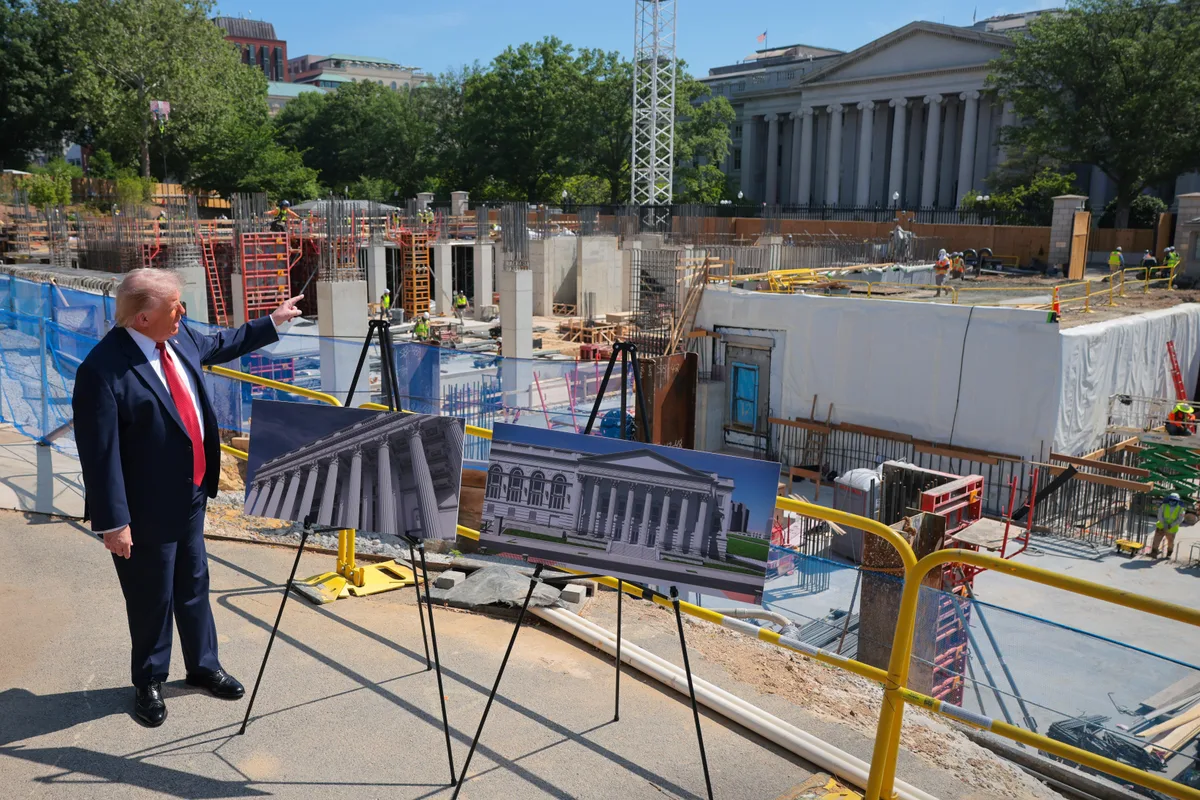
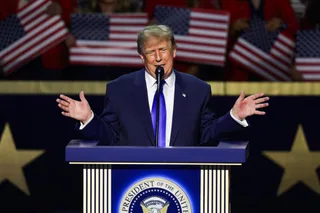
US President Donald Trump speaks to the media alongside posters of his proposed White House ballroom. | Chip Somodevilla/Getty Images The question of whether President Donald Trump may, without seeking permission from Congress, demolish much of the White House and replace it with his own projects is now before the Supreme Court.
Last fall, construction crews acting under Trump’s orders abruptly tore down the East Wing of the White House , the first step in Trump’s plan to replace the historic building with an enormous ballroom.
A conservationist organization, the National Trust for Historic Preservation, soon sued to stop the construction on the ballroom in a case that is still ongoing.
Lower courts have thus far agreed with this plaintiff that the ballroom is illegal.
Last week, Trump formally asked the justices to greenlight his ballroom while the challenge works its way through lower courts.
The case is known as National Park Service v.
National Trust for Historic Preservation .
Trump’s claim that he may tear down large sections of the White House and replace them with the ballroom is not supported by law.
A federal statute provides that “a building or structure shall not be erected on any reservation, park, or public grounds of the Federal Government in the District of Columbia without express authority of Congress.” Although Trump’s lawyers claimed that two separate statutes allow him to get around this provision, the federal appeals court that heard National Park Service thoroughly dismantled that claim in a 101-page opinion .
That said, the Court could potentially hand Trump a victory by prohibiting anyone from bringing a lawsuit against his ballroom to begin with.
Should this argument succeed, it could have major ramifications for a wide range of laws that seek to conserve environmental resources or preserve sacred or historical sites.
Under current law, a plaintiff who alleges that a defendant’s actions will illegally damage such a site may file a federal lawsuit so long as they can demonstrate that they plan to visit the site in the near future and will find the site less attractive if it is altered.
This is exactly what happened in National Park Service : A member of a conservationist group — the National Trust for Historic Preservation — who often went by the White House said the new construction would diminish the beauty of the site.
More broadly, the Court has long held that plaintiffs who wish to observe something beautiful may often sue to enforce environmental statutes that seek to preserve that beauty.
5News aggregated this summary from the outlet’s public feed. The full article, with all the context, is on www.vox.com — the content belongs to Vox.