How the World Learned to Embrace Tupac Shakur
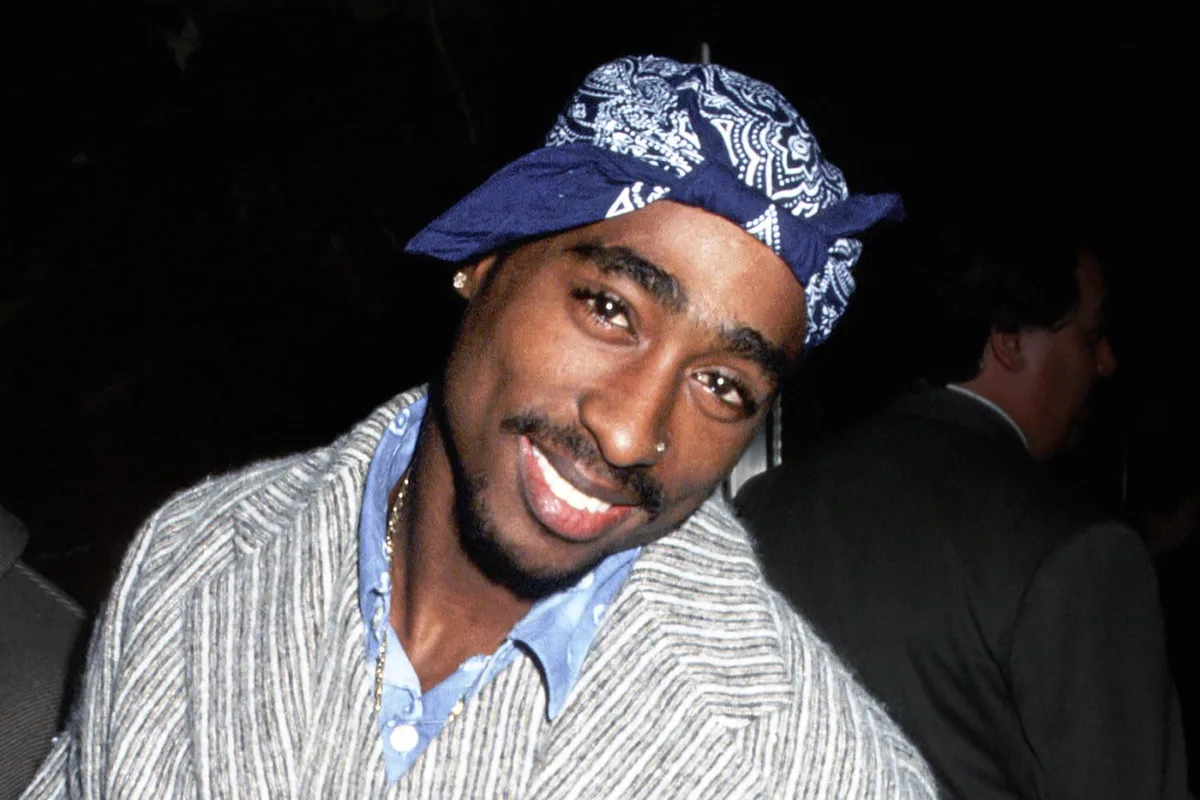
When Tupac Shakur was shot by assailants on the night of Sept. 7, 1996, in Las Vegas while riding alongside Death Row CEO Marion “Suge” Knight, resulting in his death six days later, the collective response from media outlets vacillated between paternalistic concern and outright mockery. “What goes ‘round …” blared a Time magazine article. “Blood on the Record Biz,” read a similar headline in Newsweek . People magazine called it “Living Dangerously.” Perhaps most unkindly, conservative outlet The American Spectator summarized Shakur as a “Bozo in the Hood.” As pundits moralized, photos of a mural in New York painted by Andre P. Charles and titled “Live by the Gun, Die by the Gun” flickered across the media for months.
It’s been three decades since Shakur’s death at the tragically young age of 25. Yet despite having been dead longer than his short, turbulent life, he remains a magnetic presence in absentia. That much became clear when the just-concluded trial and conviction of Duane “Keffe D” Davis for orchestrating Shakur’s murder reignited international discussion of his legacy. Today, he’s a universally acknowledged rap icon and, since 2017, a Rock & Roll Hall of Fame inductee. Accordingly, the tone of the coverage this time around felt far less dismissive than decades ago. When photos of his dead body were displayed during the trial (which was livestreamed), it was hard not to recall the Nineties conspiracy theory that Shakur was “still alive” and secretly thriving triumphantly somewhere like Cuba, only to confront the unavoidable sight of another broken Black body cut down by violence. “ Tupac Shakur Was at His Cultural Peak When He Was Killed,” read an August 2026 headline in The New York Times . The Guardian , for its part, blamed the long wait for justice on “U.S. policing forces,” viewing the trial through a decidedly political lens.
It all suggests an evolving appreciation of Shakur as a human being with strengths and flaws, not an ornery “rebel for the hell of it” (to quote the title of a disparaging 1997 biography by conservative gadfly Armond White) nor the gangsta-rap martyr hung on a cross on the cover of his first posthumous album, 1996’s Don Killuminati: The 7 Day Theory, released under the name Makaveli. Even Time magazine concluded as much during the 20th anniversary of his death in 2016, concluding that Shakur was a “symbol of possibility.” Editor’s picks The 250 Greatest Albums of the 21st Century So Far The 100 Best TV Episodes of All Time The 500 Greatest Albums of All Time 100 Best Movies of the 21st Century
Back in 1996, P. Frank Williams watched Shakur’s mother, former Black Panther activist and political prisoner Afeni Shakur, as well as his family and friends, hold vigil at a Las Vegas hospital. Williams later wrote about the scene for the Los Angeles Times and penned The Source’ s November 1996 cover story about Tupac Shakur’s life.
5News aggregated this summary from the outlet’s public feed. The full article, with all the context, is on www.rollingstone.com — the content belongs to Rolling Stone.