The Gulf’s AI boom is driving the race to control the data highways
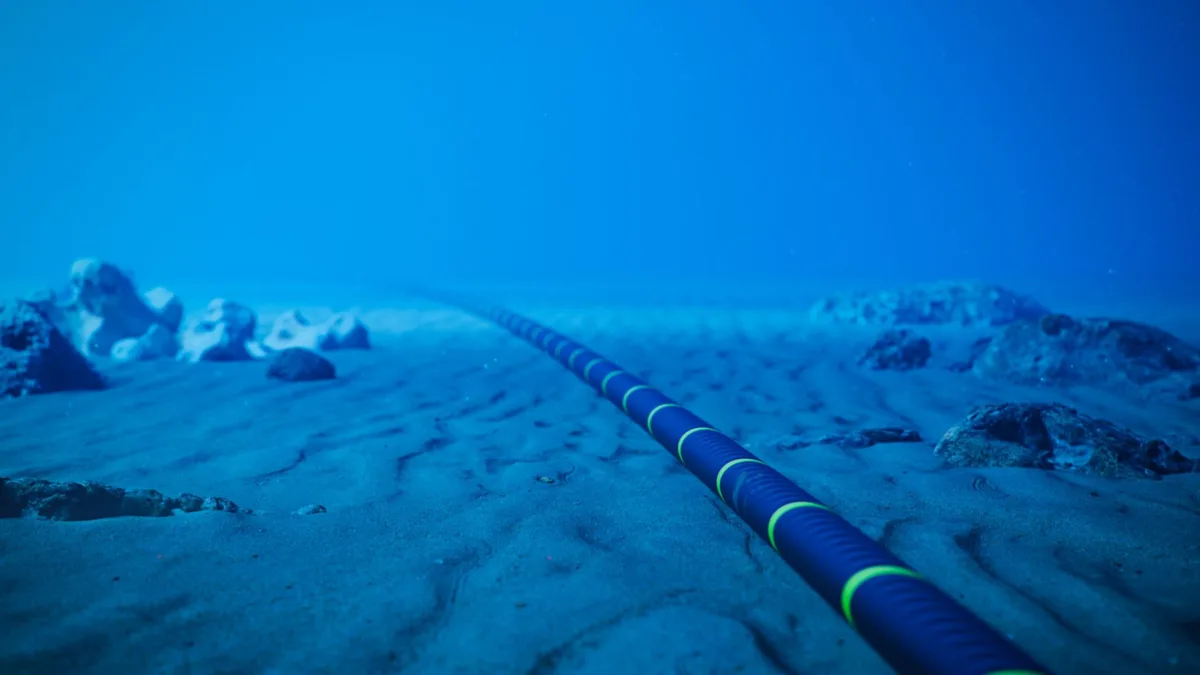
As tech behemoths Meta and Google delay subsea cable projects through the Red Sea amid rising security risks, many of the Gulf’s tech players are ramping up investment in the data highways needed to support the region’s rapidly expanding AI and cloud ambitions.
While geopolitical tensions are making traditional Europe—Asia routes through the Red Sea increasingly difficult to build and maintain, countries including Saudi Arabia, the UAE and Qatar are pouring billions into alternative subsea and terrestrial fiber routes in a bid to ensure that their ambitious plans to become AI powerhouses are not derailed.
Playing a key role in that push is Qatar’s Ooredoo Group, which has been steadily transforming itself from a traditional telco into a digital infrastructure provider over the last three years.
Its Fibre in the Gulf (FIG) subsea cable system, scheduled for completion in late 2027, will be the largest ever built in the GCC .
The system, in which Ooredoo is investing over $500 million, will span almost 2,000 kilometres and deliver planned capacity of up to 720 terabits per second—enough to move millions of gigabits of data every single second.
But FIG’s significance is not simply its scale.
“FIG will be the first cable connecting Asia to Europe, but completely circumventing both the Suez Canal and the Bab-el-Mandeb strait and running from Oman through Iraq and Turkey into Europe,” Aziz Aluthman Fakhroo, CEO of Ooredoo Group told Fortune.
“When we launched this project 18 months ago, the Iran conflict we’re facing today wasn’t on the horizon.
But even then, we were already seeing very strong demand for FIG.
I think that the current events have reinforced that proposition.” Houthi attacks have effectively halted subsea cable construction in the Red Sea since 2024, including from tech heavyweights Google and Meta.
Dubbed “the information highway”, the Middle East is a crucial conduit of data connectivity.
However, the flow of data is highly concentrated; over 90% of Europe–Asia data and telecommunications traffic flows through Egypt and the subsea cable corridors converging at the Red Sea and Suez Canal region, research by the Center for Strategic and International Studies (CSIS) shows.
“Creating these alternative routes in terms of connectivity is extremely important given that the vast majority of data flows through the Suez Canal,” said Fakhroo.
“There hasn’t been any new capacity built in the last five to seven years due to a number of reasons, including geopolitical events.
5News aggregated this summary from the outlet’s public feed. The full article, with all the context, is on fortune.com — the content belongs to Fortune.