They planned their futures around America. Now they're putting down roots elsewhere.
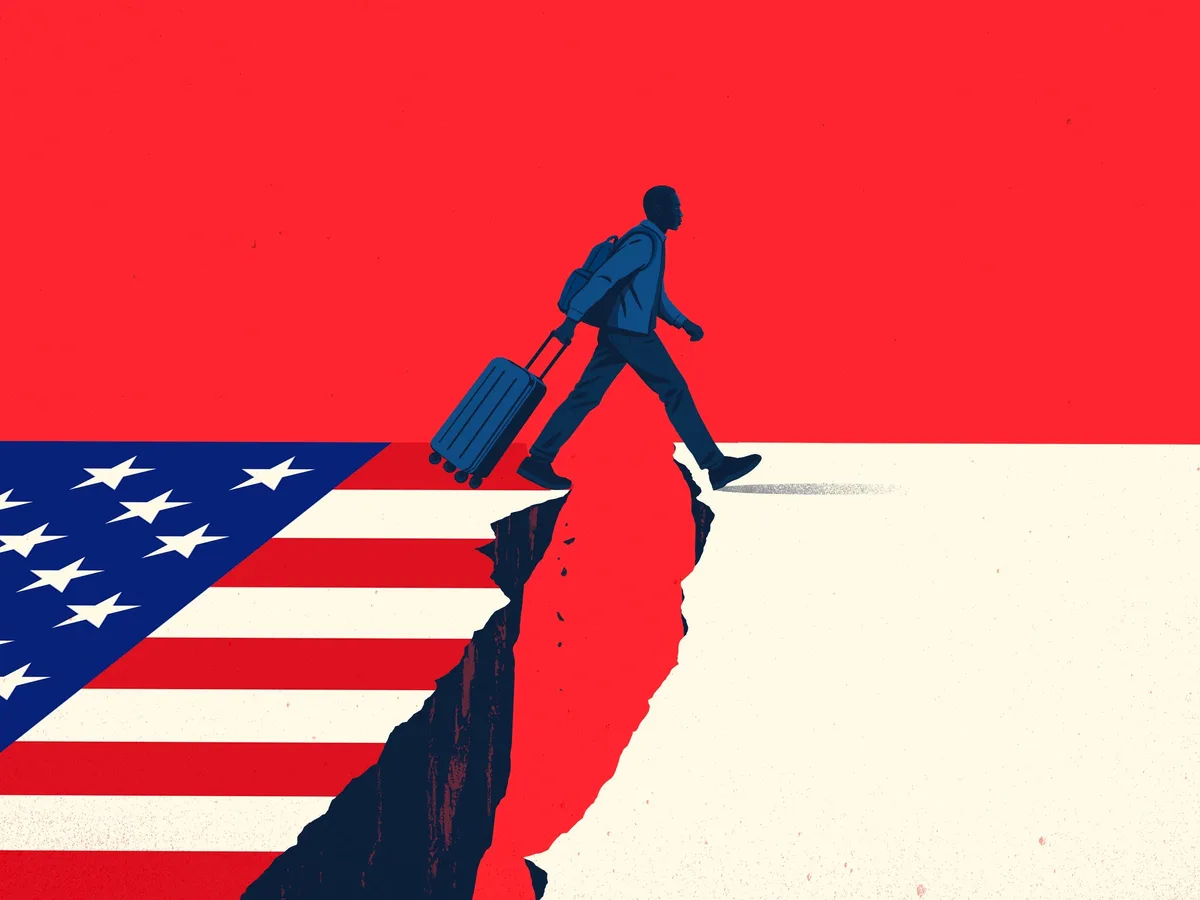
Rob Dobi for BI Ananya Joshi loved her life in Chicago.
After moving from India for a master's degree in biotechnology at Northwestern University, she landed a $75,000-a-year job as a scientist at a lab-grown meat startup in 2024.
She was doing research, living in an affordable apartment in a suburb, and road-tripping with friends on weekends.
But her life in the US had an expiration date.
Joshi's company said it couldn't sponsor her for an H-1B visa .
Her Optional Practical Training, or OPT — a work authorization for foreign students — was set to expire in July 2025.
She had two choices: She could take a job in Germany and leave behind her partner and life in the US, or race to find a new sponsor.
She took the offer and moved in January.
"Having gone through so much turbulence, I really needed the stability to calm down," Joshi, 26, told Business Insider.
Ananya Joshi, a scientist, moved from the US to Germany after her H-1B plans fell through.
Natalia Kepesz for BI Her decision reflects a broader uncertainty that international graduates and foreign workers are facing as they try to build careers in the US while navigating increasingly complex and turbulent immigration policies.
The US has long been a magnet for highly skilled workers from around the world, and the H-1B visa has been a gateway to better career opportunities since its introduction in the Immigration Act of 1990.
There are about 700,000 people living and working in the US on H-1B visas, according to an analysis by the National Foundation for American Policy.
Securing one of these visas has never been easy.
5News aggregated this summary from the outlet’s public feed. The full article, with all the context, is on www.businessinsider.com — the content belongs to Business Insider.