From killbots to cuddly little guys: Why AI companies suddenly have cute mascots
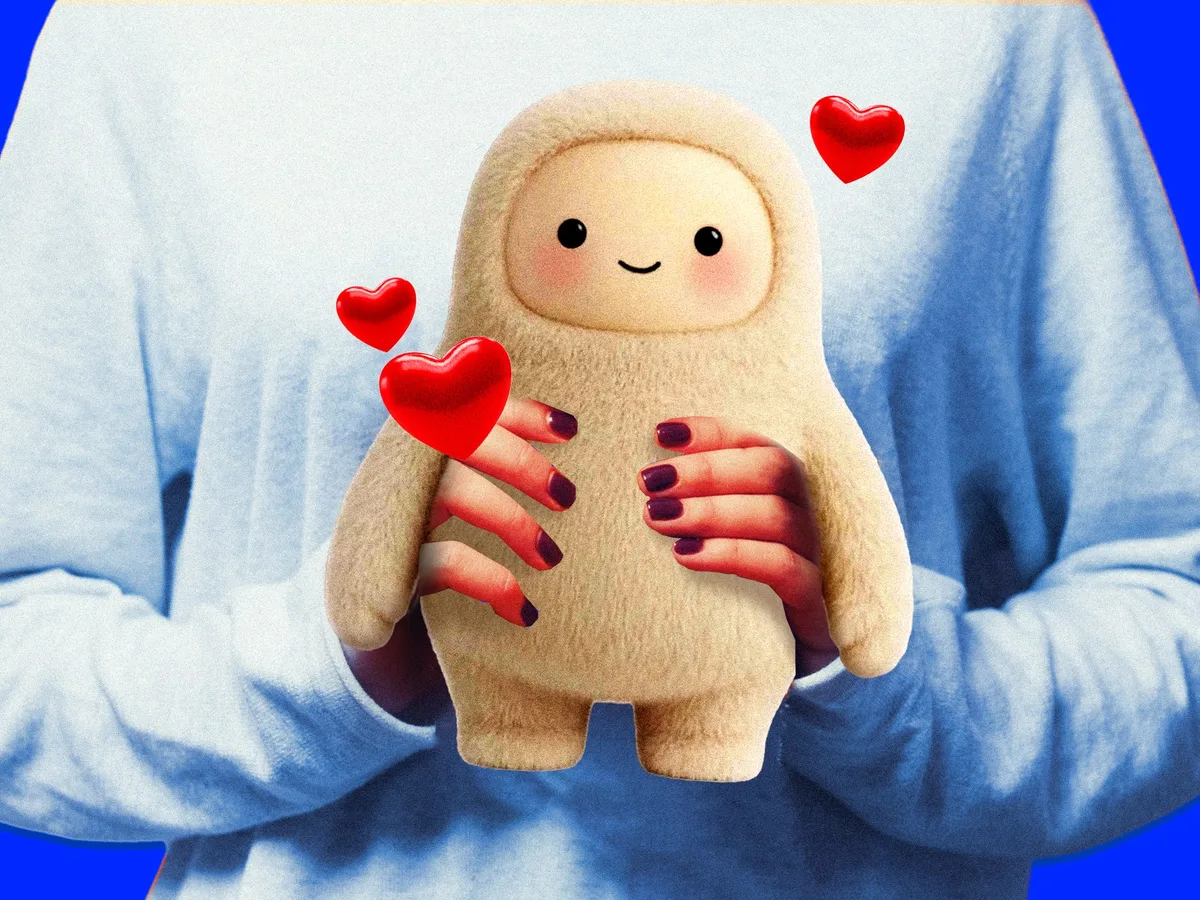
Muse; iStock; Tyler Le/BI Jolly wants to help make your life easier — and be cute while doing it.
The mascot for Meta's Muse AI is a slightly rotund, plush creature with rosy cheeks, big eyes, and a toothless grin.
It can wear clothes or little headphones when he's "working" on tasks for you.
As someone who once went through some (embarrassingly) elaborate hoops to acquire a Labubu , I must admit that I was immediately enamored by the creature's debut .
I'm not alone — much ink has been spilled on how cute the little avatar is .
Jon Stewart even devoted a whole segment to debating the cuddly guy's true intentions.
Jolly joins a growing group of creatures vying for the hearts and minds of potential AI users.
There are the round, mouthless dots of OpenAI , the fluffy Genspark lobster, and Grok users have adopted a little teal alien named "Groklet." All adorable, all plushy, and all debuting as the general populace was starting to worry that AI would maybe kill us all.
The idea behind Jolly and the rest of the mascots is simple: make us forget about all that AI doom-and-gloom and learn to love it.
They play on our most human, primal instincts, distancing us from the fact that they represent something distinctly non-human.
This round, fun little creature is your friend! He's going to work on your behalf! The fuzzy little charms also tap into our sense of nostalgia .
Everyone I spoke to for this piece immediately had a connection to the Muse avatar: Some said it reminded them of a Tamagotchi, or MySpace avatars, or Baymax, the lovable robot from Big Hero 6.
"Seeing something cute stimulates the pleasure centers in your brain before you've even had a chance to think about it," Joshua Paul Dale, the founder of the niche academic field "Cute Studies," and a professor at Chuo University in Tokyo, tells me.
"You're predisposed to act socially towards something that you find cute." It's not the first time that cuteness has arisen in response to a collective sense of unease.
5News aggregated this summary from the outlet’s public feed. The full article, with all the context, is on www.businessinsider.com — the content belongs to Business Insider.