The Biggest Map of Roman Roads Ever Made Still Isn’t Big Enough
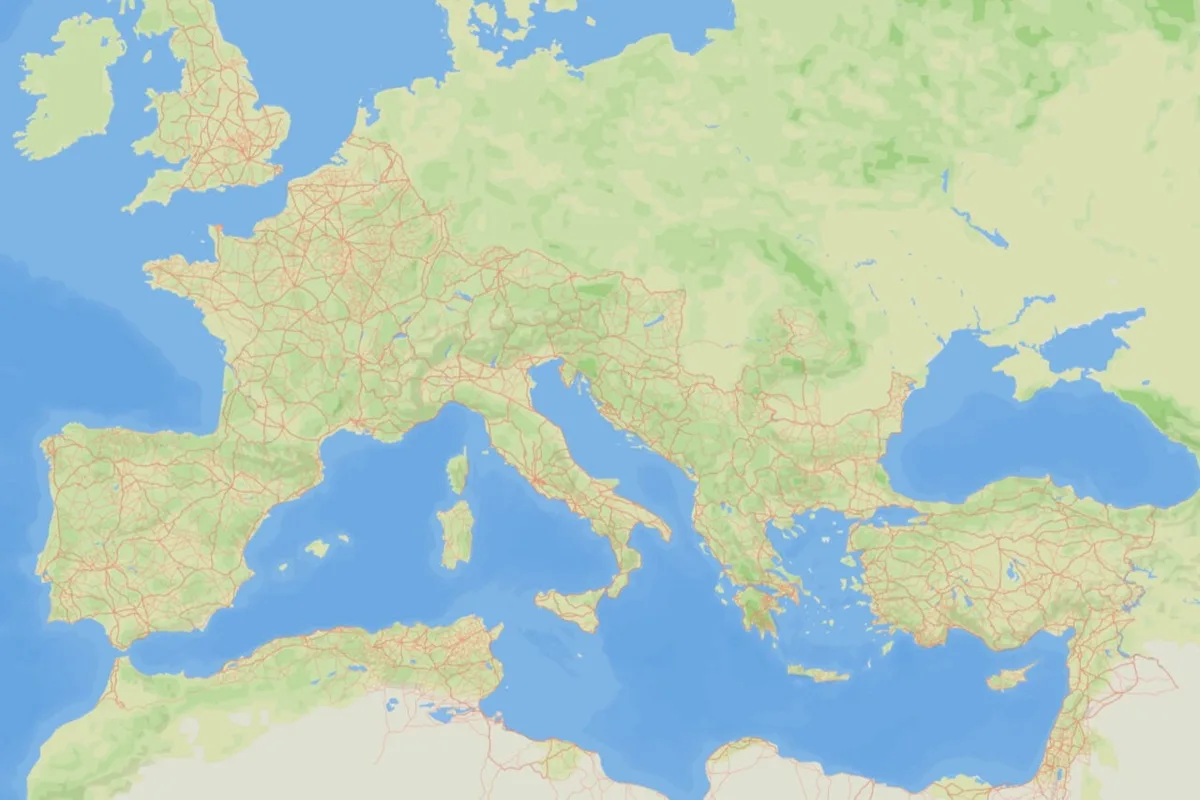
Last year, archaeologist Tom Brughmans and colleagues released itiner-e —the largest map of the Roman road system, covering 186,411 miles (300,000 kilometers). Since then, the researchers have been picking apart their database for new insights into these famous roads. Turns out, a lot of what we assume about Roman roads may be wrong.
To Gizmodo, Brughmans explained that the latest findings , published today in Nature Communications, bust several popular myths about Roman roads. First, despite the popular saying, not all roads lead to Rome, and networks were more effectively distributed throughout the Roman Empire. Second, Roman roads weren’t as exceptionally straight as previously thought. Third, the idea that Roman roads have persisted for so long that we’re still walking on them might be an overstatement. The overall takeaway is that, because the Roman road grid was so extensive—not even itiner-e covers everything, Brughmans noted—generalized assumptions will probably fall short of describing these ancient networks.
“I found it hugely frustrating that we simultaneously seemed to know so much and so little about Roman roads,” said Brughmans, of Aarhus University in Denmark. “But most frustrating is that these easily dismissible assumptions prevented scholars from asking the really interesting questions underpinning them.”
According to Brughmans, Roman roads represented the “first continental-scale transport network in human history.” This enabled the transmission of people, animals, disease, goods, and ideas, the researchers wrote. The system represented a mix of newly built roads and upgrades to existing ones; the roads supported the Roman Empire’s conquest of new regions in addition to a vast trading network. The latter included smaller transactions in local communities for buying and selling necessities like produce.
“The system was crucial to keep a 1 million population alive in the capital city, Rome, which was highly dependent on the import of grain all the way from Alexandria in Egypt,” Brughmans explained. “The roads reveal so much more than Roman emperors’ politics and military campaigns: they shaped the lives of the ‘silent majority.’”
That said, despite scholars’ long-time interest in Roman roads, our understanding of them has largely depended on qualitative studies based on snippets of direct and indirect evidence, according to the paper. The goal of the latest study, therefore, was to conduct a formal quantitative assessment of Roman roads. Needless to say, the team, having put together itiner-e , was in an excellent position to pursue this project.
The latest analysis began with three common assumptions: the centrality of Rome with regard to the network, the roads’ topological nature, and their continuity to the present day. Exploring these questions led to other inquiries, Brughmans explained.
5News aggregated this summary from the outlet’s public feed. The full article, with all the context, is on gizmodo.com — the content belongs to Gizmodo.