Football is dangerous. Parents are finally steering their kids away from it.

When the NFL season kicks off next month, millions of Americans will gather around their televisions to watch athletes of comic book proportions crash into each other at breathtaking speeds.
Inevitably, those players’ heads will smash into each other, leaving them dazed on the field.
And according to a major new study , these repeated head-on collisions may eventually lead to a degenerative brain disease for many — if not most — of the players long after they’ve left the field.
For years now, America has been reckoning with the tension between its love for football and the growing evidence of its dangers .
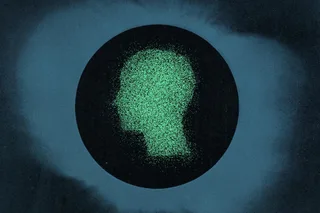
Those concerns can be boiled down to three letters: CTE, or chronic traumatic encephalopathy, which is the progressive brain disease that can lead to dementia, depression, suicide, and other serious mental health problems.
One major question over the past 20 years has been: Exactly how often does playing football lead to CTE? What are the risks for peewee players versus pros? How quickly does the brain deteriorate once the disease takes hold? And new research, published this week in the British Medical Journal , has provided us with some staggering answers.
After analyzing the death records for hundreds of former NFL players, the co-authors concluded that at least 25 percent of the former players who died between 2016 and 2021 had CTE at the time of their death.
And the actual prevalence could be much higher, but more players’ brains would have to be given over to scientists for a CTE assessment for us to know for sure.
Because among the 338 players whose brains were donated and studied, the CTE rate was an astonishing 93 percent.
The question is, according to the researchers: Is that percentage skewed because the players exhibiting CTE symptoms were more likely to offer up their brain for research? Or, as the authors suggest is possible, is the real CTE rate closer to 90 percent? Only further research will be able to tell us, but even the latest estimate — one in four — is cause for concern.
It’s a stark reminder of football’s risks, delivered right on the cusp of a new season for pro, college, and high school teams around the country.
And according to the Aspen Institute’s annual State of Play report , there are signs that the game’s future may actually be at risk.
More and more American parents are steering their kids away from tackle football.
How long can an elite league like the NFL last when the pool of players is getting smaller and smaller — at the same time the scientific evidence of its dangers is becoming clearer and clearer? The youth football pipeline is drying up Despite the latest research, the NFL is going to be fine in the short term.
5News aggregated this summary from the outlet’s public feed. The full article, with all the context, is on www.vox.com — the content belongs to Vox.