California Vowed to Stop Paramount-Warner Bros. Merger. Why Did It Fold?
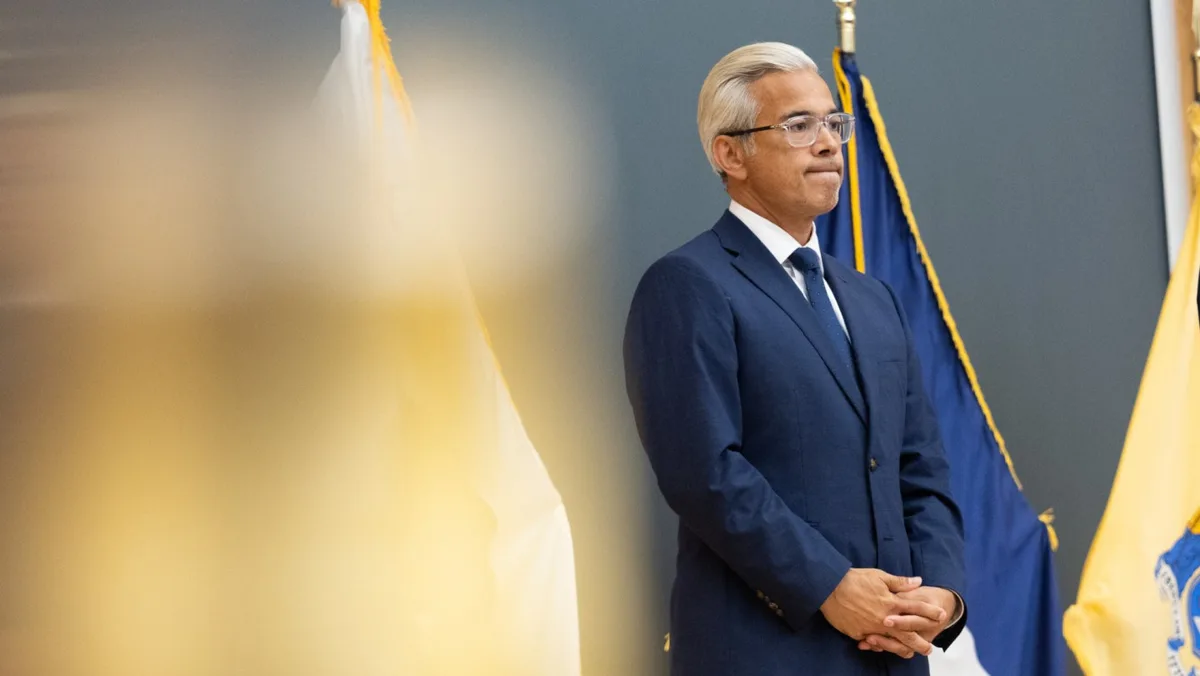
For months, California attorney general Rob Bonta told anyone who would listen that Paramount ‘s $111 billion bid for Warner Bros. Discovery would ruin Hollywood and that he could stop the merger. Then, when his leverage appeared the highest, the political and economic realities surrounding the showdown became impossible for him ignore.
That pressure came from the top. Gov. Gavin Newsom had expressed concerns about the state’s lawsuit, particularly in relation to employment levels. He had inserted himself into negotiations to encourage a settlement.
“I’m very mindful of what this means to the state — our reputation,” he said at a press appearance last month, adding that he took CEO David Ellison’s threat to move out of California “seriously.”
Indeed, Newsom’s fingerprints were all over the announcement of the settlement. Paramount thanked him “for his support throughout this process.” Read between the lines and the picture comes into focus: Newsom wanted a deal, and Bonta fell in line.
Newsom leaning on Bonta — along with Los Angeles Mayor Karen Bass and gubernatorial nominee Xavier Becerra — put the state’s top prosecutor in an increasingly untenable position. California had sued to stop the merger, but it also faced the prospect of losing Paramount regardless of the outcome of the lawsuit if a deal wasn’t struck ahead of an Oct. 1 deadline when the so-called $7 million-per-day ticking fee starts accruing.
That dynamic offers insight into how a case that once threatened to derail the biggest Hollywood marriage in decades ended with a whimper that stood in stark contrast to the political furor that spun off from it.
This was always the likeliest outcome for the states challenging the deal. The government had signed off on the acquisition, and merger cases are tough to win in court. The states, especially California, were being asked to gamble on a trial whose outcome was far from certain. Still, that didn’t make the terms any less striking.
While the settlement is broad in scope, it doesn’t require any divestitures that are typical of enforcer-friendly deals. Instead, it appears to be a five-year operating agreement imposed through a consent decree.
Under the agreement, Paramount and Warner Bros. must release at least 30 theatrical films a year for the first two years and 32 for the following three, maintain minimum numbers of wide and independent releases and ensure that at least half of the films are produced or jointly produced by the combined company. They must keep 45-day theatrical windows and a 90-day SVOD holdback for qualifying films. A $30 million per film penalty is assessed for missing the annual quota, with divestiture of Paramount’s stake in Miramax in play if the shortfall remains unaddressed.
The company also has to spend an additional $300 million annually on U.S. production (or $1.5 billion above its 2025 baseline over five years). Separately, the Paramount and Warner Bros. studio lots in Los Angeles must remain open and operate for the duration of the decree.
Other notable terms: Keeping Paramount and Warner Bros.
5News aggregated this summary from the outlet’s public feed. The full article, with all the context, is on www.hollywoodreporter.com — the content belongs to The Hollywood Reporter.