In My Dreams
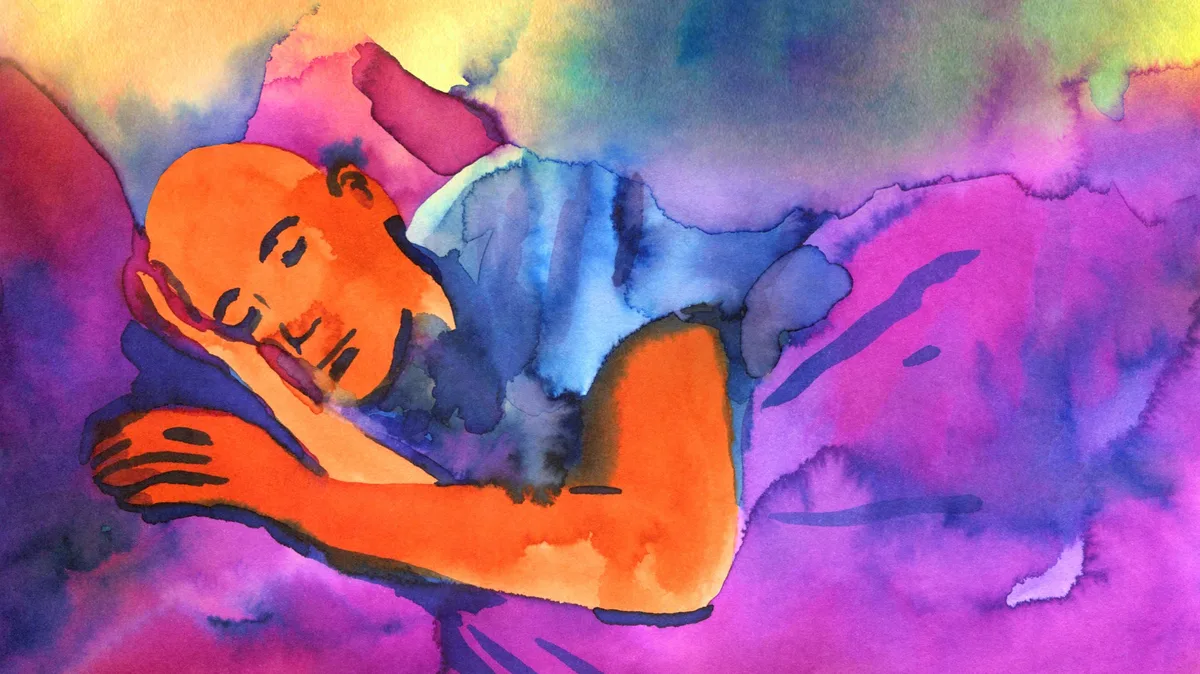
Illustrations by Hélène Blanc W hen I was 20 years old, I started to sense a hole inside me.
The feeling was utterly concrete, though the result of no medical condition that any of the various doctors I saw could identify.
The hole felt like a viscous emptiness—a paradox, admittedly, as any real emptiness should have felt like nothing.
This was a nothing, but its nothingness very much felt like something—and something that was growing.
Accompanying this feeling of an expanding hole at the center of me was a sense that I was losing more and more of myself to it, like shoreline eroded by rising waters.
To lose myself felt less like oblivion than instability.
I observed in myself a new susceptibility to the opinions of others, and a new recklessness, as if some dark, decisive action might either quiet my doubts about my fundamental worth or end my longing once and for all.
I recall one particularly dangerous, drunken night that had me well over the legal limit, both aware that I was getting into a car that could kill me and others, and also not believing that any of it mattered.
The onset of my devolving well-being was strange and sudden, and seemed connected to childhood in some way I couldn’t understand.
I hadn’t been a tortured child but rather placid, if introverted.
My parents always said that I had been easy to keep happy.
It sometimes seemed to me as if the hole I was experiencing was one where some piece of my childhood had once resided.
My friends found my behavior disturbing.
I was missing class in college, showing up to theater rehearsals drunk.
5News aggregated this summary from the outlet’s public feed. The full article, with all the context, is on www.theatlantic.com — the content belongs to The Atlantic.