Can Elizabeth Holmes Drop the Act?
When he was in charge of Apple, Steve Jobs was notorious for projecting a “ reality distortion field .” That was the jokey way his employees described Jobs’s mix of charisma and bravado and his demanding management style—which would lead people to accept seemingly impossible deadlines, or to promise that they could fix unfixable problems.
A malfunctioning version of the same phenomenon once surrounded Elizabeth Holmes, the disgraced founder of the failed medical start-up Theranos.
She worshipped Jobs , imitating his style and unnerving confidence, even while presiding over an imploding enterprise.
Her promises of a device that could affordably perform rapid medical tests with only a drop of blood were, at best, fantastical; once valued at $9 billion, Theranos collapsed into nothing.
In 2022, Holmes was sentenced to 11 years in prison for defrauding her investors .
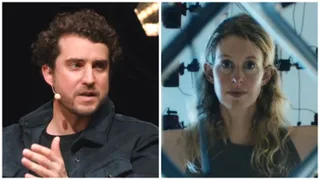
In the new documentary You Can See Everything , the comedian and television auteur Nathan Fielder steps into Holmes’s reality-distortion field.
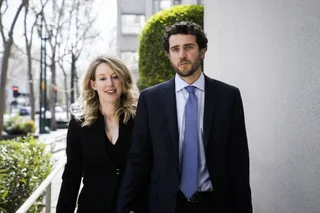
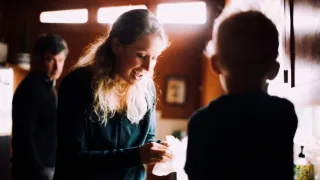
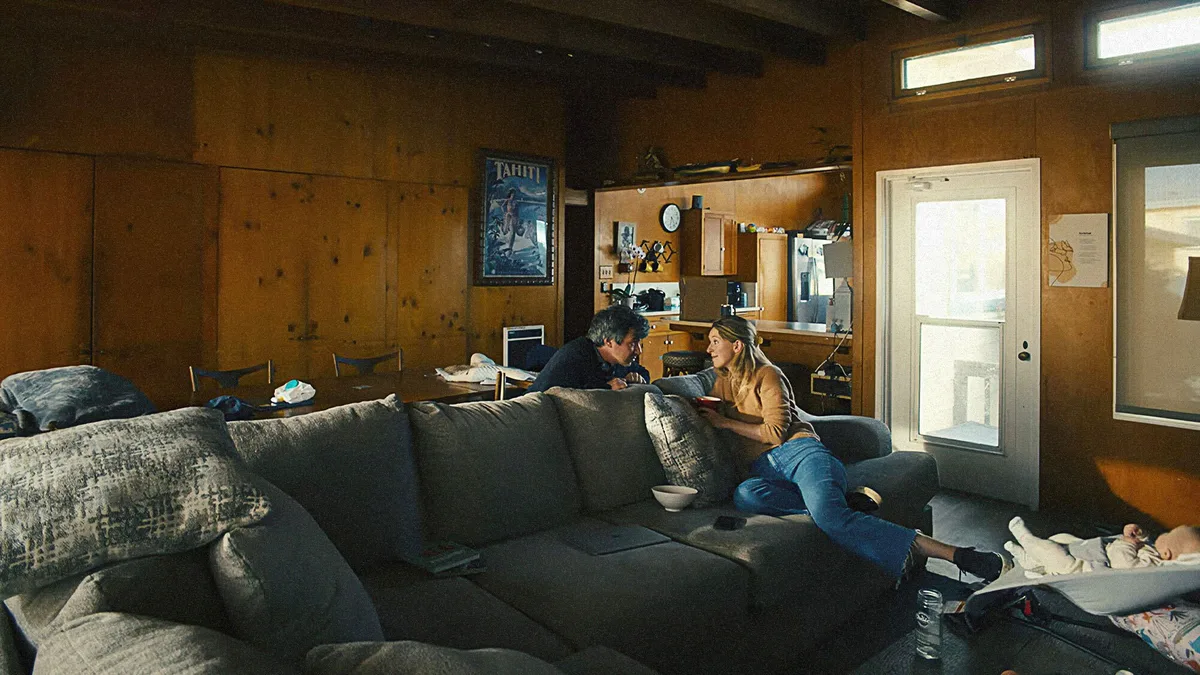
Fielder, accompanied by his co-director, Lance Oppenheim, and a small camera crew, essentially moved into Holmes’s abode for the 34 days before she reported to federal prison.
The team received fairly unfettered access to her, her two small children, and her partner, the entrepreneur Billy Evans, who professes obsessional devotion to Holmes.
What Fielder was expecting to find while staying at the family’s Del Mar, California, rental is unclear, but he ends up in an odd and unsettling game of cat and mouse: He’s trying to suss out whether Holmes is a master manipulator or someone so deeply convinced of her own genius that she can’t distinguish fiction from fact.
The film capturing that experience is an odyssey of human perception.
Fielder knows that no matter how intimate his time with Holmes is, the minute the camera is trained on her, both he and the audience will be consumed by the question of whether she’s giving yet another performance.
The movie unfolds and evolves over nearly three hours, spanning both the month ahead of Holmes’s May 2023 incarceration and the years following; throughout, Fielder pores over his interactions with not just Holmes but also the people around her, sifting for kernels of authenticity.
What emerges is a transfixing portrait of a phenomenon most viewers will understand—a deep desire to empathize, even as we are horrified by what’s occurring or suspect we’re being lied to. [ Read: Manipulator vs. manipulator ] Holmes would disagree about that last part.
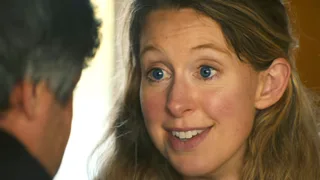
Early on, she plainly states to Fielder that she has never told a lie, a statement so bewildering that it cracks his reliably deadpan expression.
5News aggregated this summary from the outlet’s public feed. The full article, with all the context, is on www.theatlantic.com — the content belongs to The Atlantic.