Hitler’s Rise Was Not Inevitable
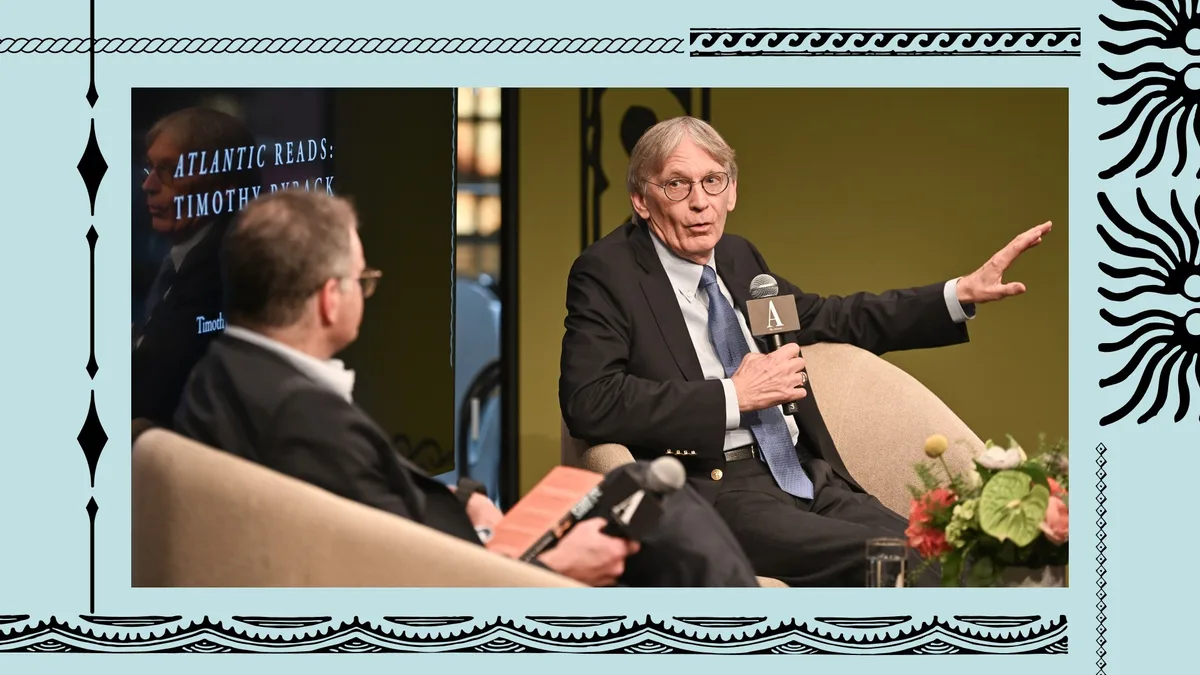
Does history repeat itself, or merely rhyme? The historian Timothy W.
Ryback has thought about this question a lot.
Ryback, the director of the Institute for Historical Justice and Reconciliation at The Hague, has written extensively about Adolf Hitler’s Germany, including in books such as Hitler’s Private Library: The Books That Shaped His Life and Hitler’s First Victims: The Quest for Justice .
Ryback’s new book, 53 Days: How Hitler Dismantled a Democracy , which grew out of a series of articles he wrote for The Atlantic , is a straightforward narrative of the period from Monday, January 30, 1933, when Hitler was appointed chancellor, to Thursday, March 23, 1933, when the Reichstag legislative body passed the so-called Enabling Act, which effectively gave the chancellor the power to dissolve the democratic Weimar Republic and inaugurate the Third Reich.
As Joseph Goebbels noted at the time, “The big joke on democracy is that it gives its mortal enemies the means of its own destruction.” 53 Days makes no reference to contemporary politics.
And yet certain echoes of the 1930s resonate so loudly that it is impossible not to hear them.
To cite just a few: Hitler was obsessed with tariffs.
Hitler tried to fire his central banker.
Hitler was preoccupied with seizing Greenland.
Hitler was intent on adding an expensive new wing to the Reich chancellery, part of his grandiose architectural ambitions for the nation’s capital.
He attacked and muzzled the press, attempted to purge the civil service of anyone disloyal to him, had a genius for inflaming the populist grievances of his base, and spurred angry young men to take paramilitary action against perceived enemies. [ Read: What the press got wrong about Hitler ] Reductio ad Hitlerum can have the baleful effect of trivializing the Holocaust, which thankfully has no parallel in the modern American context.
Yet closely examining Hitler’s rise can yield useful insights into today’s autocratic moment—and help deepen our understanding of history’s unfolding.
In a conversation I had with Ryback yesterday at The Atlantic Festival, the historian discussed the rhymes and contingencies of history, the uses and misuses of the past, the lessons of 1933, and what a reexamination of Hitler’s rise can teach us about human agency and fate.
This interview has been edited and condensed for clarity.
5News aggregated this summary from the outlet’s public feed. The full article, with all the context, is on www.theatlantic.com — the content belongs to The Atlantic.