The Politicization of ‘DEI’ Bike Lanes
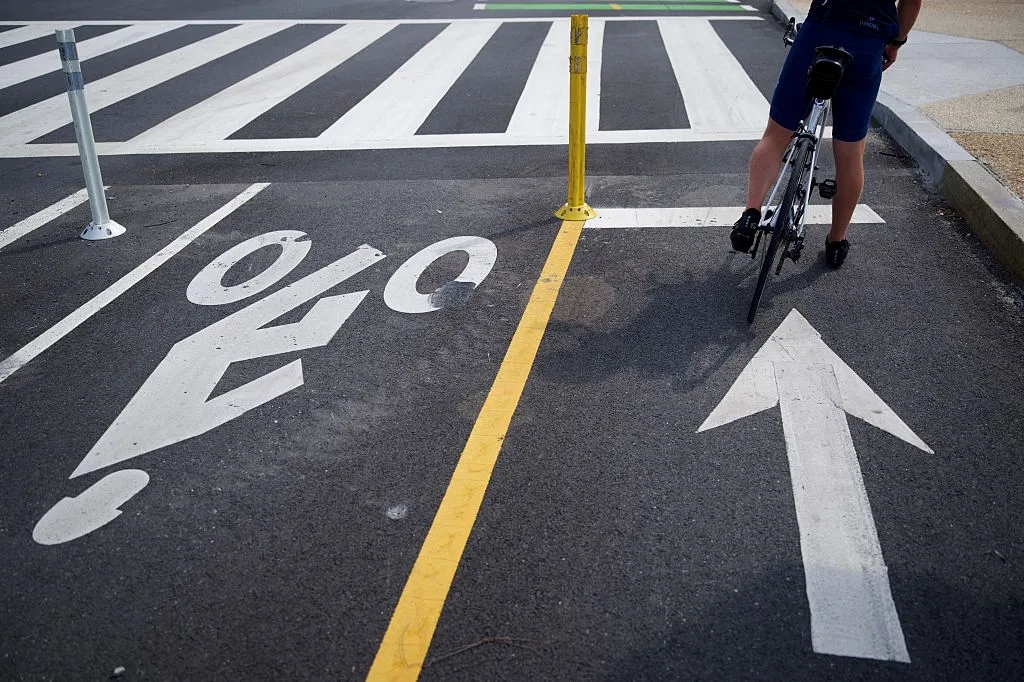
A cyclist waits for the light to change along the 15th Street bike lane in Washington, DC, on September 1, 2026. —Kent Nishimura—AFP/Getty Images What do President Donald Trump and Pastor A.D.
Cunningham of the United House of Prayer for All People (a predominantly Black church in Washington, DC) have in common? Neither seems to want to look out their window and see a bike lane.
The truth is that the ranks of anti-bike lane Americans are diverse, probably even more so than its advocates.
When I first heard that Transportation Secretary Sean Duffy pledged to rescind funding for “DEI bike lanes,” I immediately thought of the book Bike Lanes are White Lanes .
The argument of the book is self-evident.
Bike advocacy has long been largely the domain of white advocates pushing for bike infrastructure in largely white neighborhoods.
To some, bike lanes are a symbol—and even a creator—of gentrification.
So, which is it? Are bike lanes white lanes or DEI lanes? And when did they become so controversial? Over the past century or so, bike lanes have come to represent more than just painted pavement.
Historically, the bicycle has been many things to many people: a toy for tots, a piece of exercise equipment, a tool for commuting, a way to explore a rugged mountain, a delivery vehicle, a device on which to do tricks and to trick out.
Bicycling became truly popular in the 1890s, with many hoping it would become the great equalizer, a democratizing force that would open new spaces to women and afford everyone mobility.
As the 1900 U.S. census declared : “It is safe to say that few articles ever used by man have created so great a revolution in social condition as the bicycle.” Americans loved the bicycle—and loved to hate the bicycle.
Many cyclists were white and so were most anti-cyclists.
Perhaps the most common complaint was that bicycles were reckless.
Cyclists, pejoratively called “scorchers,” spooked horses and endangered pedestrians, cried critics.
5News aggregated this summary from the outlet’s public feed. The full article, with all the context, is on time.com — the content belongs to TIME.