NASA's canceled lunar space station tech will help build the Artemis moon base
Not every canceled NASA program earns a halo after its demise, but one scrapped project is finding new life by contributing its parts to help the space agency achieve its moon base goals faster.
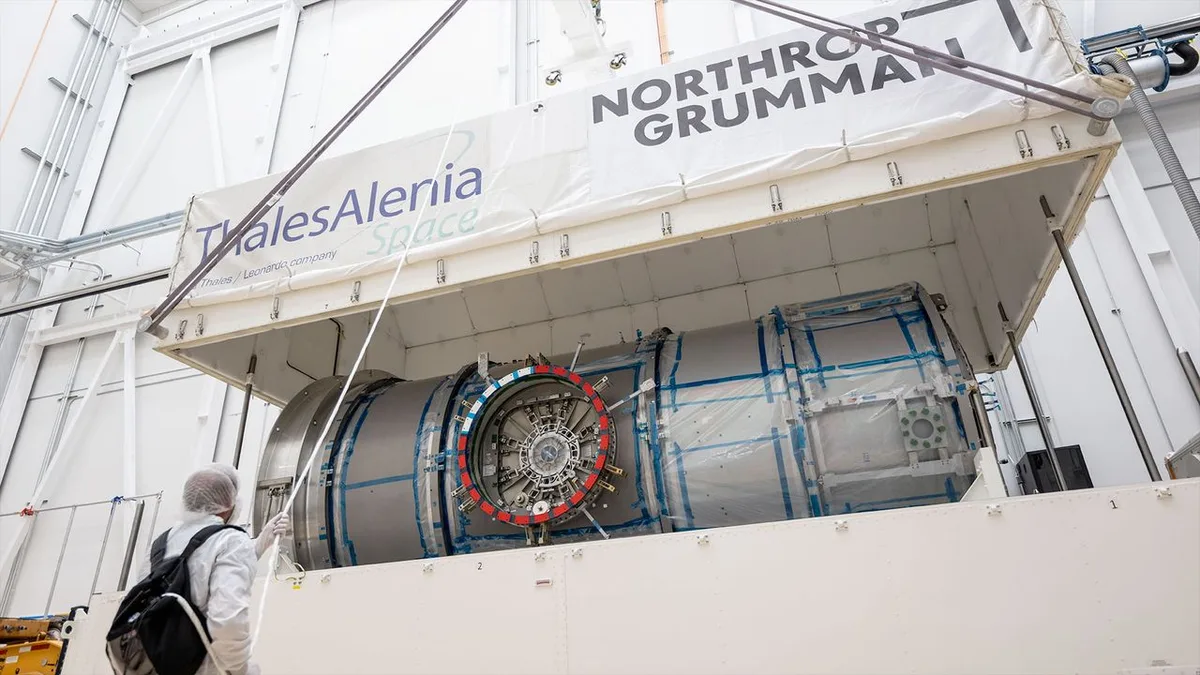
Northrop Grumman is repurposing hardware and technology from the Habitation and Logistics Outpost (HALO) space station module for use on a new series of Lunar Infrastructure Demo (LID) missions.
HALO was originally designed as the habitation module for NASA's since-cancelled moon-orbiting Gateway space station but found itself on the chopping block when the agency restructured the Artemis program architecture earlier this year.
Rather than scrap the unfinished module outright, Northrop Grumman will adapt HALO's electrical and mechanical components to support the development of technologies for a moon base that can survive the cold, weeks-long night at the lunar south pole while sustaining the long-term habitation of astronauts inside.
Part of NASA's reasoning for canceling Gateway was the need for expedience.
As the agency's vision for Artemis and the return of astronauts to the lunar surface has evolved, China's plans to land the first taikonauts on the moon have steadily taken shape.
Those ambitions, and the continued progression of China's lunar program, have kicked off a new space race in which the U.S. and NASA are intent on maintaining their first-place position.
In March, NASA Administrator Jared Isaacman announced a shakeup to the Artemis program designed to enable a more step-by-step approach toward developing the technologies needed for a next-generation crewed lunar landing, and to achieve that landing on the shortest timeline possible.
That timeline currently puts the first Artemis lunar landing with astronauts on the Artemis IV mission, scheduled for late 2028.
Before then, however, NASA is planning nearly two dozen uncrewed missions to the moon to lay the groundwork for the infrastructure needed to precede astronauts' return.
And, rather than let HALO rust in a warehouse, Northrop is doubling down on its commitment to the cause.
"To help NASA move faster … HALO’s power, data and mechanical interfaces will enable NASA to move with speed and begin gathering real lunar surface performance data sooner," the company said in a press release on Aug.
4.
Northrop Grumman’s Lunar Infrastructure Demos (LID-1, LID-2 and LID-3) will reuse HALO derived technologies to rapidly mature lunar surface power, thermal, autonomy, communications and hosted payload services that can survive the lunar night and scale into persistent infrastructure near the moon’s south pole.
5News aggregated this summary from the outlet’s public feed. The full article, with all the context, is on www.space.com — the content belongs to Space.com.