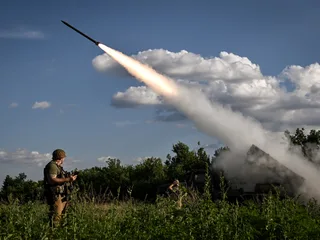
Ukrainian soldiers are changing how they train to deliver medical care as casualty evacuation becomes more unpredictable
Casualty evacuation in Ukraine was already daunting, but the drone situation in the kill zone surrounding the front line has further complicated the situation, forcing medical units to reevaluate care and evacuation.
NurPhoto/NurPhoto via Getty Images The heavy drone saturation above the battlefield in Ukraine has made casualty evacuation difficult.
Ukrainian soldiers are changing how they train to deliver medical care to wounded soldiers.
One battalion is preparing troops and medics for scenarios where quick extraction isn't possible.
Ukrainian forces are changing how they train to deliver medical care to wounded soldiers as heavy drone saturation increasingly complicates battlefield casualty evacuation.
The area surrounding the front lines has turned into what Ukrainian officials and soldiers describe as a "kill zone," where drones are constantly watching and targeting anything that moves, including wounded troops and those trying to save them, with precision strikes.
Moving wounded troops off the battlefield was already a daunting challenge.
Ukraine's 1st Separate Medical Battalion, a unit that specializes in front-line casualty evacuation , told Business Insider in translated remarks that the emergence of the kill zone has further upended long-standing theories about how to deal with casualty care on the battlefield.
Casualty evacuation timelines have become even more unpredictable, forcing the battalion to prepare soldiers and medics for scenarios where a quick extraction won't be possible .
The norm now is what's called prolonged casualty care.
It requires soldiers and combat medics to not only provide initial stabilization but also manage the casualty for an extended period, a spokesperson for the battalion said, asking not to be identified for security reasons.
With this in mind, the battalion now teaches tourniquet reassessment at the basic level to lower the risk of tourniquet-related complications, including reduced blood flow and amputation, that could arise during prolonged evacuation.
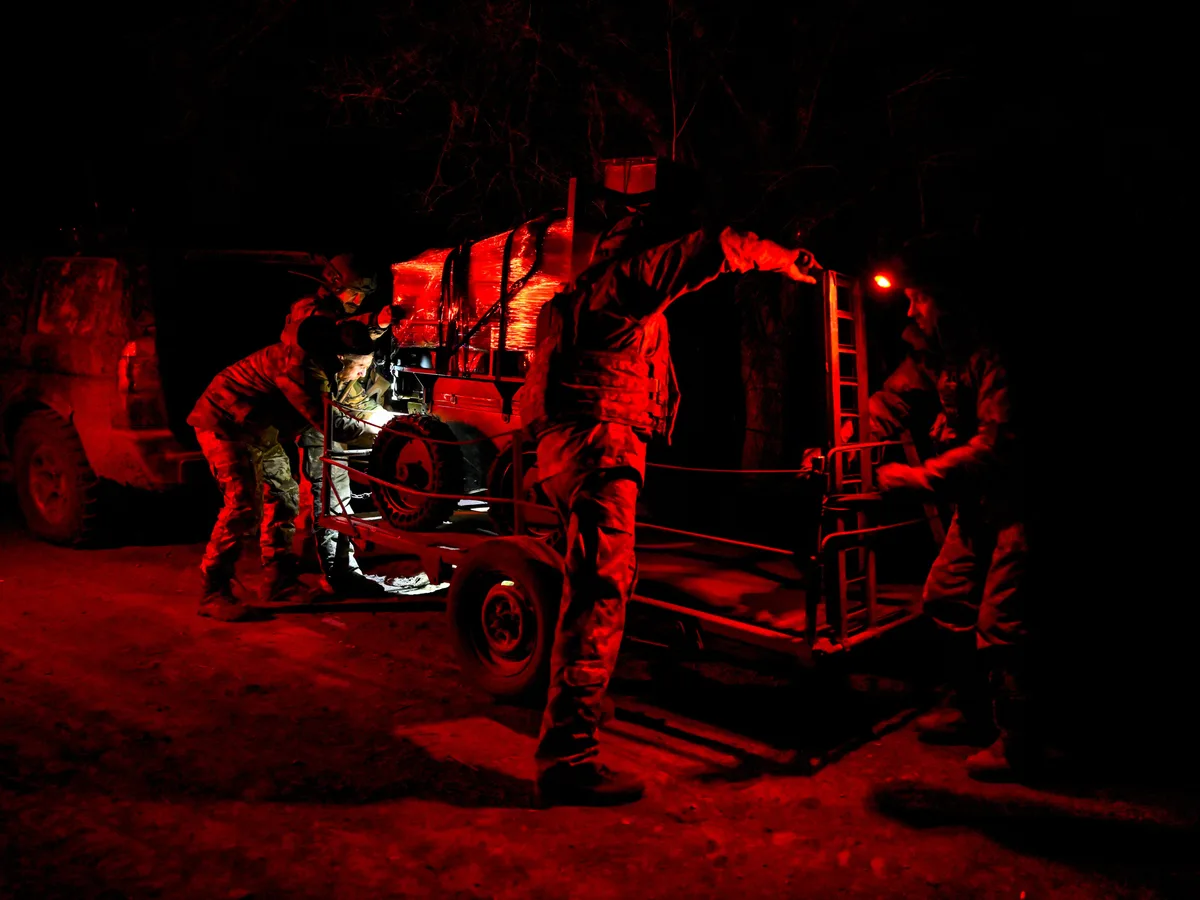
Casualty evacuation training in Ukraine involves both medical crews and robotic systems.
Andriy Dubchak/Frontliner/Getty Images During the wars in Iraq and Afghanistan, US military medics applied tourniquets without ever thinking about removal because wounded troops could be swiftly evacuated to higher care.
5News aggregated this summary from the outlet’s public feed. The full article, with all the context, is on www.businessinsider.com — the content belongs to Business Insider.