Jimmy Wales: ‘AI can generate answers. It still can’t earn trust’
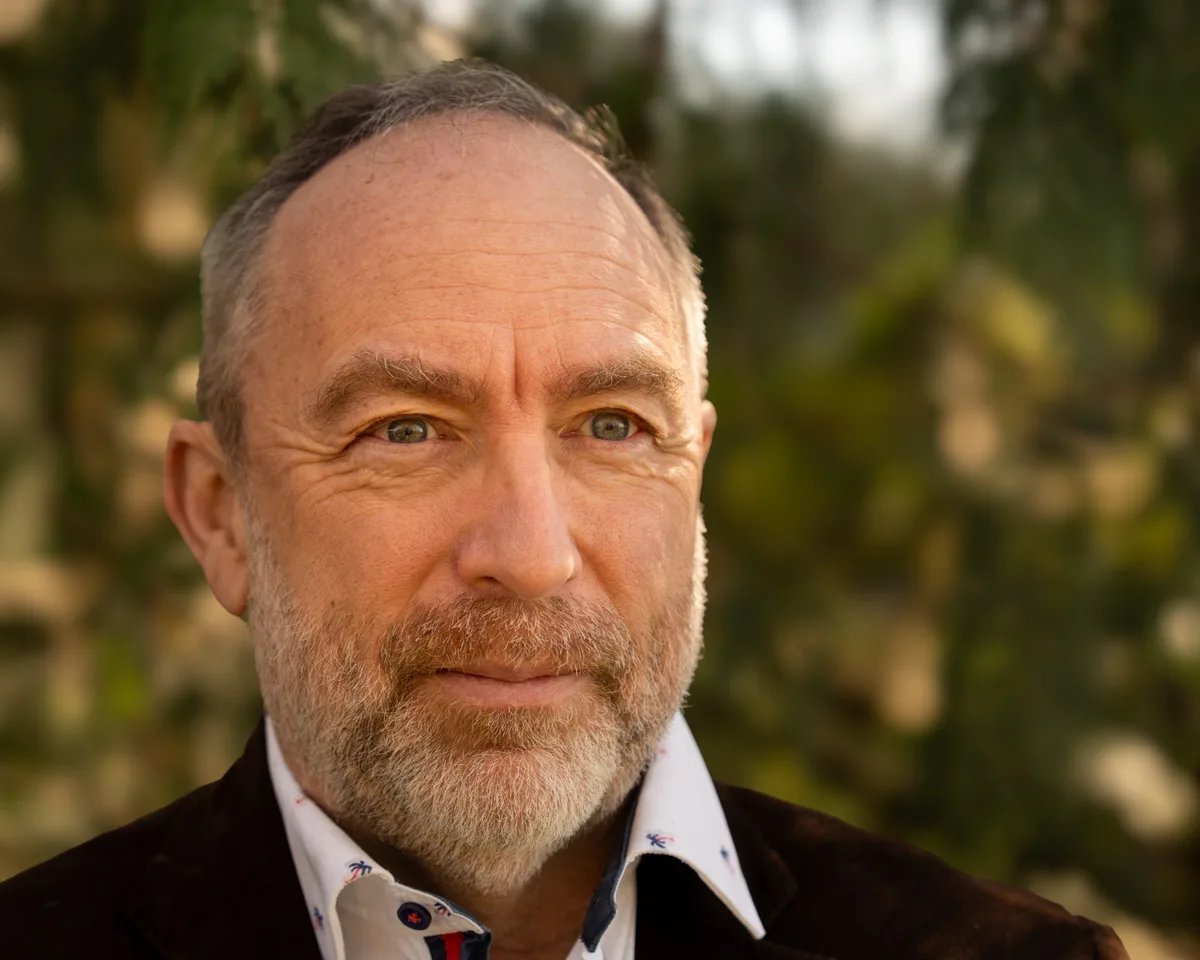
The man behind the world’s largest digital encyclopedia talks to Fortune Greece, republished with permission.
There are few digital platforms that have become as quietly indispensable as Wikipedia.
With no ads, no subscriptions, and none of the noise that typically accompanies anything “big” on the internet, it has been operating for nearly a quarter of a century as the most stable knowledge infrastructure of the digital world.
Behind it stands Jimmy Wales, a founder who seems almost stubbornly resistant to the logic of Silicon Valley.
Today, in an environment where truth is constantly questioned, artificial intelligence is reshaping our relationship with knowledge, and trust in institutions is at historical lows, Jimmy Wales appears almost unconventional.
He doesn’t make any reference to disruption, nor does he promise technological “revolutions.” Instead, he insists on something far simpler—and far more difficult: the pursuit of transparency, verification, and group responsibility.
The story of Wikipedia is now well known.
What matters more today is not how it began, but how it endured—and what it means to remain relevant in an ecosystem that evolves faster than ever.
There is something oddly reassuring about talking to someone whose creation has become so deeply embedded in our daily lives that it’s hard to remember what the world looked like before it.
It’s not just the scale of the project.
It’s his commitment to principles that sound obvious, but in practice feel almost radical.
At a time when information is becoming increasingly “easy,” Jimmy Wales insists that understanding remains a deeply human process—one of the most hopeful messages not only for the future of Wikipedia, but also for the future of knowledge itself.
Wikipedia has shaped how billions of people access and understand knowledge.
Nearly 25 years on, how has it managed to remain sustainable without ads or paywalls? The model has worked very well from the beginning, and we see no reason to change it.
5News aggregated this summary from the outlet’s public feed. The full article, with all the context, is on fortune.com — the content belongs to Fortune.