Trump Is Preparing for a Long War
To hear the Trump administration tell it, the war with Iran is all but over.
U.S. military posture tells a different story: Naval forces are being positioned for a sustained presence at least through the end of the year, keeping open the option of escalation.
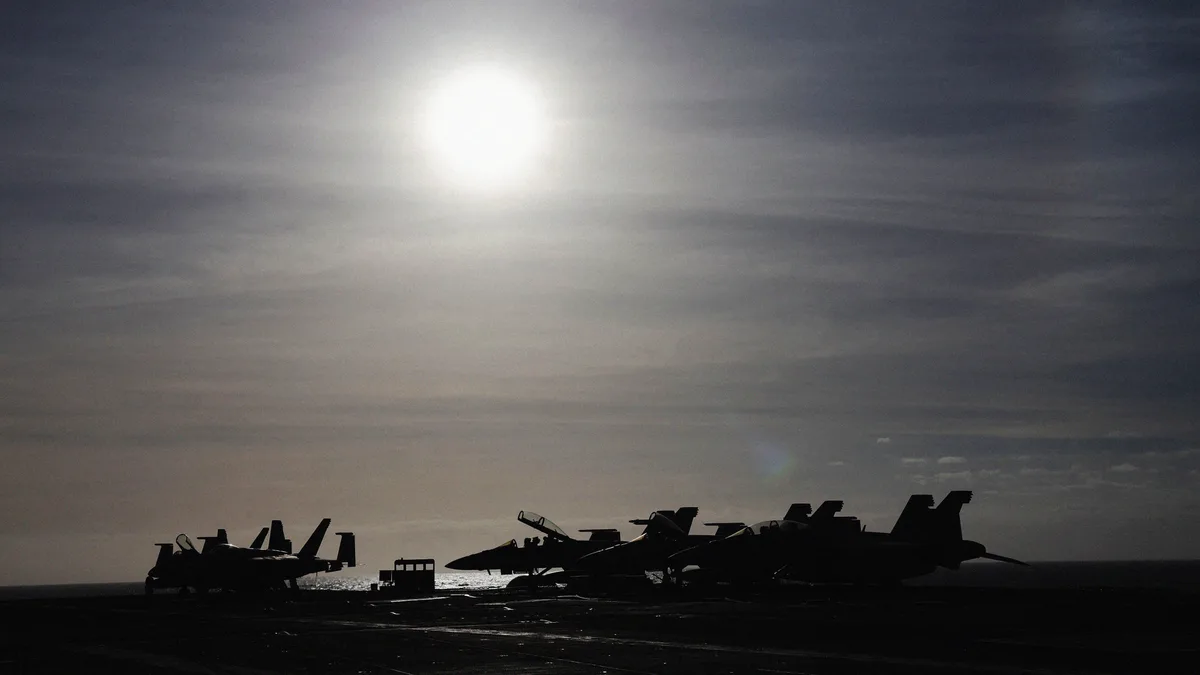
The Navy is moving aircraft carriers, its signature asset, around the globe so that two can be deployed in and around the Persian Gulf in the final months of this year, giving the United States the ability to hit both Iran and Iran-backed Houthi rebels in Yemen, who have recently fired barrages of missiles at Saudi Arabia.
Meanwhile, the Army has extended the deployment of elements of the 82nd Airborne Division, which are already in the region, because of “operational requirements.” The conflict, now in its seventh month, has already lasted far longer than the president’s initial predictions of victory within a few weeks.
And senior officials have recently downplayed the scale of the conflict in the apparent hope that it will recede from the headlines.
Vice President Vance claimed to reporters last week that the U.S. is not at war at all.
Soon after, President Trump referred to the conflict as “small potatoes,” though he has since termed it a war.
After Iran targeted a U.S. warship, the Navy sank five Iranian crude-oil tankers on Tuesday, according to U.S.
Central Command.
With no talks under way, and no end to the hostilities in sight, the Navy is staying on a war footing indefinitely, adding to the severe burden already placed on the Navy and on U.S. munitions stockpiles.
The unusually long deployment of the carrier USS Abraham Lincoln, whose crew spent 264 consecutive days at sea and dropped more than 1.5 million pounds of ordnance, was plagued with food and supply shortages, plumbing problems, and declining morale.
The Lincoln eventually departed for Thailand, relieved by USS George Washington.
The Washington joined about 20 other ships in the Middle East, including USS George H.
W.
5News aggregated this summary from the outlet’s public feed. The full article, with all the context, is on www.theatlantic.com — the content belongs to The Atlantic.