Meet the Florida architect who lost his roof at 12 — and now builds for the next Andrew
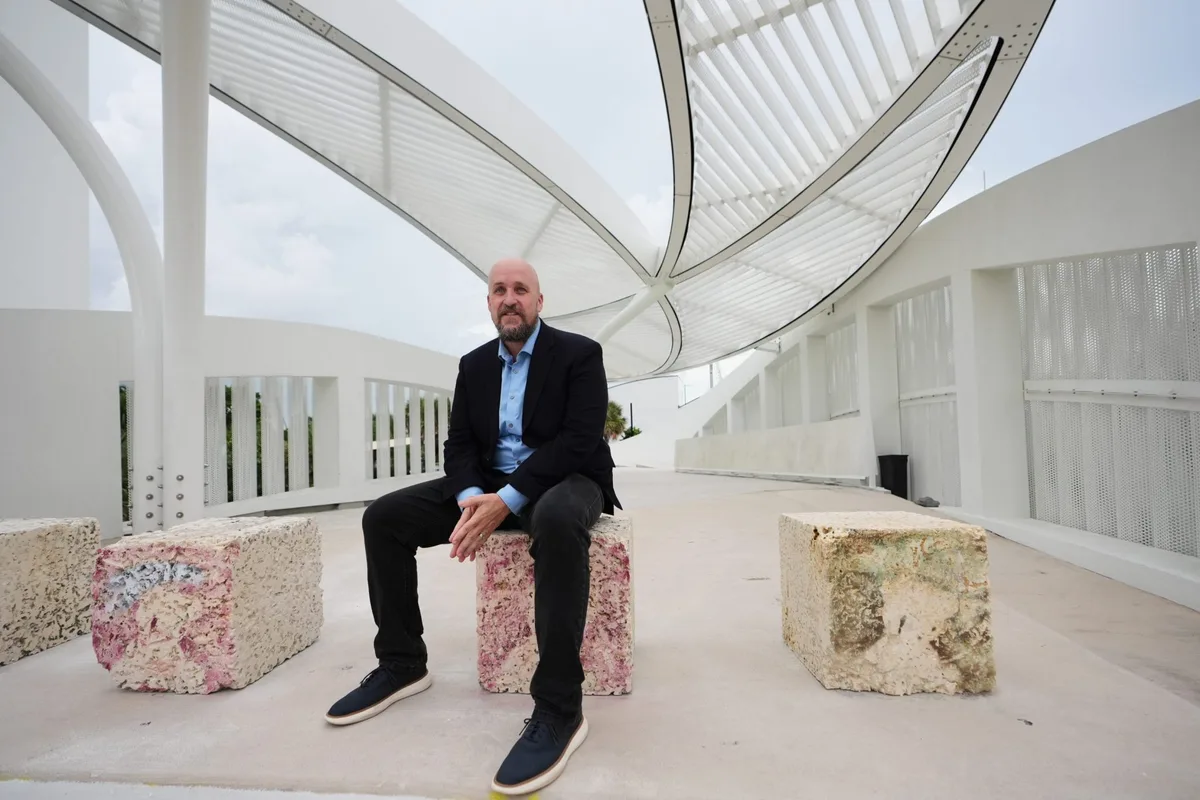
One day there was a roof.
The next morning it was gone.
Jeffrey Huber still remembers the day some 34 years ago when Hurricane Andrew blew off the roof of his childhood home, one of tens of thousands damaged and destroyed across southern Florida.
For days, first responders couldn’t get to them.
For a month and a half, they relied on food donations.
For more than a year, he lived with his family in a trailer.
“It wasn’t just about the storm itself, but it was about the aftermath of that storm and how we begin to design for those aspects,” said Huber, a landscape architect and professor who was 12 in 1992 when the Category 5 hurricane hit.
“We are seeing extreme storms, extreme scenarios like this that are becoming much more common.” Some 129 million people — nearly 40% of the U.S. population — live in coastal counties.
Recent research shows that a rise in sea level driven by humans has increased the frequency of extreme coastal flooding around the world.
As climate change threatens communities, Florida is showing how to build to adapt.
Throughout the state, architects and designers are merging infrastructure with urban design to create residential buildings, parks and more.
The goal is to better withstand rising waters, worsening storms, saltwater intrusion, heat heaves and other climate impacts.
“In places like Miami, we’re dealing with a combination of tidal flooding, storm surge and long-term sea level rise,” said Huber, professor in the School of Architecture at Florida Atlantic University.
“So the question isn’t about how we stop water, but it’s how we live on, with and over it.” Seawalls that double as reefs As global average temperatures climb because of fossil fuel emissions, so do sea levels, making low-lying coastal cities vulnerable to flooding.
5News aggregated this summary from the outlet’s public feed. The full article, with all the context, is on fortune.com — the content belongs to Fortune.