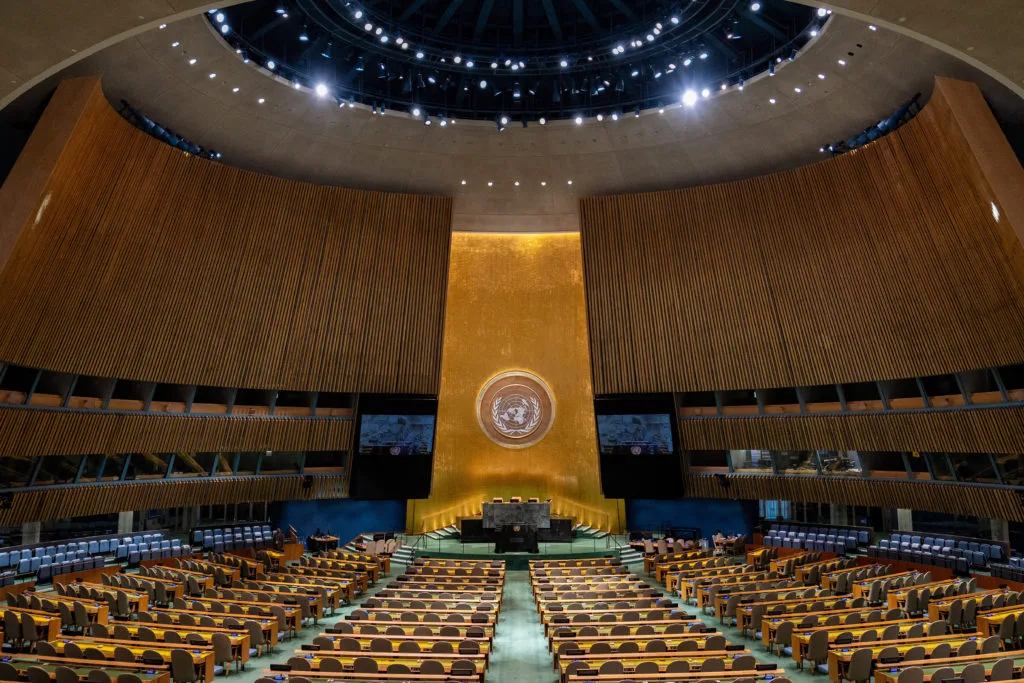
WATCH LIVE: Day 1 of the 2026 United Nations General Assembly
Jennifer McDermott, Associated Press Jennifer McDermott, Associated Press
NEW YORK (AP) — World and business leaders gathering this week in New York are grappling with the increasingly urgent costs of climate change, soaring energy prices and the human toll from this summer's oppressive heat waves, prolific wildfires and a catastrophic Nepal flood.
The first day of high-level debate at the United Nations General Assembly is scheduled to begin Tuesday, Sept. 22 at 9 a.m. EDT. Watch live in the video player above.
Every year as top government officials attend the United Nations General Assembly and business executives flock to New York City Climate Week sessions, global warming generates lots of talk but little action.
READ MORE: World leaders meet at UN as planet grapples with war, runaway AI and climate shocks
This time two new forces — the rise of energy-hungry artificial intelligence and data centers and higher fossil fuel prices from wars in Iran and Ukraine — should change the discussion, experts and activists said. That's on top of the usual climate-driven disasters that reached new levels of destruction, with more than 1,300 killed in sudden flooding caused by a collapsing glacier on the Nepal-China border.
"We've gone from seeing the fingerprints of climate change in individual events to seeing the handprint of climate change on the whole world," said scientist Bill Hare, CEO of the organization Climate Analytics.
Climate change is "driving up food prices and wider inflation," U.N. climate chief Simon Stiell said on Monday. "Billions of people around the world are realizing that fossil fuel dependence is hitting them hard at the fuel pump."
Protests about high prices have sparked worldwide. In the U.S., consumer confidence is plunging while gas prices have reached record highs. Stiell said energy shortages due to the Iran war have cost American consumers more than $100 billion in higher fuel prices.
Mohamed Adow, director of Power Shift Africa, said there are two climate stories happening at the same time: "One is extremely hopeful. Renewable energy is booming, technology is improving and the economics of clean energy increasingly make sense without anyone having to make a moral argument for it."
"The other is terrifying. Climate impacts are accelerating faster than our political and financial systems are responding," Adow said. "New York needs to bring those two stories together."
During a Climate Week event, Australia's Prime Minister Anthony Albanese said "the global community cannot afford to be frozen in time while the world warms around us."
The environmental footprint of artificial intelligence and data centers is a big topic this week.
That's because of the fear that the data center boom will mean a surge in fossil fuels, even though data centers can be powered by renewable energy.
5News aggregated this summary from the outlet’s public feed. The full article, with all the context, is on www.pbs.org — the content belongs to PBS NewsHour.