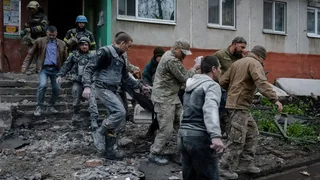
Nepal flash flood rescue efforts intensify as death toll rises

Kathmandu, Nepal — Rescuers pulled out survivors caked in dark brown mud and helicopters lifted stranded people to safety Friday as Nepal and China raced to respond after catastrophic flash floods killed more than 470 people and left more than 1,500 missing.
Nepal authorities said the death toll there rose to 469, injured people were taken to hospitals and helicopters carried more than 3,000 people to safety. Survivors, including the injured, were brought to Kathmandu and other locations.
In contrast, on the Chinese side, there was little information on survivors, although the death toll rose to five Friday as state media showed evacuations of villages and leaders' efforts to direct relief efforts.
China's state media previously said 558 people were missing and Nepal's disaster management authority said Friday that 977 people were missing. Hundreds were foreigners who were in the area to work, trek or make a pilgrimage to a sacred peak.
Nepal police issued a fresh alert Friday after receiving information that a dam on the Tibet side had burst. Security personnel and rescue and relief workers were told to stay on high alert and immediately move to a safe location if necessary.
It was unclear if that concern was related to fears of flooding from an overflowing barrier lake that formed behind a dam made up of debris from the initial flash floods, high up in the Chinese side of the Himalayan mountains.
Nepal police spokesperson Abi Narayan Kafle told The Associated Press the rescue operation was continuing but with high alert. "It hasn't stopped."
Nepali and Chinese authorities warned of further flooding because the barrier lake was overflowing. They urged people in potentially affected areas to move to safer ground.
Although Chinese state broadcaster CCTV reported Friday morning that the lake was more than six miles from Gyirong Port, the hard-hit border crossing with Nepal, it said the risk of flooding was high.
It said the lake was at an elevation of 9,680 feet, about 3,280 feet above Gyirong Port.
But CCTV later said flood risks from the overflowing lake were deemed "manageable," the Reuters news agency said.
Nepali Army rescuers were working to help people trapped in a hydropower tunnel in Rasuwa, part of the Upper Trishuli-1 Hydropower Project.
In video from the scene, rescuers half-pulled, half-pushed the man covered in dark brown mud out of the tunnel. He was one of likely dozens trapped in the tunnel.
Army spokesperson Brig. Gen. Raja Ram Basnet told The Associated Press the focus was on survivors.
5News aggregated this summary from the outlet’s public feed. The full article, with all the context, is on www.cbsnews.com — the content belongs to CBS News.