Parkinson's patients may protect memory and movement with one simple habit
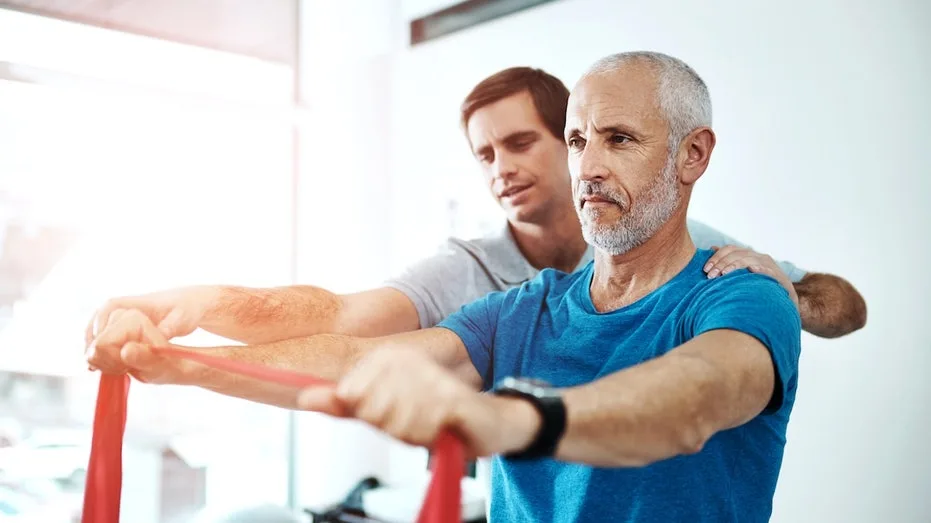
Weekly physical activity could help to slow down disease progression in Parkinson’s patients , a new study found.
The research, led by the University of Cincinnati, included 294 patients with mild-to-moderate Parkinson's disease.
Their average age was 66.
The participants reported their weekly physical activity via questionnaires.
ALAN ALDA REVEALS UNEXPECTED WEAPON IN HIS BATTLE AGAINST PARKINSON'S DISEASE Physical activity was assessed through structured interviews covering moderate and vigorous activities at work, at home and during recreation.
Examples of moderate activity included brisk walking, light swimming, doubles tennis and household activities such as washing windows, vacuuming or mowing the lawn, the study release stated.
Vigorous activity included pursuits like jogging, fast bicycling, team sports and singles tennis, along with shoveling and carrying heavy loads.
Participants were divided into three groups based on their amount of weekly physical activity — up to four hours, four to eight hours and more than eight hours.
PARKINSON'S IS BECOMING MORE COMMON; HERE ARE 5 THINGS EVERYONE SHOULD KNOW The researchers then monitored the participants’ cognitive health for up to five years and their motor function for up to seven years.
Each additional hour of physical activity per week was linked to slightly slower declines in memory, thinking and movement abilities over time, even after accounting for factors such as age, sex, education, weight and disease severity.
Patients who were physically active for four to eight hours per week experienced slower declines in memory and thinking abilities than those who exercised less than four hours.
Exercise duration above eight hours per week did not appear to provide additional benefits for memory and thinking.
The study was published on Oct.
7 in Neurology, the official medical journal of the American Academy of Neurology.
5News aggregated this summary from the outlet’s public feed. The full article, with all the context, is on www.foxnews.com — the content belongs to Fox News.