Mirrorless vs DSLR: Which camera type is better?
The camera industry is moving toward mirrorless, but there's plenty of life left in a good DSLR.
Yekatseryna Netuk/Shutterstock Buying your first proper camera used to mean picking a brand, determining a budget and perhaps arguing with yourself about how much zoom you really needed. Now, there's another consideration that's been added to the top of the list: DSLR or mirrorless?
Mirrorless is the simple answer for most people who are just beginning. Over the last few years, camera manufacturers have been investing their latest autofocus technology, video capabilities and lenses into their mirrorless lines. There are models available for all levels of experience, from APS-C beginner-friendly cameras to full-frame models for professionals. Our favorite cameras right now are overwhelmingly mirrorless for much the same reason.
DSLRs haven't suddenly become bad cameras. They simply are not in the direction of the majority of the industry. There's one little terminology trap to clear up here. DSLR stands for digital single-lens reflex camera, which means both DSLRs and mirrorless models are digital cameras. The difference lies in how they get light from the lens to your eye and the image sensor.
A DSLR has a mirror inside that redirects light from the lens into an optical viewfinder. Press the shutter, and that mirror flips up so the sensor can capture the image. A mirrorless camera skips that mechanical detour, sending light straight to the sensor and showing you its feed through the rear display or an electronic viewfinder. While it seems like a minor engineering adjustment, it really isn't minor at all.
Modern mirrorless cameras can have more autofocus points in the frame, since the sensor is always exposed to the scene, can detect subjects like eyes, animals or vehicles and preview exposure changes before you shoot, and can even feature electronic shutters that allow for very fast bursts without a mirror slapping around inside the camera body. It can make photography easier for the novice, because what you see through the viewfinder is much closer to what you'll get. The optical viewfinders on DSLRs, however, do not use a small screen to view the image, so battery life is typically superior since the camera does not have to power a screen to see everything when composing a picture.
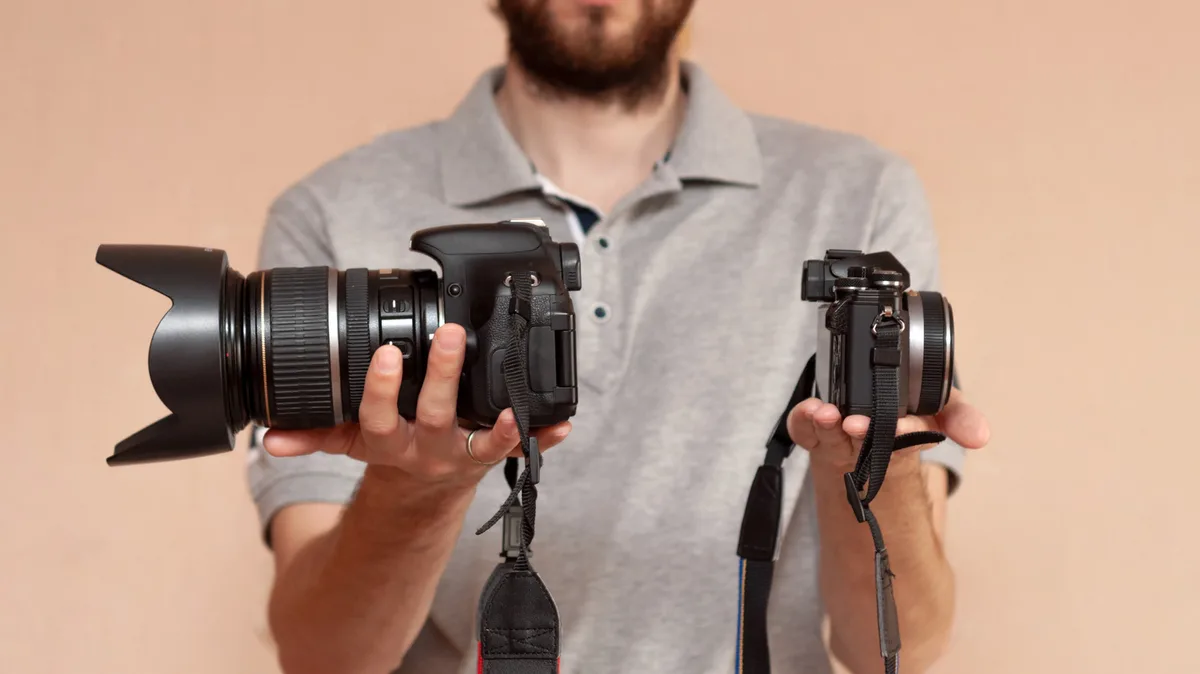
Removing the mirror also makes the camera body smaller, but attaching a huge telephoto lens to the front of the camera soon shatters the pocket camera illusion.
Things are less clear-cut with image quality. With a good sensor and a good lens, you can take great photographs in either format. But the larger mirrorless improvements are in autofocus, shooting speed, video and the overall shooting experience, which is why Canon and Nikon turned to mirrorless cameras .
Kosoff/Shutterstock If you're buying your initial interchangeable-lens camera, this comparison becomes a lot simpler. Get yourself a mirrorless model.
There is a different calculation for existing DSLR owners.
5News aggregated this summary from the outlet’s public feed. The full article, with all the context, is on www.engadget.com — the content belongs to Engadget.