Trump Can’t Stop, Won’t Stop (Undermining the 2026 Elections)
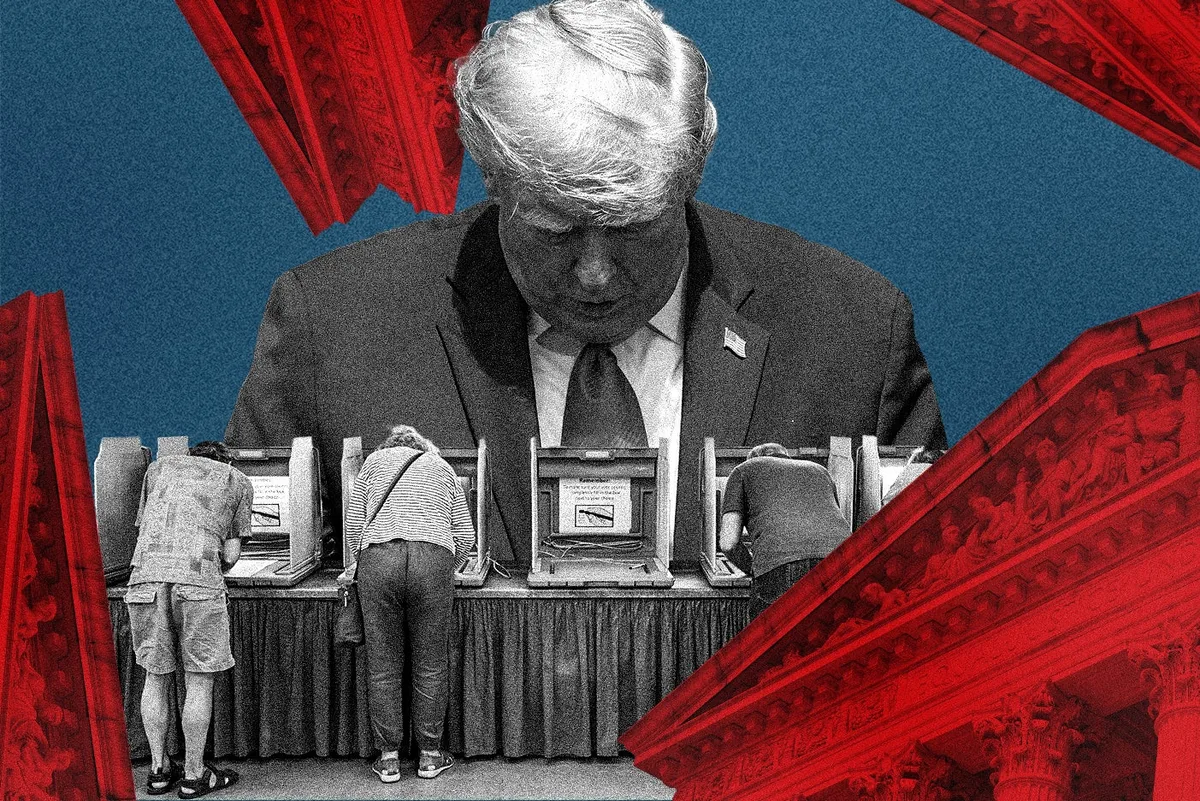
President Donald Trump’s attempt to nationalize America’s voting system suffered another loss in court this week, just the latest in a lengthy series of defeats over Trump’s blatantly unlawful executive orders around voting . This time was a bit more dramatic, though, with a judge bluntly calling out the Justice Department for using a lawsuit against Minnesota as a “fishing expedition” to help it find a violation of federal law. U.S. District Court Judge Katherine Menendez dismissed the case, ultimately finding that Congress never authorized the attorney general to access voting records and documents that state officials create themselves. These continued losses won’t end the story, though. Newly confirmed Attorney General Todd Blanche announced this week that he’s considering asking the Supreme Court to intervene in the dozens of lawsuits his DOJ has filed against states that, like Minnesota, refused to hand over their voter rolls. Trump and Blanche are attempting to bully states into submission over “election integrity,” but it’s obvious what the real endgame is: Complete control over U.S. elections.
All of this began about four months ago, when Trump signed an executive order targeting mail voting. It directed Homeland Security to create a national list of all U.S. citizens over the age of 18 who would be eligible to vote, and then that list would be sent to all 50 states. Each state would then have to send the United States Postal Service a separate list of all of its eligible voters—presumably it would need to match DHS’ list—so when election time rolled around, USPS could refuse a mail ballot from someone not on a state’s shared voter list. Immediately upon Trump signing this EO, it was obvious to many that it would be found unconstitutional by the courts.
Regardless of that fact, the Trump administration pushed forward, now having established legal footing to force states to work with the federal government and, more importantly, fueling a massive step toward nationalizing America’s elections. Most states did not fall for this scheme and refused to create or send any voter lists to the federal government, prompting the DOJ to sue 30 states and D.C. for noncompliance. So far, most of these lawsuits have been dismissed , while 16 predominantly Republican states agreed to comply with Trump’s EO.
The case in Menendez’s courtroom was a bit different. Initially, Minnesota did share some information when the DOJ asked, mostly relating to maintenance of its voter rolls, which is congressionally mandated. However, the state refused to send anything more detailed, as it includes sensitive identifying information like Social Security numbers. However, the DOJ was unsatisfied and continued to push for full access to Minnesota’s voter rolls, which eventually culminated in the lawsuit.
That effort has effectively been put to bed, as Menendez concluded that Congress never intended to allow the AG to access voter records and papers that state election officials create. The AG can only access voter records that come into the possession of state election officials, a critical distinction which Menendez says the DOJ intentionally misconstrued.
5News aggregated this summary from the outlet’s public feed. The full article, with all the context, is on slate.com — the content belongs to Slate.