Trump’s Monumental Obsession
Donald Trump is facing multiple challenges.
The United States is losing to one of its worst enemies in a war that has left the American economy mired in the sludge of growing inflation and rising energy prices.
His popularity is now hovering around second-term George W.
Bush levels, and may even be headed for end-stage Richard Nixon numbers.
His party faces the prospect of a crushing defeat in midterm elections that are only six weeks away. (In some places, early voting has already begun.) The country, and the 47th president’s administration, are in trouble on every front.
Despite all this military, economic, and political chaos, Trump has stayed true to a handful of projects: Renaming the John F.
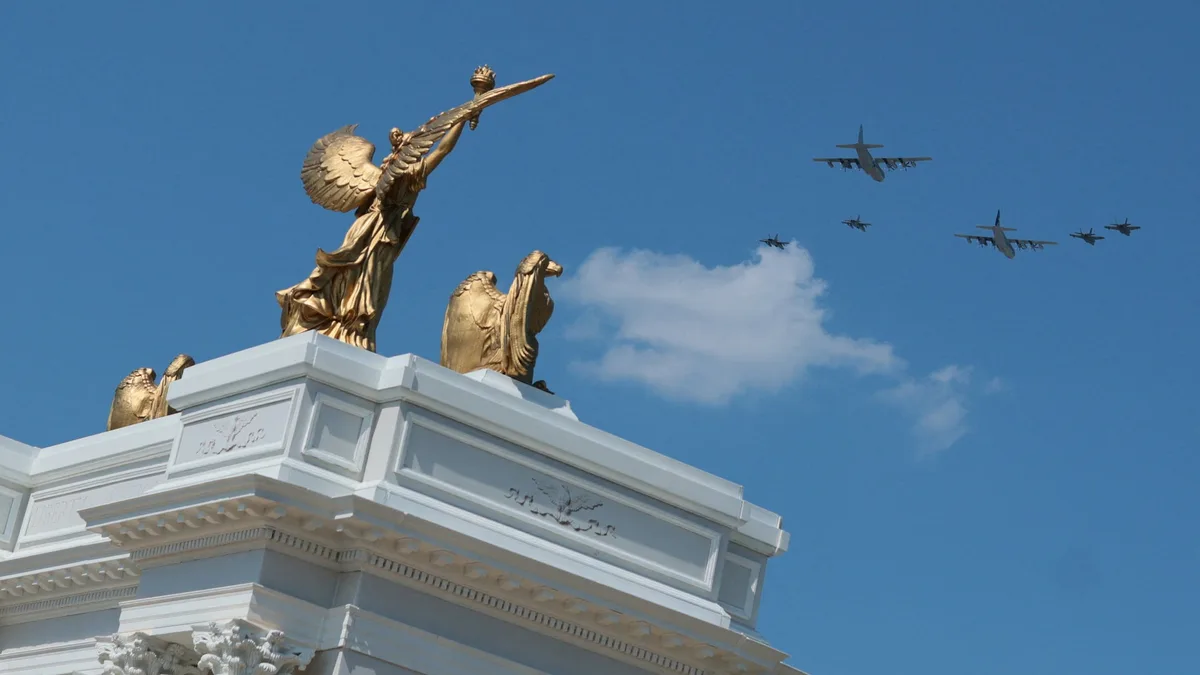
Kennedy Center for the Performing Arts, demolishing the East Wing of the White House and replacing it with a ballroom that even the French kings might have thought over the top, and building a triumphal arch in front of the bridge to Arlington Cemetery whose design looks like it was found in the bottom of Albert Speer’s desk drawer.
The president is very concerned about these undertakings.
He is, as they say in Washington, laser-focused on them.
Ordinary folks might say “obsessed,” because at times he seems unable to talk about anything else, even when asked about matters of national importance, including America’s slow-motion defeat in the Middle East.
Perhaps this world of troubles is why Trump is taking refuge in plans of marble and gilt.
Even an emotionally healthier man might want an occasional break from the travails of a presidency in crisis: Harry Truman would retire to the White House balcony with a bourbon, Dwight Eisenhower played a lot of golf, Kennedy and George H.W.
Bush loved sailing, Ronald Reagan watched hundreds of movies in the mansion theater and at Camp David.
But Donald Trump is not an emotionally healthy man, and his obsession with monuments is not a mere diversion from the pressures of the job.
5News aggregated this summary from the outlet’s public feed. The full article, with all the context, is on www.theatlantic.com — the content belongs to The Atlantic.