The centuries-old Japanese art of ikebana draws those seeking calm
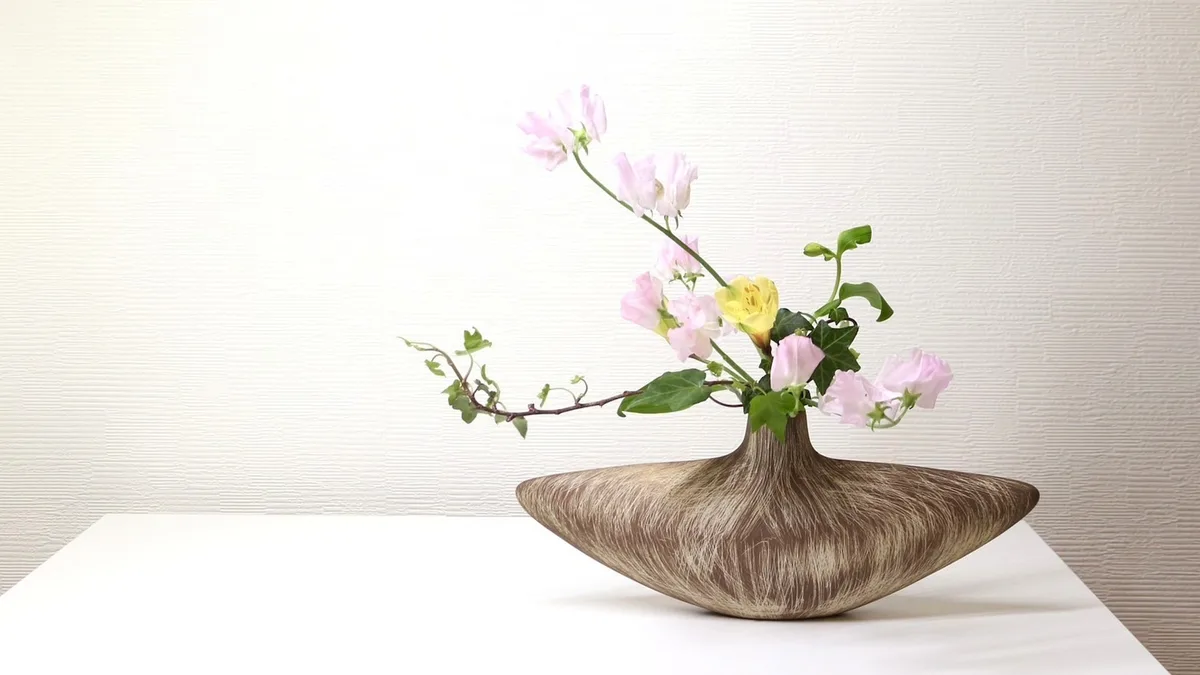
Ikebana, the Japanese art of arranging flowers, is a form of expression that dates back more than 500 years
TOKYO -- Ikebana, the Japanese art of arranging flowers, is a form of expression that dates back more than 500 years. It continues to blossom, quietly, not only with traditionalists but also with newcomers who find its blend of creativity and mindfulness to be restorative.
Ikebana can be a bit like solving a puzzle, except there’s no fixed answer. Because each flower, and human individual, is different, there are multiple solutions.
“There’s a ‘detox’ purifying factor, and a healing,” says Hiroyuki Okada, 40, who began taking lessons in ikebana about seven years ago. He now teaches Ikenobo, the oldest of three major ikebana schools.
Okada, who also teaches backflips to anyone who wants to learn, usually wears silver chains and jeans, but he wears a nice kimono when he formally demonstrates his arrangements. He considers himself typical of those drawn to ikebana today, people looking for joy, purpose, or solace from the daily grind or pain of modern life.
“In arranging (flowers), you are dealing with the life that is there, the beauty, of course, but you find what’s in your heart,” said Okada. “You come face to face with yourself.”
The Kyoto-based Ikenobo school, which is rooted in Buddhism, now has chapters around the world.
Okada's previous job at a nonprofit involved talking to people from around the world, and he realized how different — and alike — people were. When he switched to his current job, at a flower shop, he decided to take up a pursuit that was Japanese , so he could explore that aspect of himself, and one that could be done for a long time, alone.
Ikebana involves interacting with nature , although on a small scale — usually in a little vase.
“It is about the relationship of the creator with the flowers,” said Senko Ikenobo, headmaster-designate of the Ikenobo school.
Her family dates back generations to the originators of the art. Her father is the current headmaster.
Jeannette Haviland-Jones, professor of social psychology at Rutgers University, says studies have shown “that flowers and even flower scents promote happiness in people. We suggested a coevolutionary theory for this in which flowers became the ‘pets’ of the plant world.”
Besides a flower's beauty and fragrance, the feel of its petals and leaves to the touch is crucial, like petting a kitten or a puppy, according to Okada.
There are toddlers who do Ikenobo, copying their moms, and there are devoted centenarians. The headmaster-designate says she has seen ikebana help women who are juggling work and motherhood, or taking care of aging parents.
5News aggregated this summary from the outlet’s public feed. The full article, with all the context, is on abcnews.go.com — the content belongs to ABC News Health.