Nine-Inch Snails
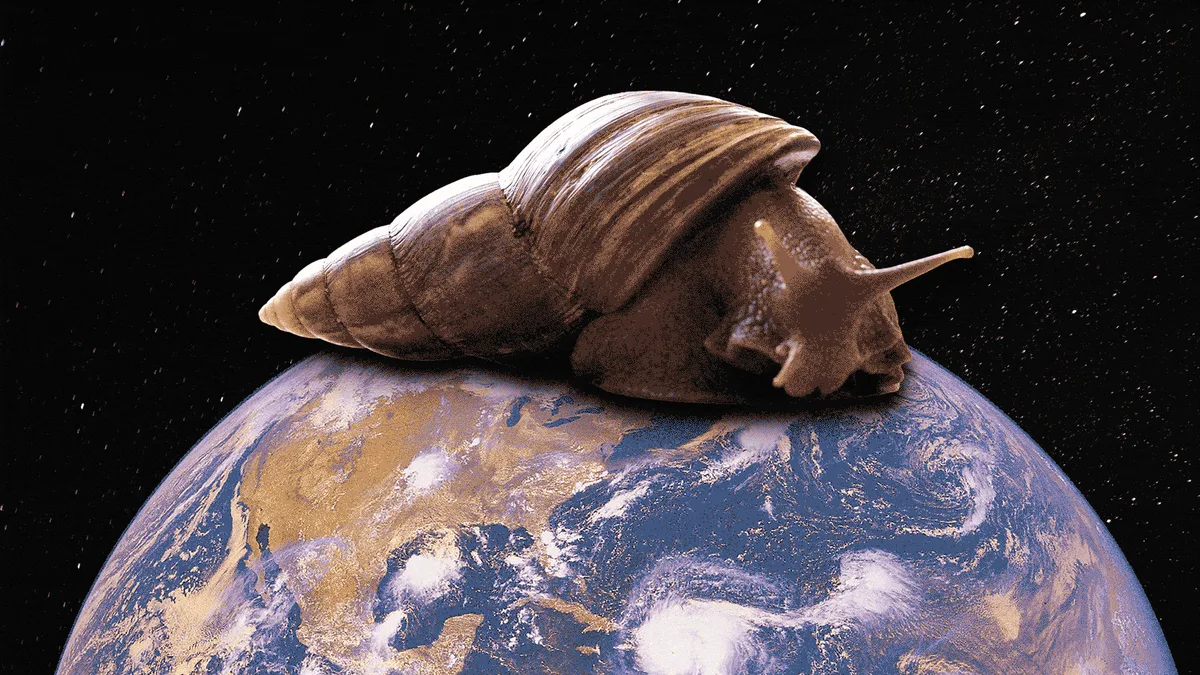
Since September, giant snails have put one Florida neighborhood on high alert.
No one in a roughly 300-acre zone in the city of Hialeah, just outside of Miami, is allowed to move yard waste or even a single brick into or out of the neighborhood without explicit permission from state authorities.
Teams of scientists patrol the area in search of giant African land snails, enormous mollusks with tiny teeth, a foot bigger than a 5-year-old’s, and the tendency to spread the rat-lungworm parasite, which is exactly as delightful as it sounds.
The snails, which actually grow to about eight inches in length, but can stretch—if nothing else, for headline-writing purposes—to nine inches, have worried Florida authorities since 1969.
Since then, the state has spent millions of dollars fending off three infestations.
One such operation took a decade to complete.
Now, whenever a snail is found, inspectors from the state agriculture department’s Division of Plant Industry start patrolling.
They set out bait and drench hatchling-harboring soil with anti-mollusk poison.
Then they distribute mug shots to the public. (That step might seem unnecessary, given that we are talking about snails the size of chipmunks, but the experts I talked with all emphasized the importance of anti-snail awareness.) An area is considered clean only after it has been monitored and treated for three years.
This time, the problem “seems to be limited to just one city block,” Paul Skelley, a main architect of the agriculture department’s crackdown, told me.
But the response is full-bore.
“We are serious about this snail in Florida,” Skelley said.
“When you find these cancers, you don’t want to let them fester.
You need to cut them out.” Skelley was part of the response to the last big infestation, which lasted from 2011 until 2021, and he sounds somewhat keyed up on the phone.
5News aggregated this summary from the outlet’s public feed. The full article, with all the context, is on www.theatlantic.com — the content belongs to The Atlantic.