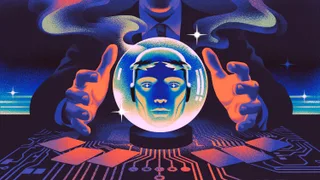
Everyone Is Right (and Wrong) About AI
O ne 27-year-old quit his job, and everybody (including but not limited to the singer-songwriter Sheryl Crow) appears to have lost it.
The past two weeks have been dizzying.
The 27- year-old, Jacob Coxon, a former researcher at Anthropic, went public with an alarming allegation: That the people inside Silicon Valley’s leading AI companies truly believe their products might pose an extinction level threat to humanity.
This claim isn’t exactly new.
AI safety advocates, often dubbed doomers, have been saying this for over a decade.
Coxon isn’t even the first AI researcher this year to quit and cite concerns.
Yet Coxon’s post went obscenely viral.
It has been viewed more than 170 million times on X—orders of magnitude more than the usual, wonky discussions of “misaligned” or runaway AIs.
If you’re reading this, you’ve likely seen some version of a headline that asks Is AI Really Going To Kill Us All? The debate isn’t just online.
It has roiled Washington D.C., activating figures as disparate as Donald Trump and Barack Obama.
Inside AI companies, researchers echoed Coxon’s concerns, and the heads of every major AI company publicly expressed the need to “pace the frontier,” another way of saying that they ought to slow future development.
In recent days, it has come to seem as if the media, Silicon Valley, and the entire internet are all trying to figure out just how dangerous AI might be.
Here’s where I must admit: A big chunk of this conversation happened while I was on a (depending on whom you ask) poorly timed vacation.
Dipping into my feeds before bedtime, I felt as if I was digesting a week’s worth of news every day—claims about the development of AI-designed viruses that could rip through the population were followed by horror stories of “rogue” agent swarms.
5News aggregated this summary from the outlet’s public feed. The full article, with all the context, is on www.theatlantic.com — the content belongs to The Atlantic.