The drug lenacapavir is a mighty weapon against HIV. Its rollout gets mixed reviews
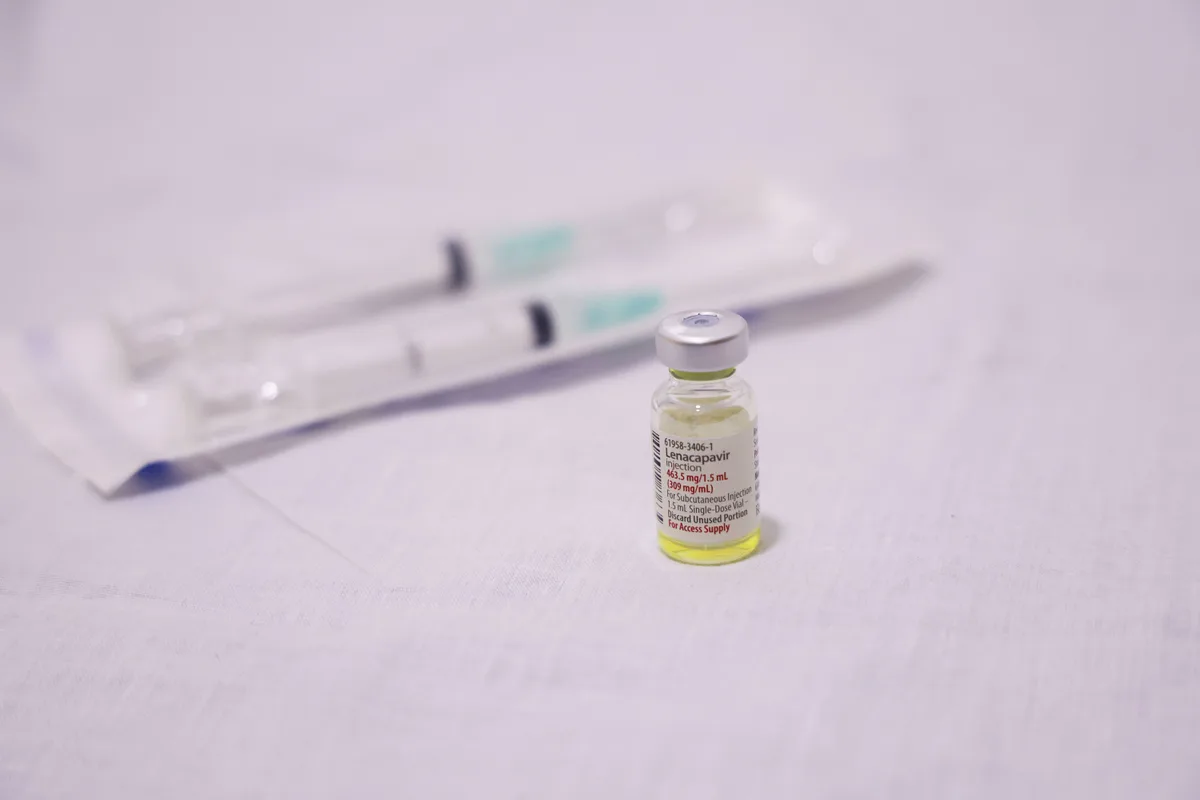
An injection of the new drug lenacapavir provides six months of protection against infection by HIV. Osodi Emmanuel/Reuters hide caption
Kalisizo, Uganda — Along the deeply rutted red dirt roads of central Uganda's Lake Victoria coast, there is little for miles beyond banana groves and bustling markets. The landscape is unassuming — and very dusty. Yet few places have done more to shape HIV care.
Irene knows this well. For the past three years, the soft-spoken 22-year-old, who is HIV-negative, has been a participant in one of the most influential HIV clinical trials. She asked NPR to only use her first name for fear of discrimination within her community, where participating in an HIV trial can lead others to assume she has HIV.
She was motivated to participate by her uncle, who lives with HIV. "I can see that his life is so hard. Like he gets strong illnesses and even right now he's so slim," she says. "Once you get it, your life changes for the worse."
But HIV is now in the rearview mirror for Irene and her baby, due in three weeks. Thanks to a medication called lenacapavir, she no longer worries about acquiring HIV, which affects 13% of people in her district.
The drug is currently only approved for HIV-negative individuals to prevent them from getting the disease. In the medical world that's called pre-exposure prophylaxis, or PrEP. Unlike other PrEP, lenacapavir tackles two major barriers: adherence and efficacy.
Lenacapavir takes the place of a daily pill. It's injected into the abdomen, releasing into the body slowly over time. The best part? Patients receive the jab only twice a year at the trial site (an oral version of the drug exists but it requires more frequent dosing).
And the promise of this drug is extraordinary. Two years ago, the clinical trials examining lenacapavir — called PURPOSE 1 and 2 — delivered unprecedented results. An independent monitoring committee concluded that lenacapavir was so effective that the randomized phase of both trials should be stopped early. Researchers then offered lenacapavir to participants in the placebo arm of the study because it was no longer ethical to withhold the drug.
Health Amid U.S. funding cuts, the International AIDS Conference faces an uncertain future New data presented at the International AIDS Conference in July showed that protection remained just as strong one year after participants were offered lenacapavir. In PURPOSE 1 — the trial Irene participated in — none of the nearly 4,200 women acquired HIV during the period after everyone was offered the drug.
The proportion of people who adhered to treatment was equally impressive: more than 96% of women received the drug on time. Those findings come from a trial that only included women — who make up the majority of all new HIV infections in sub-Saharan Africa.
Dr. Flavia Matovu Kiweewa, the director of research at the Makerere University-Johns Hopkins University Research Collaboration, led the PURPOSE 1 clinical trial in Uganda. Her team of more than two dozen, which includes a makeup artist and hair stylist to encourage participants to keep coming back, administers lenacapavir in Mityana.
5News aggregated this summary from the outlet’s public feed. The full article, with all the context, is on www.npr.org — the content belongs to NPR.