The Supreme Court Is Poised to Strangle Climate Lawsuits in the Cradle
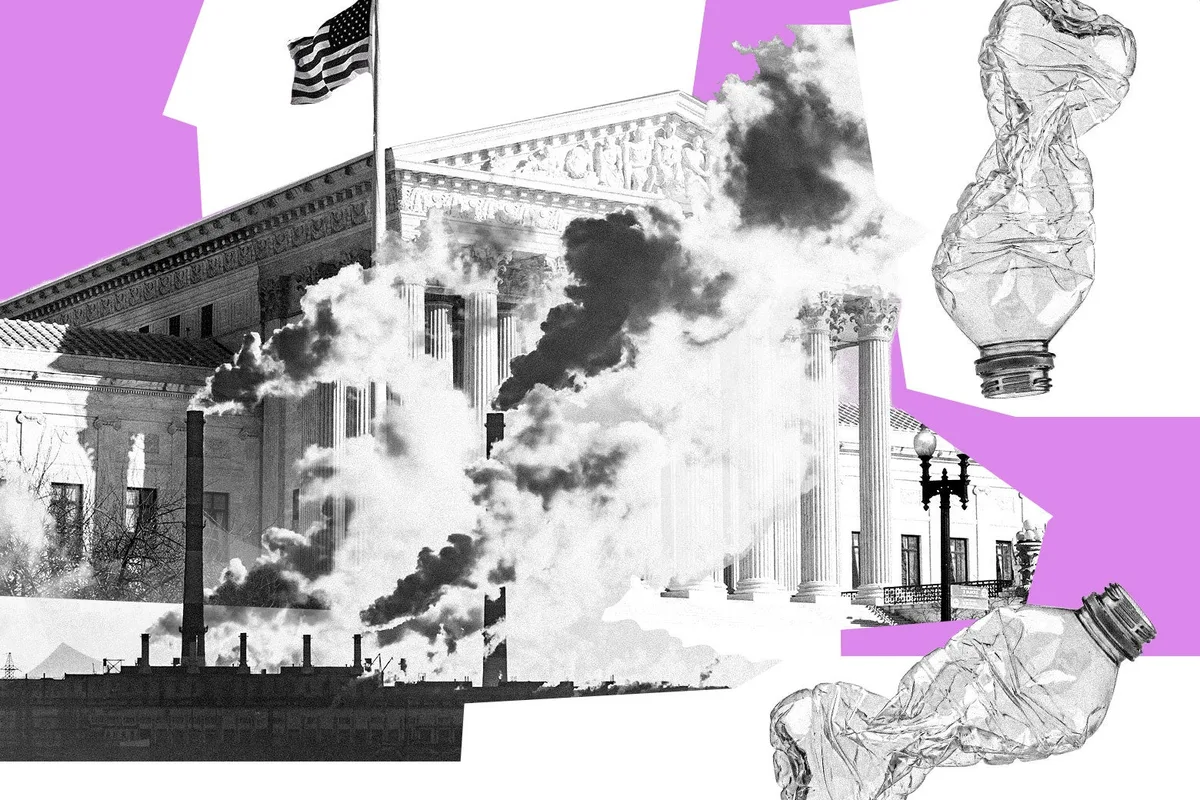
Who bears the costs of climate change? The answer is very simple: you, me, and most acutely of all, low-income households and marginalized people. This Supreme Court term will open in just over a week with a case that will help decide whether that is to remain the sole case, or if carbon polluters might actually bear some burden for the effects of human-caused climate change, for which they are largely responsible. The case, Suncor Energy v. County Commissioners of Boulder County, questions whether local and state governments can sue oil companies in state court and force them to pay some of the localized costs of climate change. On this week’s Amicus podcast, Dahlia Lithwick asked Sam Sankar, vice president of programs at Earthjustice, to lay out the stakes. Their conversation has been edited and condensed for clarity.
Dahlia Lithwick: Before we turn to the precise contours of Suncor , I think it’s worth laying out how we can follow the trail of climate denialism and suspicion of regulatory agencies right to the doors of SCOTUS and a legal apparatus that gears up in order to serve a deregulatory agenda targeting environmental protections.
Sam Sankar: Broadly speaking, the Supreme Court left alone environmental law in the early days, back in the 1970s. The D.C. Circuit was the one that was really making tons of law around these areas, tons of doctrines and administrative law to guide the agencies without blocking them. The first shot in that denialism and suspicion of regulatory agencies comes in early cases about standing, where Justice Antonin Scalia starts drawing lines and saying, You know, you can’t just sue about anything. You’ve really got to be personally injured in a very clear and concrete way . That kind of requirement itself makes it tricky to sue about everything from taxpayer issues to, as you know, Donald Trump blowing up the White House and rebuilding it in his image, or the environment.
The next thing I think you start seeing is the court becoming interested in, despite its professed adherence to textualism, reading these statut es with an eyebrow raised . Could they really mean that? It seems like there’s a lot going on here. There might even be major questions about these regulations that are coming out . For those who aren’t aware, “major questions” is a doctrine the court announced a couple of years ago that seems tailor-made to restrict the ability of agencies to regulate.
What we’re now seeing is a lot of these decisions around preemption. Because we know the federal government isn’t doing what needs to happen, many progressive states are trying to do things on their own. And the court is being asked to block state action, it’s being asked to say: Federal law, even if it’s not really being implemented, blocks all of that stuff . And that has happened in tandem with an extraordinarily conservative Supreme Court coming into being under the banner of ideas like textualism and originalism and supposedly neutral approaches to interpreting the law. And so this court is now really openly hostile to the idea of regulation and is reading statutes to limit regulatory power.
5News aggregated this summary from the outlet’s public feed. The full article, with all the context, is on slate.com — the content belongs to Slate.