What we learned from Nvidia's big day
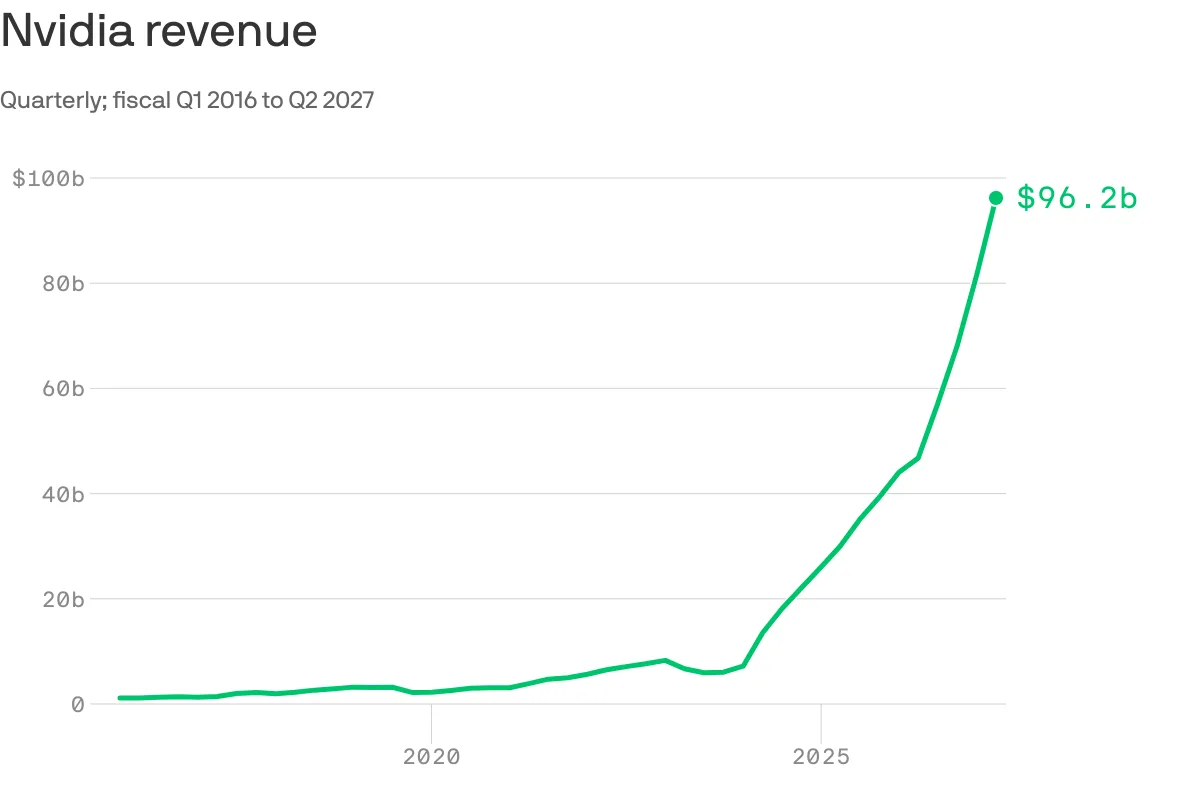
Data: Source: S&P Capital IQ Pro, company releases; Note: Nvidia's fiscal year runs ahead of the calendar.
The quarter ended July 2026 is its Q2 fiscal 2027.; Chart: Emily Peck/Axios AI behemoth Nvidia reported blowout earnings Wednesday — exceeding Wall Street's expectations — and even jaded investors who had grown a bit immune to the company's stratospheric growth over the past year seemed to like it.
Why it matters: The chipmaker's earnings are viewed as a barometer of the overall health of the AI trade.
Every three months when it reports its financials, Wall Street combs through the numbers for signs the whole shebang is slowing down.
By the numbers: The numbers are bonkers.
Nvidia's revenue was $96.2 billion in the second quarter — up more than double the same period a year ago.
The latest: After chief financial officer Colette Kress told investors that the company expects revenue will jump another 70% next fiscal year — the expectation was 45% — the stock shot up in after-hours trading and is up more than 7% on Thursday morning.
It didn't hurt that Kress also announced that Amazon would be buying an additional 2 million chips.
Zoom in: Here are a few other takeaways that stood out: Supply chain problems.
Nvidia is just like everyone else, squeezed by the surging demand for memory chips.
The company said that price increases in the space are exceeding its expectations and shrinking its margins slightly for the year to come.
This is a good problem to have, Kress said.
Memory scarcity is being driven by the AI buildout — it's good for business.
"Unlike a component that simply raises our cost with no offset benefit, tighter memory supply is a symptom of the same demand surge that's driving our own growth." Buyback flex.
5News aggregated this summary from the outlet’s public feed. The full article, with all the context, is on www.axios.com — the content belongs to Axios.