Why scientists are using cheap picnic coolers to protect some of the world’s most endangered animals
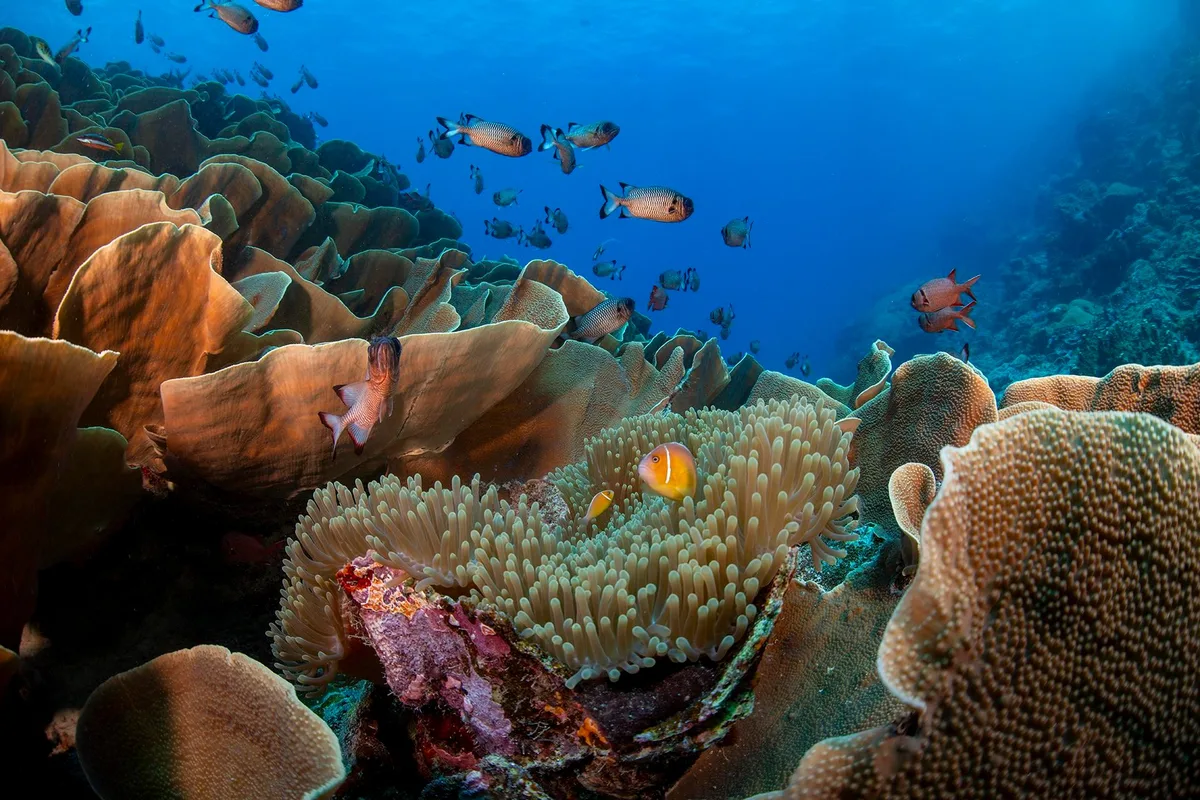
The island nation of Palau is home to some of the world’s most pristine coral reefs.
Here, two pink anemonefish, a kind of clownfish, swim above an anemone that’s nestled within a patch of lettuce coral.
PALAU, Micronesia — The ride out to sea was, in a word, unpleasant .
The coastal waters of Palau, an island nation in the western Pacific, are typically calm and electric blue, like what you might see on a screensaver or postcard.
The country has put in place some of the world’s most rigorous protections to keep its marine environment pristine.
But on this particular morning in July, a super typhoon named Bavi was churning north of us in the Philippine Sea.
Clouds darkened the water and battered us with rain as our boat seesawed through the swell toward the horizon.
Our destination was what you might call a coral garden — a patch of coral, about two miles from shore, that scientists had planted over the past couple of years in an effort to rebuild a damaged reef.
I was wet, cold, and nauseated when we arrived.
So naturally, I strapped on a mask and jumped in.
Below me, I could see dozens of star-shaped metal structures that researchers had attached to the seafloor.
They were studded with corals in all forms and colors: neon blue antlers, fluffy green mittens, baseball-sized brains.
Some of the corals looked like a collection of human vertebrae.
Others resembled miniature pine forests.
5News aggregated this summary from the outlet’s public feed. The full article, with all the context, is on www.vox.com — the content belongs to Vox.