Hot or not? The economy’s fate rests on Kevin Warsh’s answer to one key question

“I am the house now,” Treasury Secretary Scott Bessent told traders last week, as he defended the administration’s increasingly interventionist approach to the bond market.
He added that he had “asymmetric information” about what policymakers would do next and dared investors: “bet against me if you want.” On Wednesday, Federal Reserve chair Kevin Warsh might effectively take the other side of the bet.
It’s been a hot American summer.
Oil is hot, hovering around $110 a barrel.
Bond yields are hot, too: the 10-year Treasury yield has pushed above 5%, around its highest level since 2007.
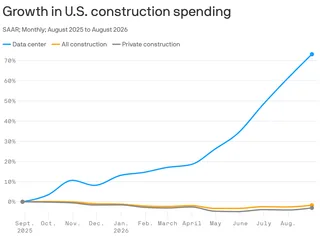
Credit markets are running hot as well: U.S.-dollar debt issuance to finance AI and data-center development reached $308 billion through July.
And all that borrowing is competing with U.S. national debt, which crossed $40 trillion less than a month ago.
Stocks, despite a rough few days, are still up roughly 11% this year.
Inflation, meanwhile, remains above 3%.
Put all that heat together, and the Federal Reserve is staring down a question it hasn’t seriously confronted in three years: Is the U.S. economy actually overheating? Markets are betting the Fed thinks the answer is at least “maybe.” Traders have priced a quarter-point hike Wednesday with near certainty.
But whether Wednesday amounts to a one-time course correction or the beginning of a new tightening cycle depends on what, exactly, is making the American economy hot.
The last time the Fed began raising rates, in March 2022, Jerome Powell’s Fed ultimately raised its benchmark rate by 525 basis points over 16 months.
Mohamed El-Erian, Wharton professor of practice and chief economic adviser at Allianz , parsed the current fervor and anxiety into four questions on X Tuesday: whether oil-supply disruptions persist, with China potentially acting as a “swing consumer”; whether Treasury Secretary Scott Bessent intervenes again to influence long-end yields; whether this week’s hike proves “one and done” or the beginning of a cycle; and how markets balance AI’s enormous promise against its enormous risks.
The ultimate question is whether the inflationary period we’re experiencing is due to an unusual pileup of supply shocks, or evidence that aggregate demand is running too fast for the economy to handle.
5News aggregated this summary from the outlet’s public feed. The full article, with all the context, is on fortune.com — the content belongs to Fortune.