Sons and Mothers
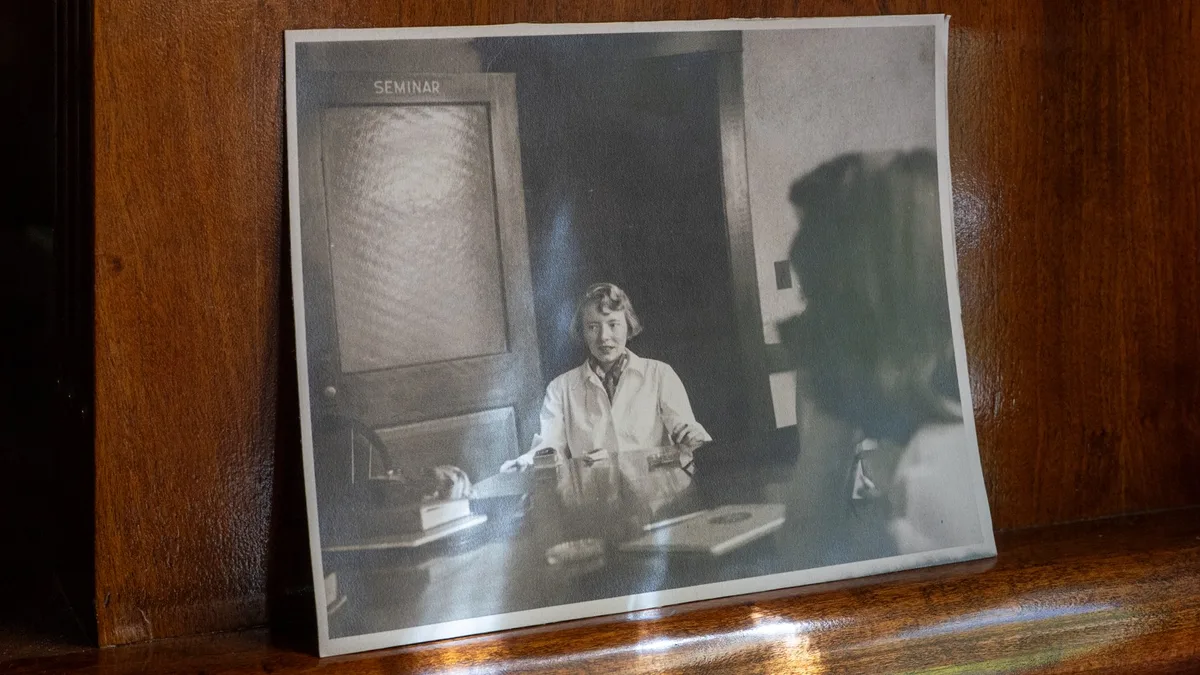
Photographs by Amy Elkins 1.
When I was 13, not long after my father had committed suicide, I asked my mother, “What’s the Oedipus complex?” “Why?” she replied at once.
“Are you afraid you’ve got it?” Maybe.
I wasn’t aware of wanting to murder my father, but in the four years after he suffered a massive stroke at 43, he’d been a volatile presence in our house, given to bursts of rage and tears, or rendered ominously mute by his paralysis.
When he disappeared on December 6, 1972, leaving my mother, my sister, and me, I was troubled by a sense of profound relief.
Unable to understand, let alone forgive, myself, I went searching for insight on the shelves of my parents’ narrow, high-walled study.
Books offered a way to replace real self-knowledge with an official version—the idea of “guilt” instead of the intolerable feeling itself.
In a volume called Oedipus: Myth and Complex , amid thickets of psychoanalytic jargon, I found what I was looking for.
So why did I ask my mother the question, if I already knew the answer? To show off my new command of the term.
To set her up for the unreturnable ping-pong smash I must have known was coming at me—to prove I could take it.
I shared everything with my mother: Stanford’s football triumphs, the Democratic Party’s defeats, every Little League at-bat, every dream of glory on the stage or page.
Why not my Oedipal anxiety? A few days later, she handed me her copy of Sons and Lovers , D.
H.
Lawrence’s autobiographical novel about a sensitive young man who is shaped and crushed by the love of his domineering mother.
5News aggregated this summary from the outlet’s public feed. The full article, with all the context, is on www.theatlantic.com — the content belongs to The Atlantic.