Trump's DOJ lays groundwork for subpoena fights with a Democratic Congress
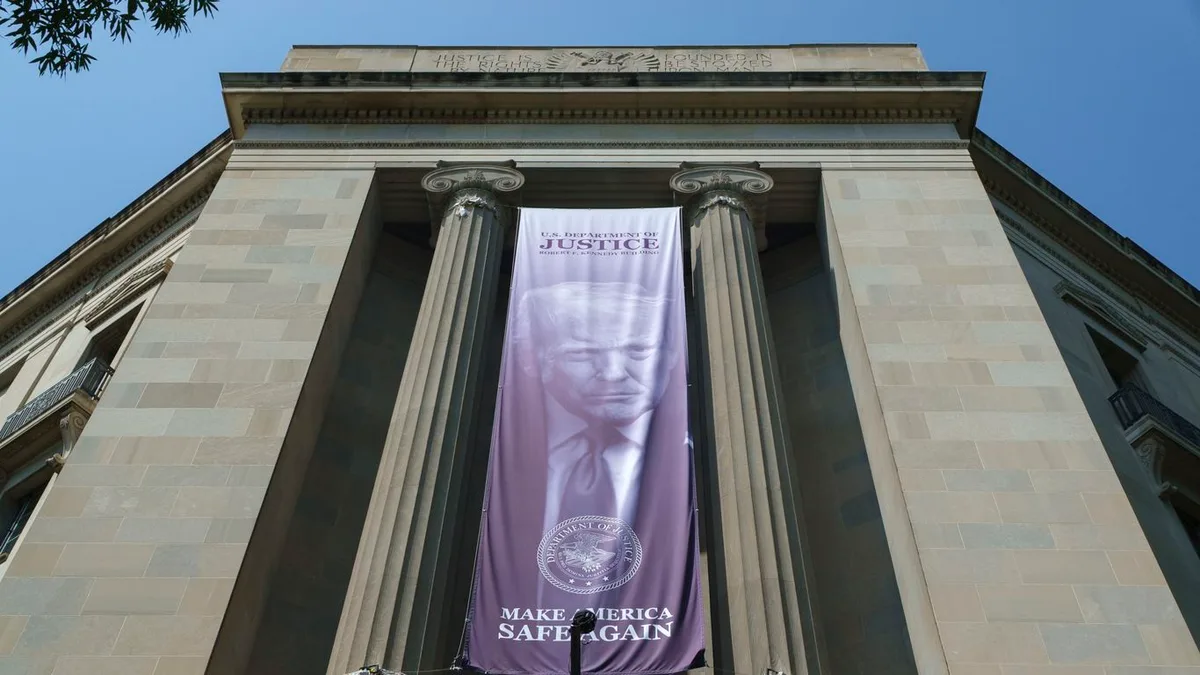
Executive privilege can shield President Trump's communications with "private advisers" outside of the government, the Justice Department's Office of Legal Counsel concluded Monday.
Why it matters: Democrats have been planning to bypass expected White House stonewalling by subpoenaing companies, colleges and private citizens if they win enough seats in November.
The new opinion could create a new hurdle for Democrats should they retake Congress.
"It really could be a pretty significant weapon" for the administration "to deflect a lot of that congressional investigation of private parties," says Jonathan Shaub, a University of Kentucky law professor and former OLC attorney.
The fine print: " The need for presidential confidentiality applies to communications with private advisers just as it does with government officials," the opinion reads , arguing outside sources may be less willing to give advice if they fear public disclosure.
The OLC said privilege applies when three boxes are checked: The communications must "relate to official presidential decisionmaking," "involve or reflect communications" with the president or his direct advisers, and remain confidential.
The memo's release was first reported by Punchbowl News.
Beyond its implications for future fights on the Hill, the opinion comes as the administration fights an American Bar Association subpoena directed at Boris Epshteyn , Trump's senior personal counsel, in relation to a lawsuit over deals the administration struck with law firms.
Reality check: Even if the memo offers a legal argument for individuals fighting subpoenas, Shaub doubts courts will buy into the OLC's theory.
Shaub tells Axios that while the OLC has long held a broad interpretation of executive privilege, this goes beyond anything it's formally ruled in the past.
"The understanding was the general public and the courts would never accept this," he says.
However, "this OLC doesn't seem hesitant to make these broad, sweeping claims." And while it could be a roadblock for lawmakers seeking information from private parties , it only applies to presidential duties, Shaub says.
A probe into something like Trump's cryptocurrency empire may be harder to defend as privileged.
What they're saying: A DOJ official told Axios in a statement that the "issue has not been litigated frequently," but the opinion "reaffirms the longstanding position of the office going back at least as far as Paul Clement in 2007 and arguably as far back as 1972." The other side: Democratic Sen.
5News aggregated this summary from the outlet’s public feed. The full article, with all the context, is on www.axios.com — the content belongs to Axios.