Wanted: Notorious Lake Tahoe tree poisoner. Reward? $147,000
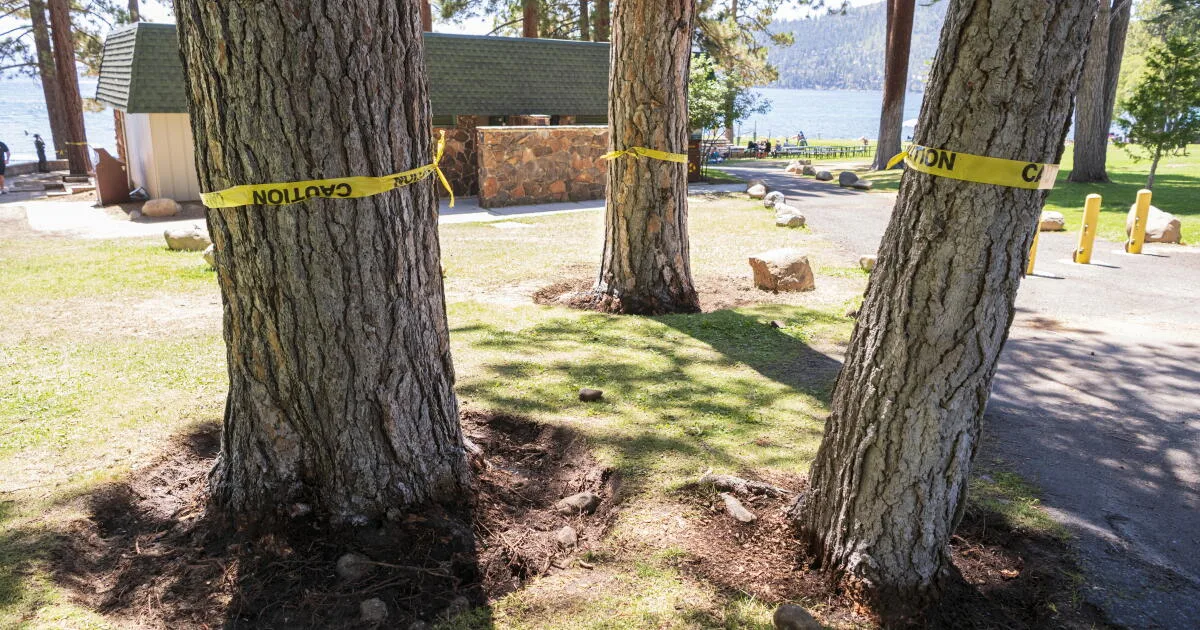
A question has bedeviled a wealthy Lake Tahoe enclave for years: Who is poisoning the towering trees that stand sentry on the North Shore?
Residents of Incline Village, Nev., hope a $147,000 reward will generate some answers.
“It’s the most appalling, selfish thing that anyone could do, especially for trees that are irreplaceable,” said Chris Nolet, a retired certified public accountant and consultant to the biotechnology industry who assembled a small group of private donors known as Friends of Burnt Cedar Beach to put up the bulk of the reward. “These trees are 100 years old.”
The donors are offering $122,000 for information leading to the successful prosecution of anyone responsible. The Incline Village General Improvement District, which owns and manages the residents-only beach where the poisonings took place, has put up another $25,000 and installed additional cameras around the trees.
The move came after an investigation failed to generate actionable leads, Nolet said.
“My feeling is, we’ve got to try something different,” he said, “and money talks.”
Someone has, on multiple occasions, slipped into a residents-only beach in Incline Village, drilled holes in the roots of trees and poured a chemical inside, killing at least 10 pines, some over a century old.
Someone has, on multiple occasions, slipped into the picturesque wooded cove, drilled holes near the roots of the conifers and poured a chemical inside. A total of 28 trees have been poisoned since 2022 and at least 10 have died, some of them more than a century old.
The attacks escalated this summer, with 16 trees — 13 Jeffrey pines and three white firs — poisoned on three occasions between May and early August. It’s too soon to say how many of the trees will survive; some are showing signs of stress including brown needles, according to Sam Gough, an arborist with the Incline Village General Improvement District.
“The effects of chemical exposure may develop slowly and may not become fully apparent for several months or even multiple growing seasons,” Gough said Friday at a news conference announcing the reward.
Grounds staff have removed contaminated soil from around the affected trees and applied a biochar and compost mixture to support their natural defensive response, she said. They are also hand-watering the trees to reduce environmental stress and give them a better chance of healing, she said.
Your morning catch-up: The Tahoe tree poisonings, online betting on the Palisades fire and more big stories
Staff will continue regular inspections to detect crown thinning, needle discoloration and loss, reduced growth and abnormal resin production, she said.
“It’s a little disheartening to realize that somebody has done something that can’t be repaired — like, this damage cannot be repaired,” Gough said. “In 150 years, new trees could regrow, but we won’t be here for that. It’s a great loss.”
5News aggregated this summary from the outlet’s public feed. The full article, with all the context, is on www.latimes.com — the content belongs to Los Angeles Times.