New 'magnetoelastic' tent generates electricity from wind, body movement and sound to power small devices
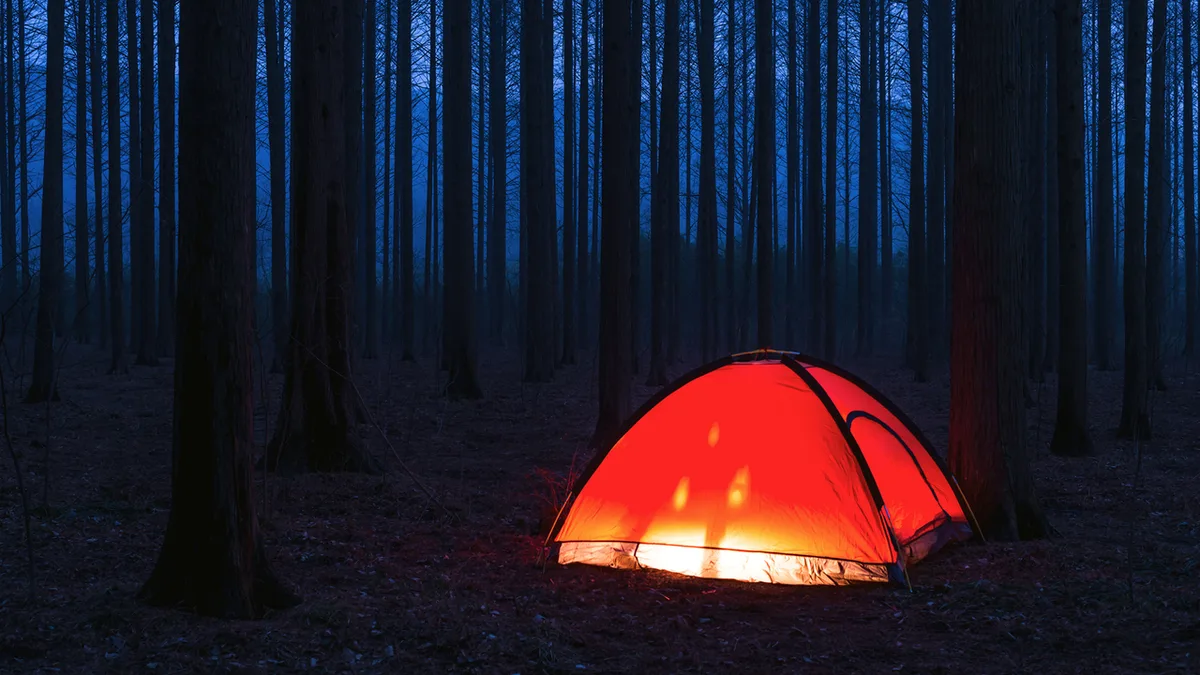
Researchers have developed a tent that harvests energy from its own motion — a process that could one day power small devices in shelters, disaster zones and off-grid camps.
The key lies in a material property known as "magnetoelasticity," which turns bending and stretching motion into electrical energy.
Magnetoelasticity, first described in 1865 by physicist Emilio Villari , is the change in a material's magnetic flux density when mechanical stress is applied in the presence of an external magnetic field.
The design, described in a study published July 31 in the journal Matter , uses smart textile layers that respond to everyday movement in and around the tent, harvesting both environmental and biomechanical motions.
Wind, a person shifting inside, or the fabric flexing during setup can all contribute to the energy output, making the shelter itself part of the power system.
The tent fabric acts as an energy harvester.
When the material bends, stretches or flexes, its magnetic state changes, and that shift is converted into electrical energy through induction .
The tent's floor incorporates magnetoelastic ribbons, while its roof is constructed as a layered architecture that integrates conductive fibers and magnetoelastic film.
In the study, the researchers reported that tapping a small sample of the magnetoelastic textile unit with a hand charged a 0.22-μF [microfarad] capacitor to 5.8 volts within 1.5 seconds.
This is equivalent to the kind of charge you might see in a tiny timing or filter cap on a low‑power sensor node.
While that's too little to power something like a smartphone, it demonstrates that even a small piece of the material can harvest energy.
Scientists have already shown that magnetoelastic devices can generate electricity from body movement , sound and other mechanical inputs , but the new study scaled this concept to larger fabric systems.
Primarily, the scientists envision it being used in places where electricity is limited, unreliable or unavailable, where even modest power generation can make a difference by powering LED lights, charging a phone or running a small heater.
The researchers also framed the design as a response to the impracticalities of existing portable shelters; they often need power, but generators require fuel, batteries add weight and maintenance, and solar panels depend on sunlight.
5News aggregated this summary from the outlet’s public feed. The full article, with all the context, is on www.livescience.com — the content belongs to Live Science.


