Pentagon rethinks military presence in Europe and ‘Godfather of AI’ calls for regulation: Morning Rundown

The Pentagon is considering a drastic plan to reduce the U.S. military’s presence in Europe. A former detainee at Florida’s “Alligator Alcatraz” detention center said he spent 15 hours in a phone booth-sized cage. Plus, a look at the business of styling tunnel fits for NFL players.
The Pentagon is considering a drastic plan to pull planes, ships, weapons and tens of thousands of U.S. troops from Europe, despite warnings from NATO allies about the growing threat of Russian aggression, according to seven current and former U.S. and Western officials. The reduction could be roughly one-third of all U.S. troops in Europe, or about 25,000 — or it could be even larger, as much as half, or up to 40,000 troops.
If carried out, it would be the most significant scaling back of the 80,000-strong U.S. military presence in Europe since the aftermath of the Cold War in the 1990s. Such a withdrawal could radically reshape America’s relationship with its major allies.
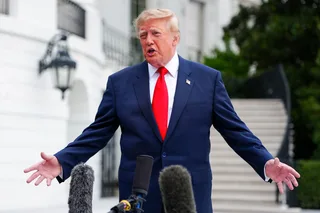
Countries affected would likely include Germany, Italy and Spain, sources said. The three nations host the bulk of the U.S. troops in Europe, but leaders of all the countries have also clashed with President Donald Trump over the war with Iran.
The Pentagon announced a six-month review of the American military’s presence in Europe in June. Air Force Gen. Alexus Grynkewich, the supreme allied commander and the head of the U.S. European Command, is expected to provide his analysis to Defense Secretary Pete Hegseth today, sources said. The analysis will likely include four courses of action that could include cuts and possibly shifting some forces within Europe to countries on NATO’s eastern flank.
How long does Congress have to implement AI safeguards before it’s too late? “Maybe a year, but not much more than a year,” according to Geoffrey Hinton, a Nobel laureate known as the “Godfather of AI.” Hinton and other experts spoke to lawmakers in a private briefing this week, capping a flurry of activity on Capitol Hill in the week since an Anthropic researcher resigned from his job and warned people of the threat AI poses to humanity.
Hinton’s dire warning came as the House departed Washington for the last time before the midterm elections, and there appeared to be lots of conversations but little sign of progress on any substantial AI regulation in the Senate. How lawmakers reacted to Hinton’s warnings.
Meanwhile, Pennsylvania Gov. Josh Shapiro is pushing the federal government to quickly pass regulations to rein in the industry, saying the warnings from tech executives is “not the time to kick the can down the road.”
Add to Google Gov. Shapiro calls for AI regulation without pausing development as safety concerns grow 06:14 More politics news: Marco Rubio, the nation’s top diplomat, has avoided the spotlight on the unpopular Iran war , distance that could be politically advantageous. Those close to him say a future presidential run or a stint in the private sector could be on the table. For subscribers: Attorney General Todd Blanche’s political appearances are shattering a decades-long Justice Department norm .
5News aggregated this summary from the outlet’s public feed. The full article, with all the context, is on www.nbcnews.com — the content belongs to NBC News.